
Call us: 1-800-927-5107 647-494-7800 ext. 1008

Top Benefits of Using Fiber Laser for Mold Repair in Manufacturing

Even minor mold damage can stop a production line. Laser welding is a way to fix a mold without slowing production or hurting product quality. It repairs worn or damaged molds with high accuracy, little heat distortion and little finishing. This article covers why it works and what to look for.

Why mold repair matters

Molds shape hundreds or thousands of identical parts in automotive, plastic injection molding, electronics and aerospace. They do not last forever:

  • Wear and tear causes cracks, erosion and edge damage.
  • Traditional welding often warps or stresses the mold surface.
  • Replacing a mold is expensive and takes time.

A mold repair laser welder repairs the damage without harming the area around it, which extends the life of the mold and reduces replacement cost. The Ascent mold repair laser welder is built for this work.

How laser mold repair works

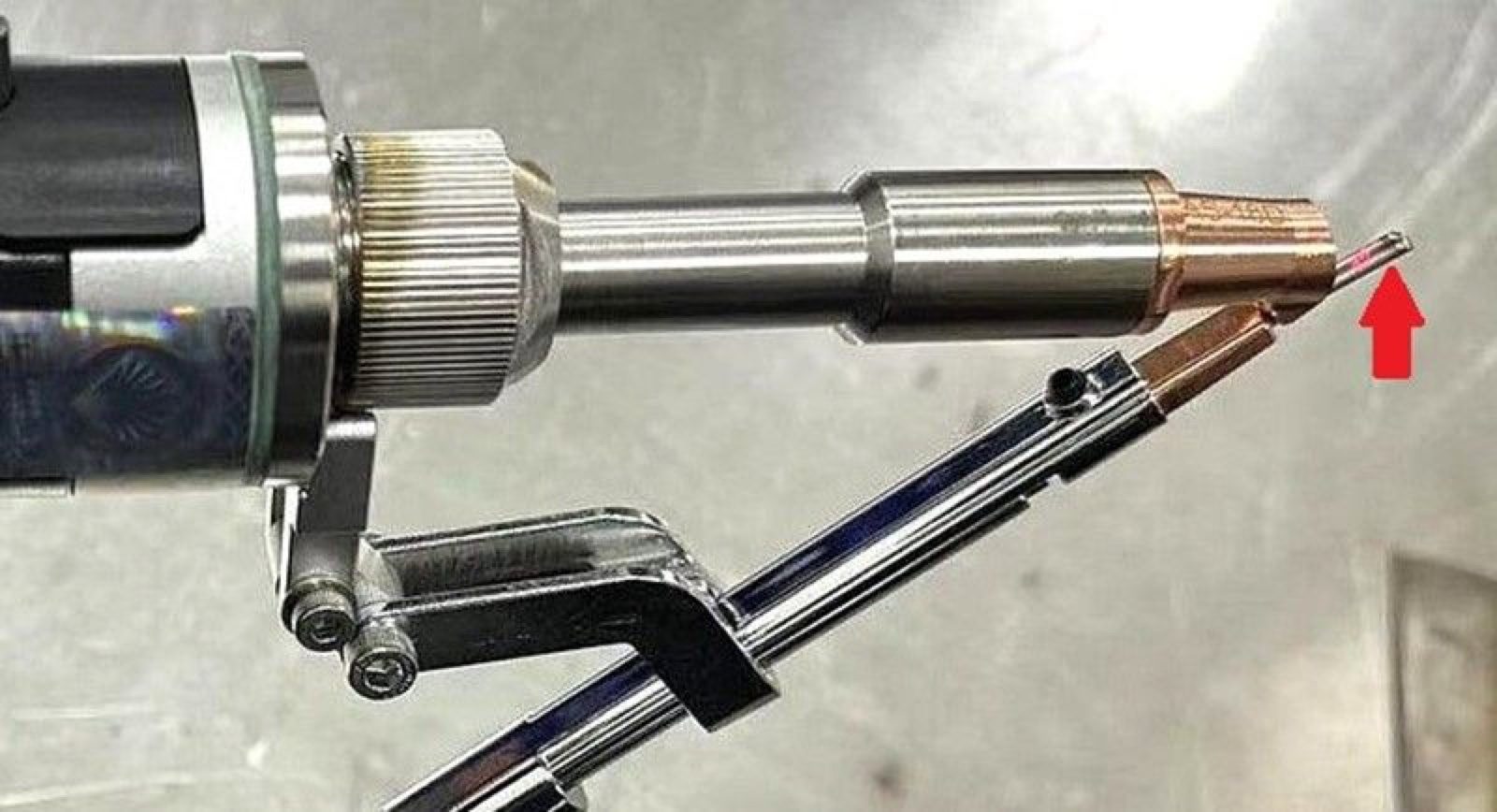
The operator uses a microscope and fine filler wire. A focused laser beam melts a small spot on the mold and fuses filler metal into it. Compared with TIG or MIG, this gives better control and cleaner results:

  • Low heat. It limits thermal damage and helps keep the mold's original form.
  • No contact. The laser does not touch the workpiece.
  • A small heat-affected zone. The surrounding area is left alone.
  • Cleaner welds. Less grinding or polishing is needed afterward.

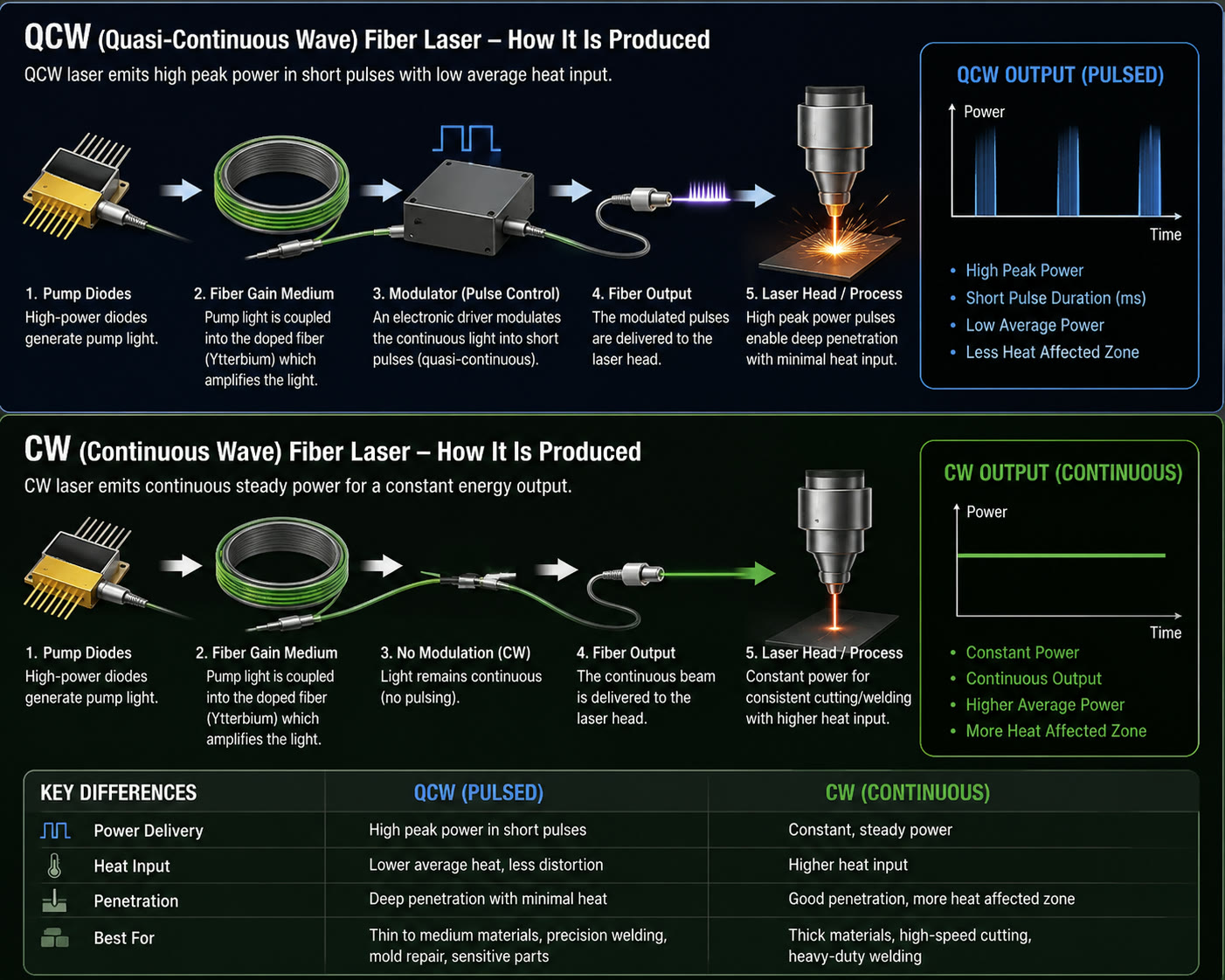
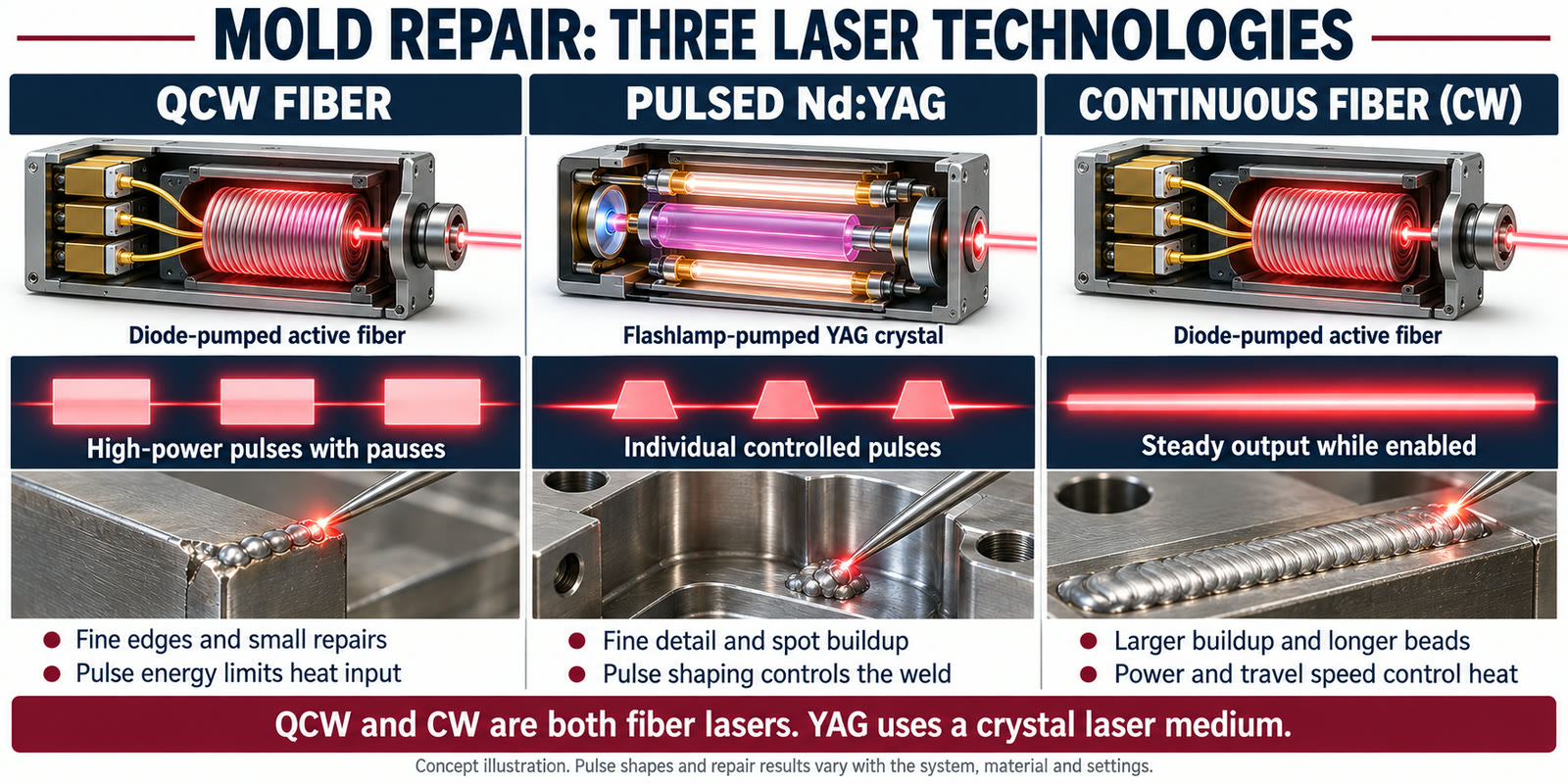
Ascent offers three laser technologies for mold repair: pulsed Nd:YAG (200W and 400W), QCW fiber (150W and 300W, with peak power of 1500W and 3000W) and continuous fiber (CW) at 1500W and 3000W.

Main benefits

1. Accuracy and less waste

Traditional repair often needs more filler and more finishing. A laser melts only the area that needs it, so you use little material. That means less metal waste, less cleanup and consistent welds. Even on tiny cracks and corners, a laser can make exact repairs without harming mold detail.

2. A longer mold life

A poor repair shortens the life of a mold. Too much heat, rough welds or aggressive polishing can damage it for good. Laser welding offers controlled heating and uniform repairs, which helps molds last longer and cuts down on replacements.

3. Faster turnaround

Speed matters in manufacturing. Laser repair can shorten the time a mold is out of service, which means more production time, lower labor cost and a quicker response to defects.

Features that matter

  • Adjustable laser output. Useful for different materials and depths of damage.
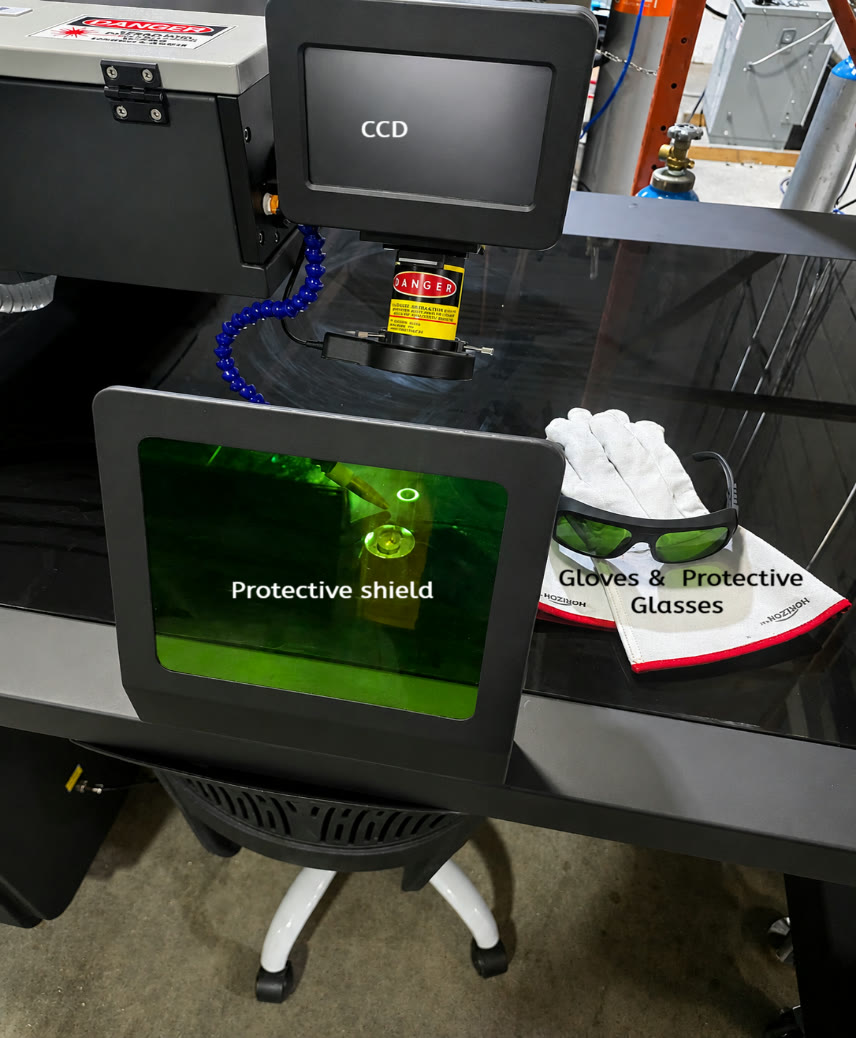
  • A microscope and joystick control. The Ascent system has both, along with a motorized XYZ work platform.
  • Fine filler wire. For consistent additions of metal.

Cost

Laser mold repair can reduce costs over time through:

  • Fewer mold replacements
  • Less downtime during repairs
  • Faster training and repairs
  • Fewer consumables

The price of the Ascent mold repair welder depends on the laser source. Shipping and on-site installation and operator training are included in the price. Its warranty depends on the laser source.

Laser and traditional repair compared

Feature Laser repair Traditional repair
Heat input Low High
Material use Minimal Higher
Accuracy High Moderate
Finishing Little Often needed
Time per job Faster Slower

This is a practical advantage for small or detailed mold cavities.

Where it is used

  • Automotive. Die-casting molds and injection components.
  • Plastics. Ejector pins, corners and gate areas.
  • Electronics. Fine mold features.
  • Aerospace. Aluminum molds for casting.

Even small shops can use a compact system. For the laser types compared, see the mold repair page. To think about starting a repair business, read starting a mold repair business with fiber laser welding.

A long-term solution?

With proper training and care, a laser welder can become a core part of your mold maintenance plan. It handles both small touch-ups and larger repairs, and you can repeat consistent weld quality.

Safety

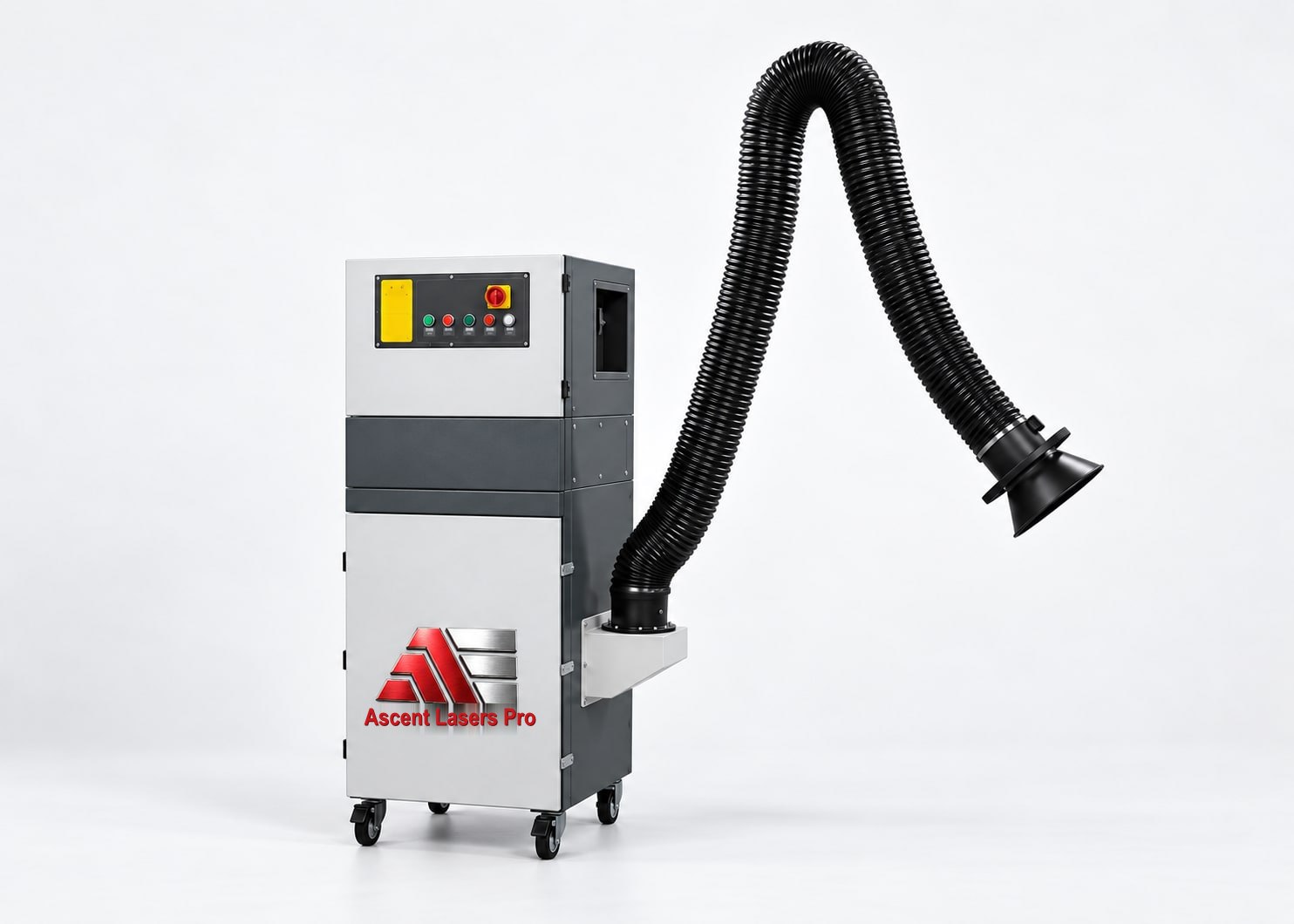
A laser mold welder is a Class 4 laser. Wear laser safety eyewear, enclose the area and ventilate. Minimum OD 5; prefer OD 7 or 8. See our laser safety page.

Ascent Lasers Pro can help you choose a system. Contact us for guidance.
← All articles
More from Ascent Lasers Pro

Related articles

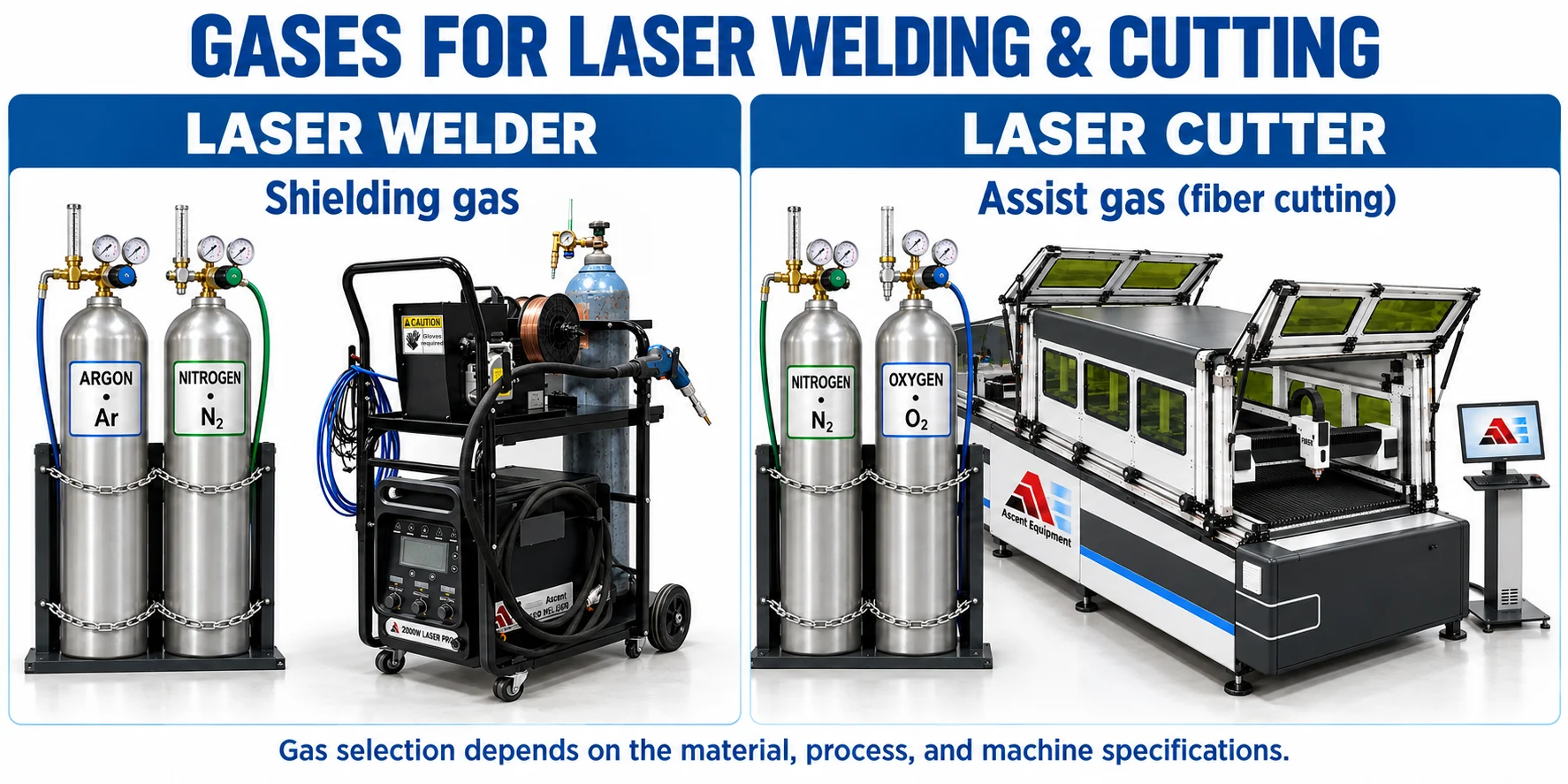
Shielding and Assist Gas for Laser Welding and Cutting
Which gas to use for laser welding and laser cutting, how to plan a supply that keeps up, what gas costs per good part, and how to handle cylinders safely.
Sheet Loading for Laser Cutters: Options and Budget Costs
Seven ways to load 5 × 10 ft acrylic and aluminum sheets onto a laser cutter, from vacuum lifters to storage towers, with sheet weights and budget costs.
Cobots and Industrial Robots in Fiber Laser Welding
Cobot or industrial robot for fiber laser welding? How they differ, six automation examples, what a cell costs and why both need laser protection.
How Laser Technology Is Transforming Industry
Laser cutting, welding, cleaning and mold repair are changing how shops make parts: where the savings come from, how new workers learn and where AI fits in.
How to Select a Handheld Laser Cleaning System
How to buy a handheld laser cleaner: describe the job, test on your own parts, look past the wattage, plan fume extraction and compare cost per square foot.
How Laser Technology Empowers Fabricators and Entry-Level Workers
Laser welders let entry-level workers do professional work on routine jobs. What they learn fast, what still takes skill, and what a shop can save.
Buying a Handheld Laser Welder: A Practical Checklist
Cooling, power, wire feeder, wobble head, torch weight, safety and warranty: the points that decide which handheld fiber laser welder fits your shop.
Inside the Ascent 2000W Handheld Fiber Laser Welder
What the Ascent 2000W handheld fiber laser welder brings to a shop: refrigerant cooling, a high-speed wobble head, a light torch and a complete kit.
How the Ascent 2000W Refrigeration Laser Welder Compares
The Ascent 2000W refrigeration laser welder next to typical air- and water-cooled handheld welders: cooling, duty cycle, torch weight, running cost and support.
Winning Over a Skeptical MIG or TIG Welder
How to get an experienced MIG or TIG welder to give laser welding a fair try: aluminum, the daily workflow, labor math, safety questions and a test weld.
Up to 4x Faster: What a 2000W Handheld Fiber Laser Welder Offers
Handheld fiber laser welders can travel up to 4x faster than traditional welding. Cooling, torch weight, included gear and what a 2000W machine can weld.
Laser Welding and the Cost of Aluminum Welding Labor
Skilled aluminum TIG welders are expensive and hard to hire. How training a production worker on a laser welder changes the labor math, with wage data.
Fit-Up and Gap Control in Laser Welding
A gap in a laser weld joint is a path for the beam. Fit-up tolerances, joint types, fixturing, copper backing bars and what to do when a gap stays open.
Setting Up for a Handheld Laser Welder, Step by Step
Get your shop ready for a handheld laser welder: power, gas, the laser-controlled area, fume extraction, table height, cables, fixtures and a daily checklist.
Is QCW Safer? Pulsed vs. Continuous Tabletop Laser Welding
QCW pulses put less heat into thin aluminum and stainless than CW, but both are Class 4 lasers. What a CCD camera and an enclosure really add to safety.
QCW Tabletop or 2000W Handheld: Which Laser Welder Fits Your Shop?
The Ascent QCW tabletop and handheld welder versus the 2000W handheld: typical work, heat input, speed, and which kind of shop should buy which.
Mold Repair Lasers Compared: QCW Fiber, Pulsed Nd:YAG and Continuous Fiber
QCW fiber, pulsed Nd:YAG and continuous fiber (CW) lasers for mold repair: beam quality, efficiency, peak power on reflective metals, filler wire and heat.
Which Materials Actually Stop a 1070nm Fiber Laser Beam?
Ordinary welding curtains don't stop a 1070nm fiber laser. Which absorbing and reflecting materials work as backing, barriers and beam stops, and which fail.

Talk to a laser specialist about your welding or cutting job

Contact us