
How new workers get professional results with laser welders, and where shops save money
A fabrication shop needs accurate parts and steady output, and both depend on people who can do the work. Laser equipment makes those people easier to train. With stored settings and some hands-on training, an entry-level worker can learn a suitable production task and start contributing to the shop.
Those people are getting harder to find. The American Welding Society estimates that the US will need about 320,500 new welding professionals by 2029, roughly 80,000 openings a year. More than 157,000 of the 771,000 welding professionals working today are close to retirement.
The savings go past the weld itself. Shorter training, faster processing, less finishing and fewer rejected parts can all help lower what it costs to produce a part.
Laser welding is easier to learn
On routine, well-defined jobs, a new employee can pick up the basics of a laser welder without much trouble. Approved settings give them a place to start, so there is less trial and error.
TIG welding takes years to do well because the welder controls everything at once: torch angle, arc length, travel speed, the foot pedal and the filler rod in the other hand. With a handheld laser welder, a new operator mostly has to position the torch, move at a steady pace and follow the joint. The machine handles much of the rest:
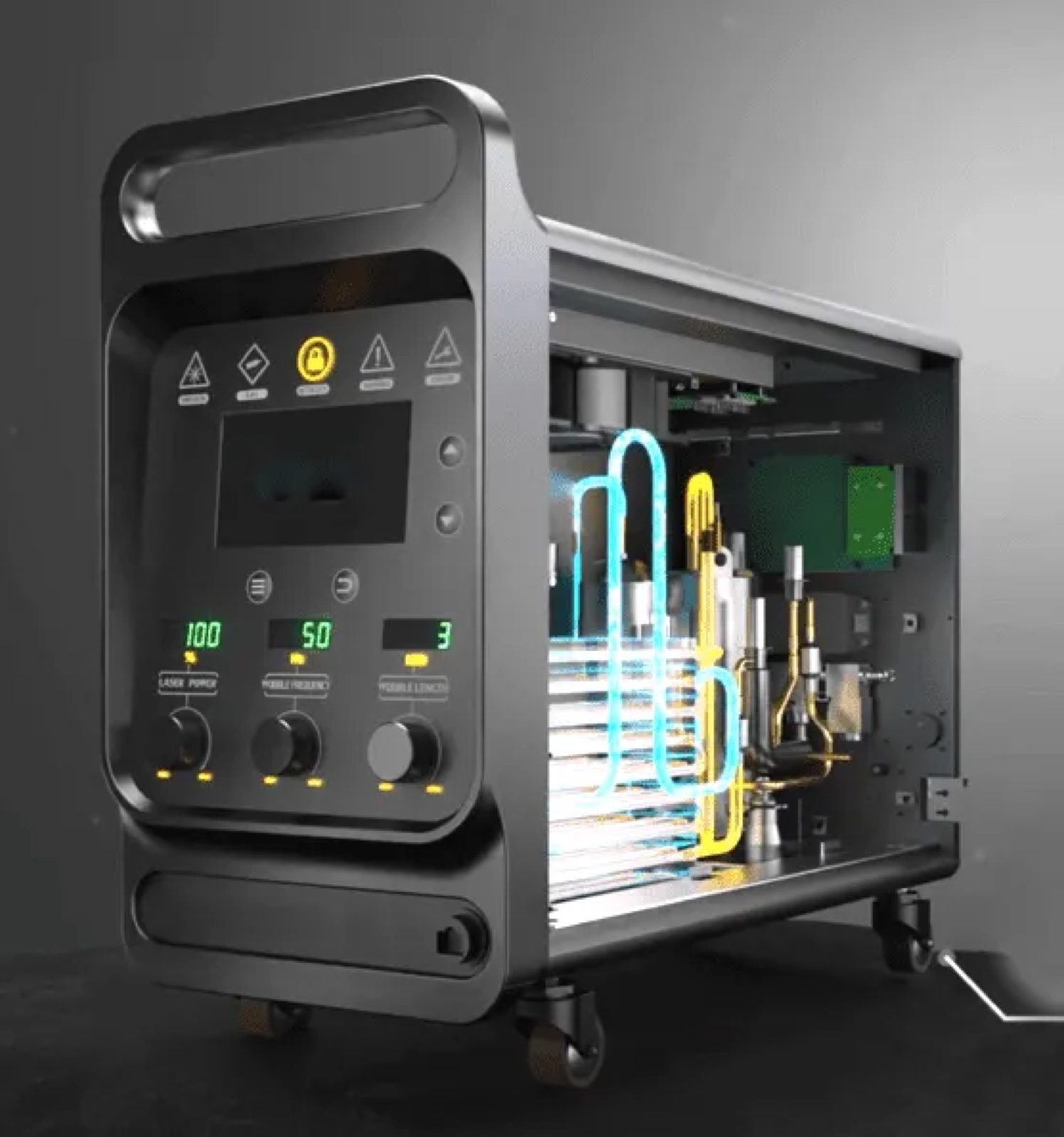
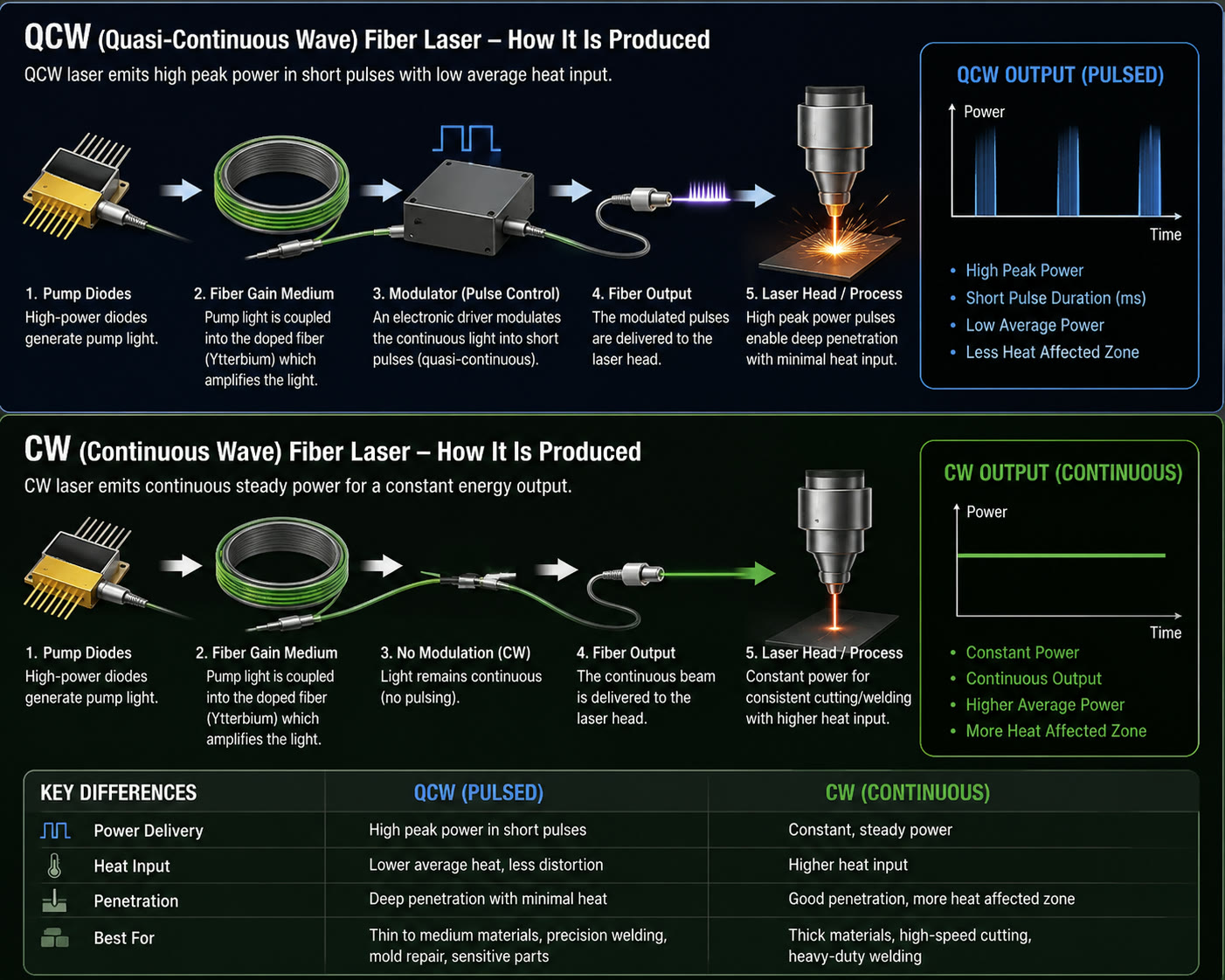
- The STR refrigerant-cooled laser welders have a built-in library of more than 20 welding process packages. The operator picks the material and thickness instead of tuning power and pulse settings by feel.
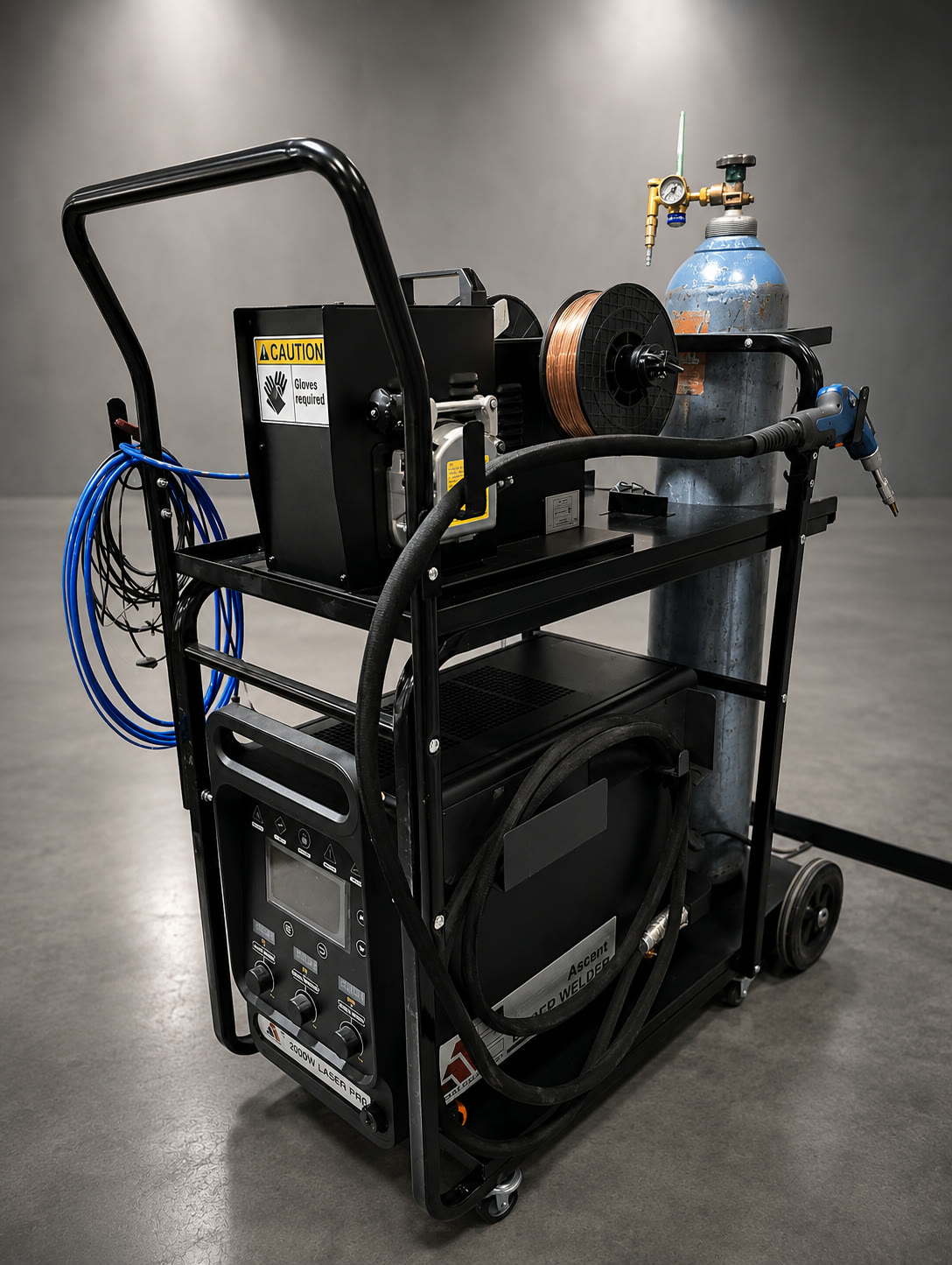
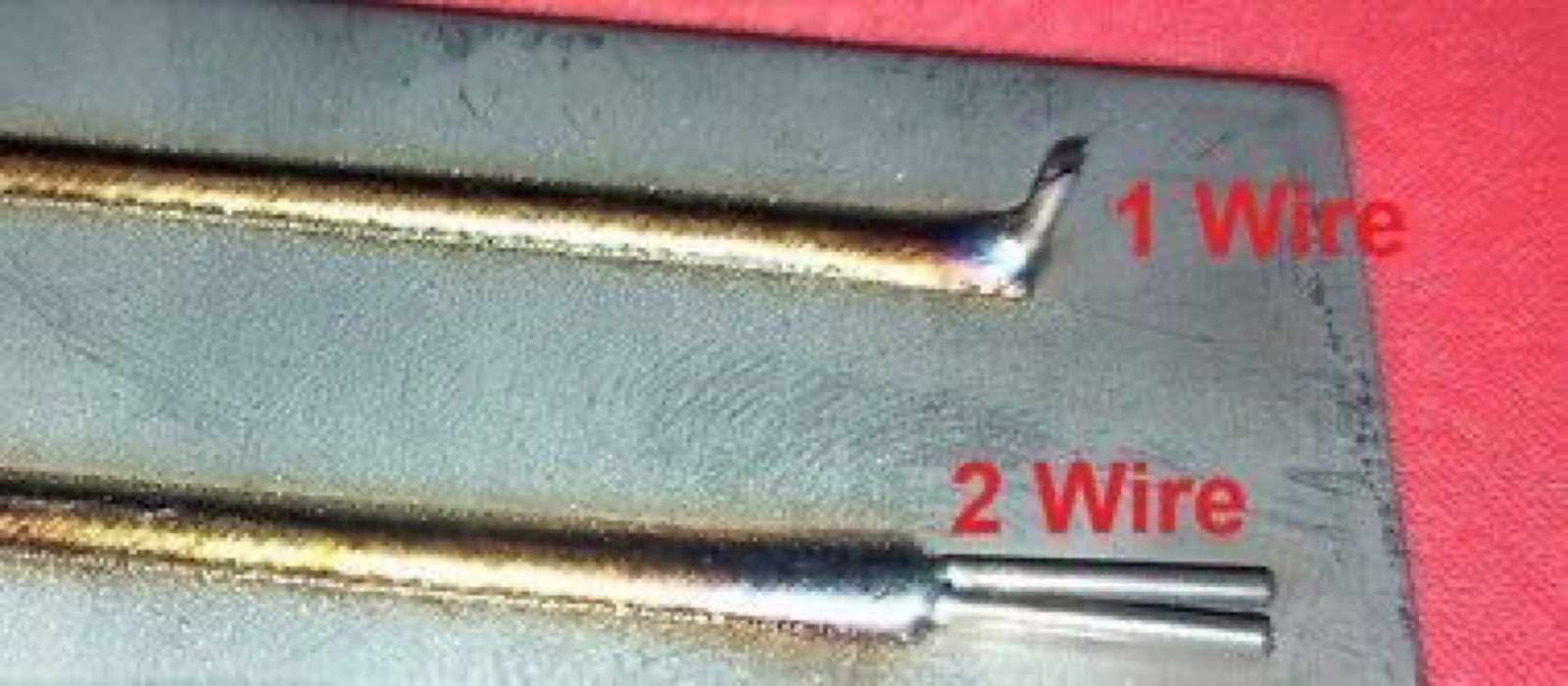
- A wire feeder pushes the filler into the joint, so the operator keeps one hand on the torch and has no rod to coordinate. On Ascent's handheld welders, a dual wire feeder handles larger gaps.
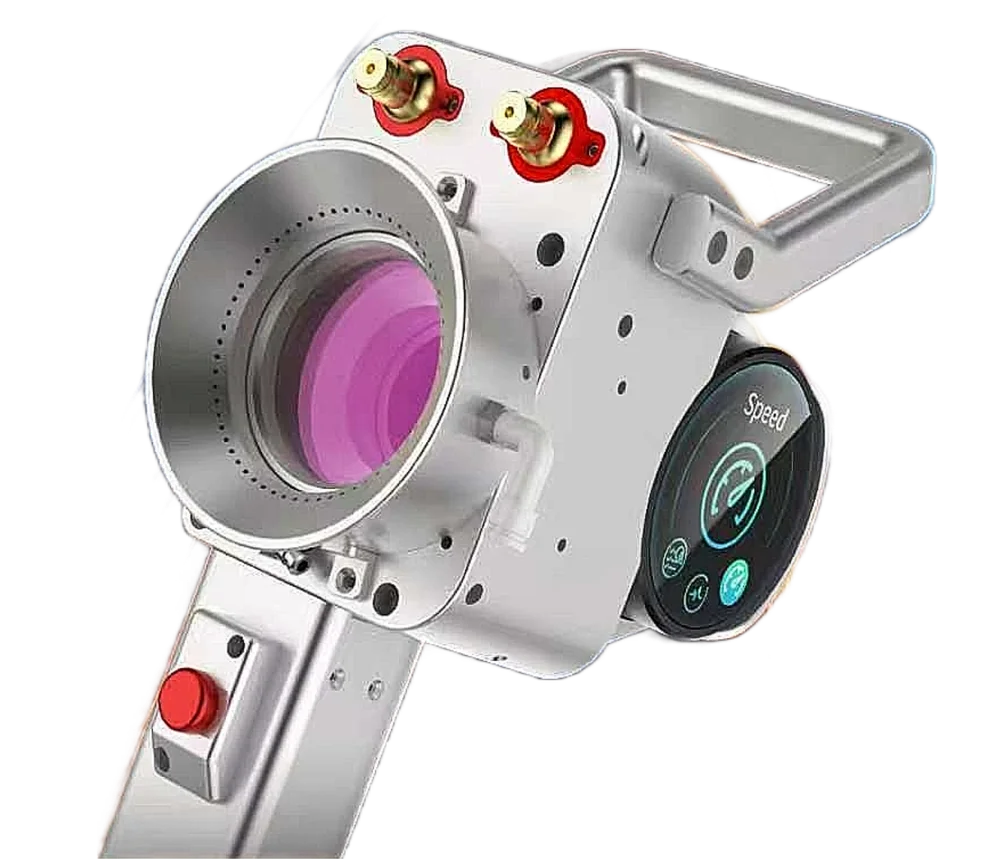
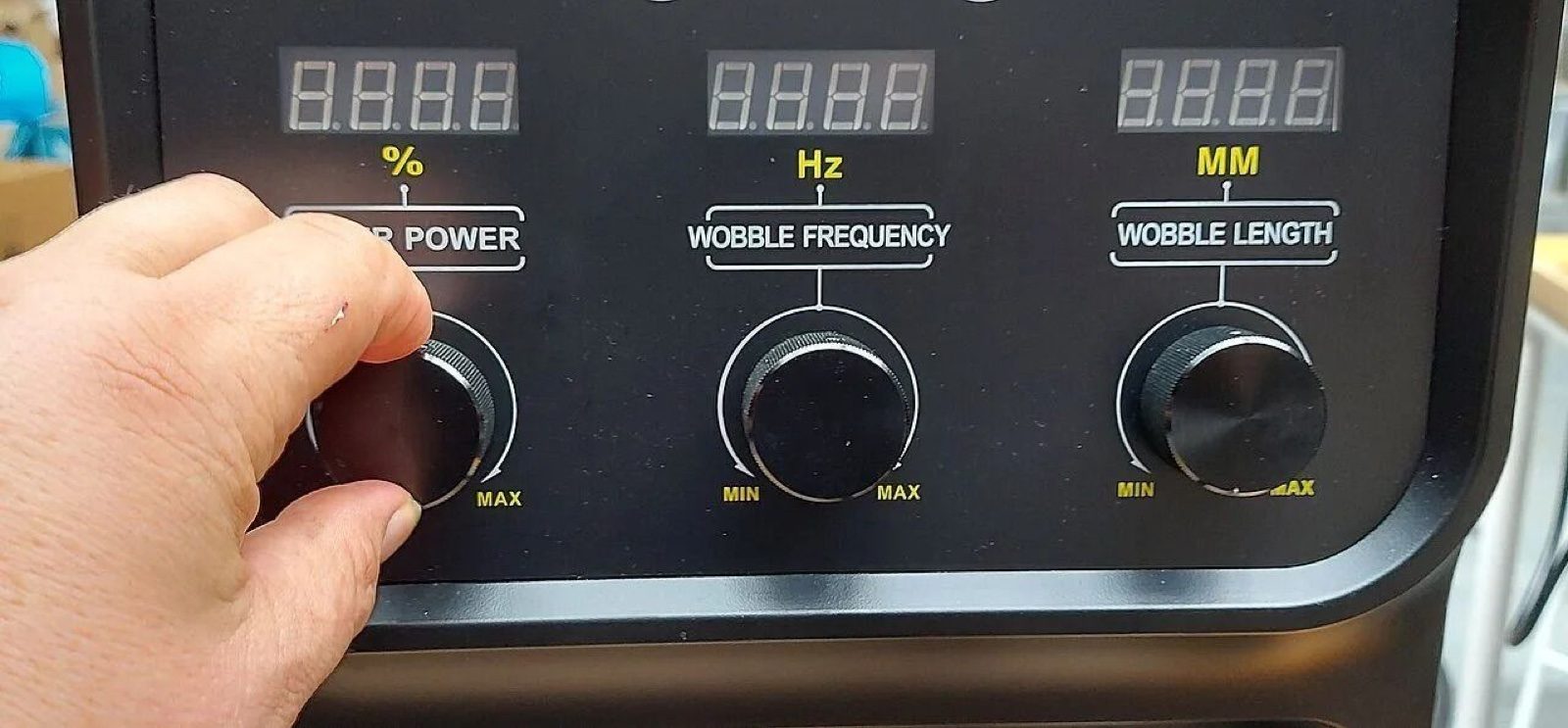
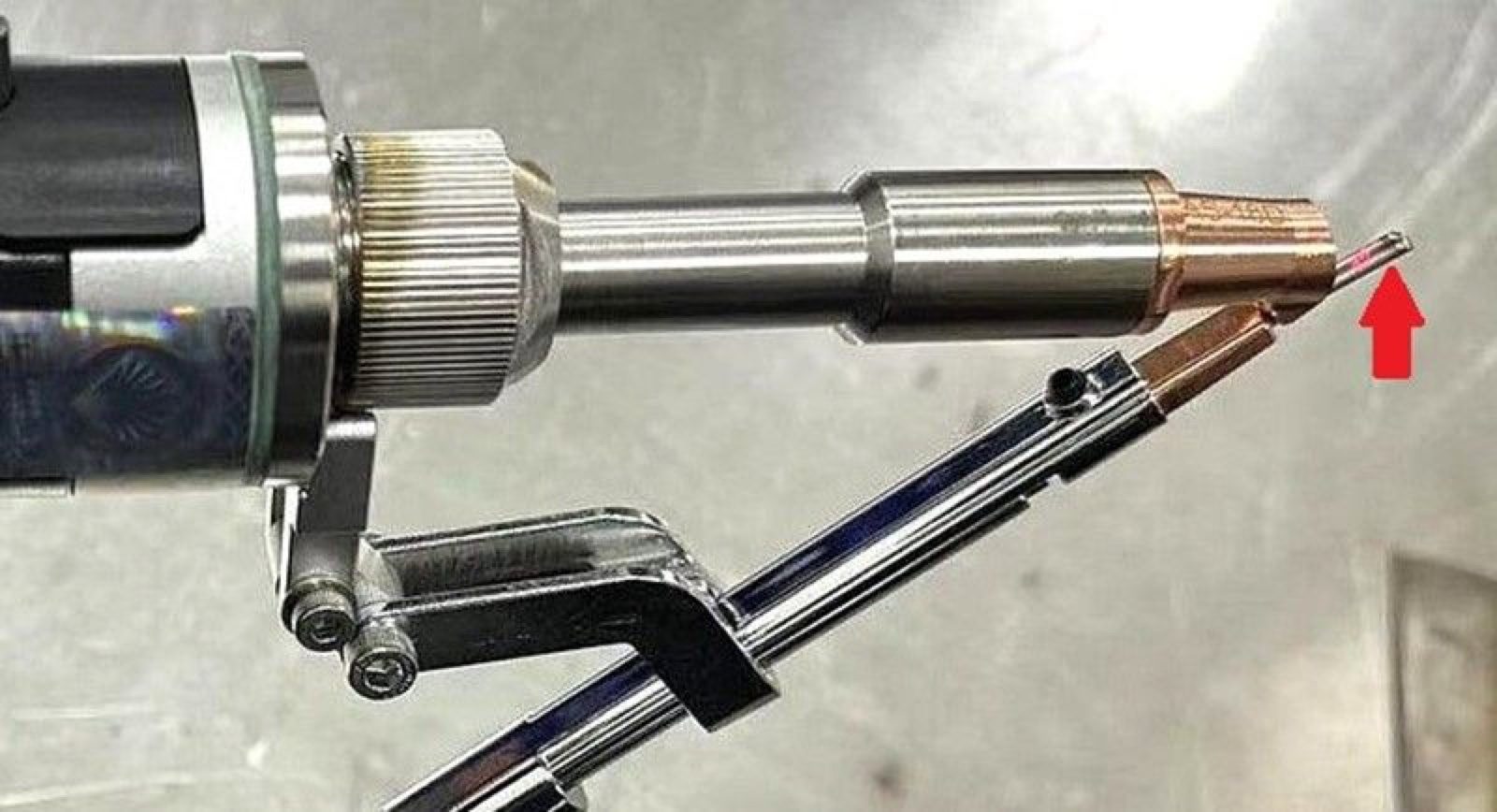
- A wobble head moves the beam in a small pattern. It widens the seam and follows contoured seams without the operator weaving by hand.
- The beam puts its energy into a small spot, so there is far less heat. Thin parts warp less and need less straightening and grinding afterward.
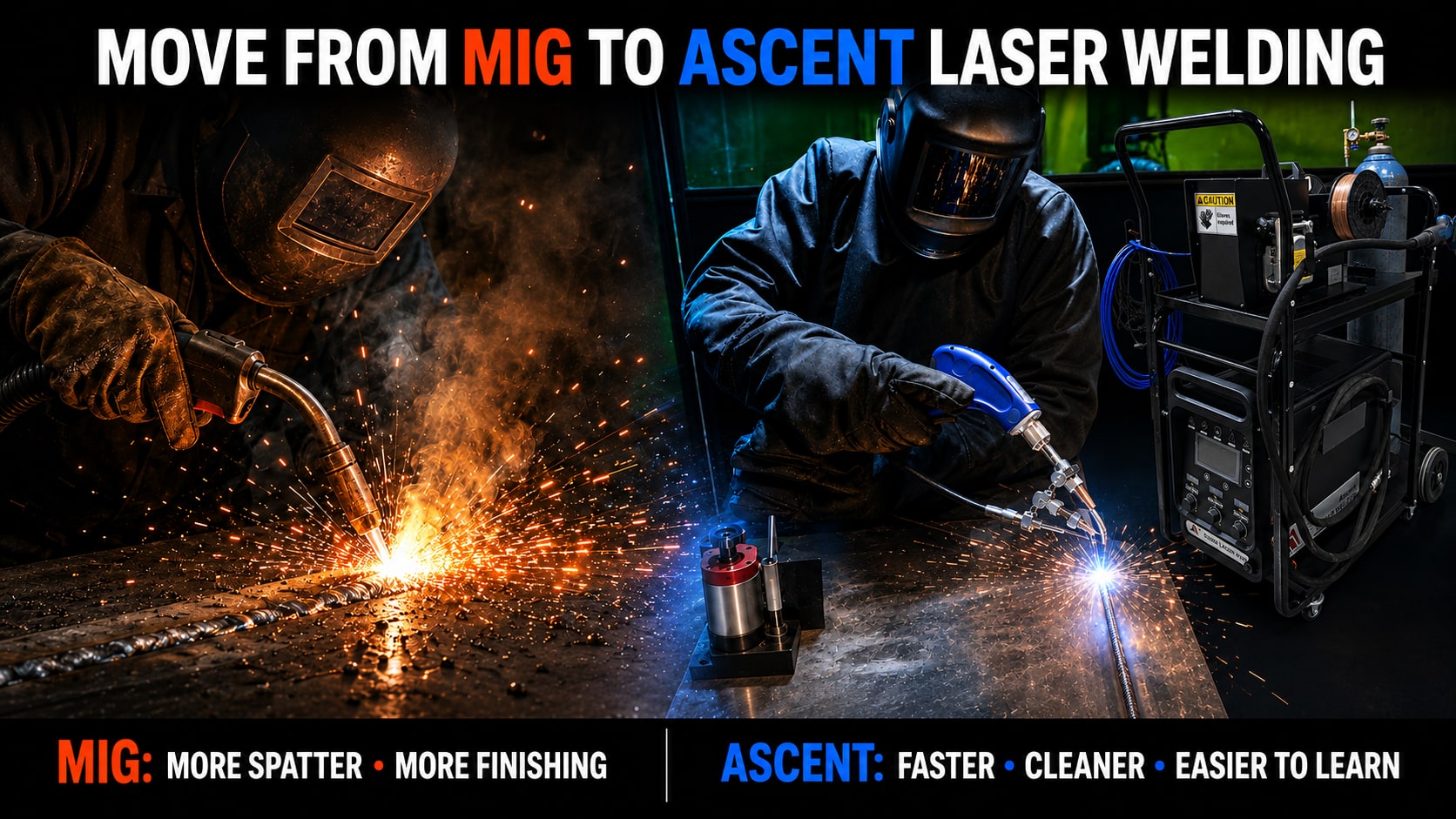
Manufacturers say suitable handheld systems are easier to learn than traditional welding and give consistent results on the materials and thicknesses they support. Many quote travel speeds up to four times faster than TIG. Test that on your own parts before you count on it.
That means a shop can hire reliable people with little or no welding experience and train them. A new worker learns one operation, practices on samples and moves on to customer work once the results pass. The basics may come easily. Good, dependable work still takes practice, inspection and someone to guide them.
What beginners can achieve
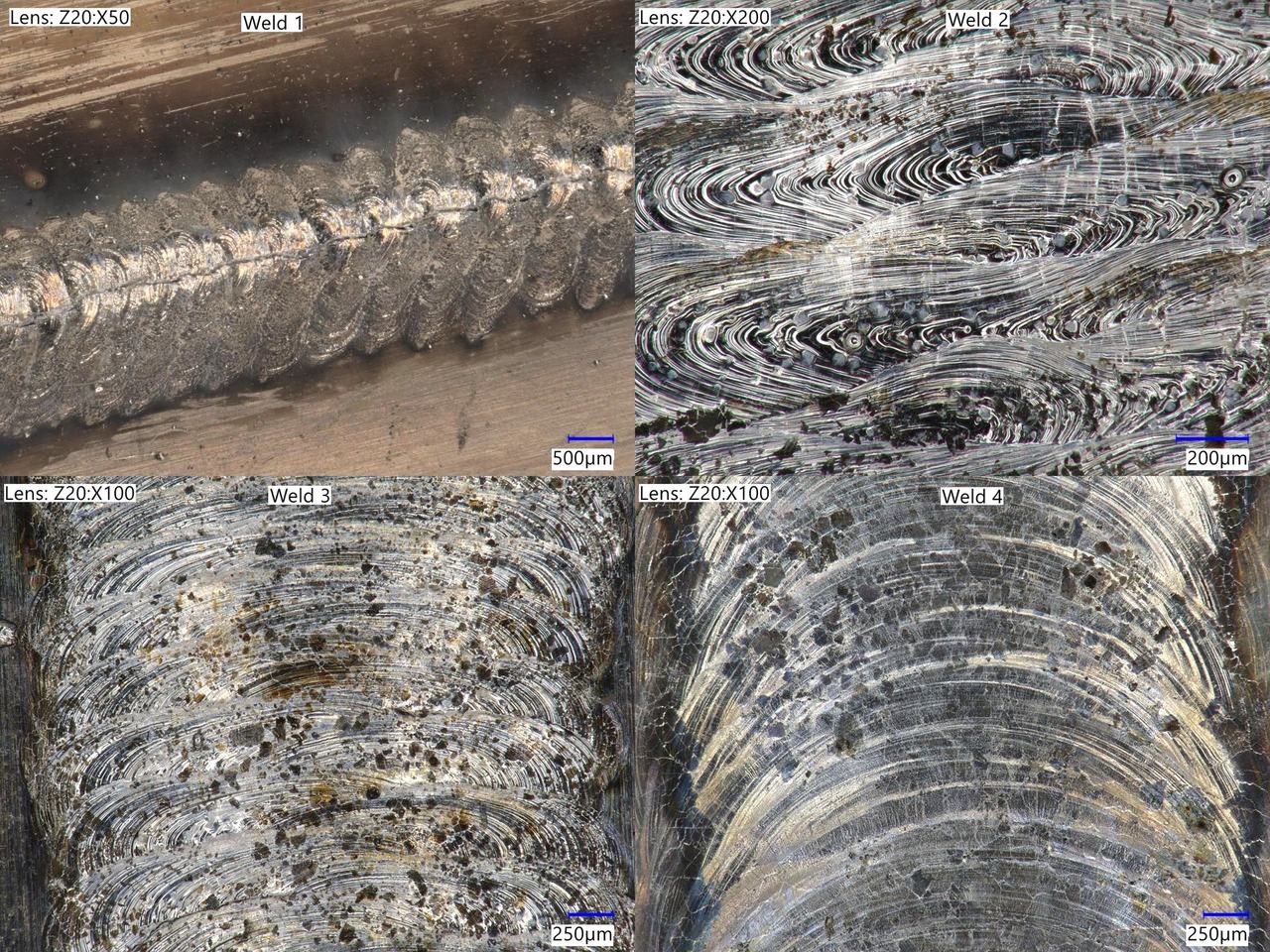
How much does the operator's experience matter? A thesis at Politecnico di Milano had professional and first-time operators weld stainless steel with a handheld laser. The mechanical properties of the welds didn't depend on who made them. The differences were mostly in how even the seam looked, and that's what training and practice improve fastest.
We see the same thing. Ascent technicians give 3 to 4 hours of operator training, and after it, operators who had never welded aluminum before can weld very thin aluminum. Thin aluminum is one of the hardest jobs for a new TIG welder.
When your experienced aluminum welders retire
Your workforce is getting older. In a lot of shops, a few experienced aluminum welders do the hardest work, and some of them will retire soon. Replacing one is hard, and finding another experienced aluminum welder can take months.
With a laser welder, you don't have to find those same skills again. Entry-level people can learn to run approved aluminum jobs on it, as the training results above show, while your remaining experienced staff set up the work and check it.
Start before anyone retires. While your experienced welder is still with you, have them set up the procedures and fixtures for your regular aluminum parts and train the new operator on them. That way, what they know stays in the shop after they leave.
Turning experience into a repeatable process
Your experienced fabricators set the parameters, choose the fixtures, show the technique and approve a finished sample. From then on, the new operator follows the same steps: prepare the material, select the approved program, weld, and compare the result with the approved sample.
For example, a shop can teach a new employee to weld one aluminum or stainless steel seam using the same material, the right fixtures and a proven procedure. Once they do that well, the shop can add more assemblies and materials.
Where companies can save money
The money comes from cutting the total work it takes to deliver a good part. Look at preparation, processing, finishing and inspection together.
| Potential saving | How the process can help |
|---|---|
| Training | Clear controls and approved procedures can shorten learning for defined tasks. |
| Production labor | Faster processing on suitable jobs can reduce time per finished part. |
| Finishing | Controlled heat input can reduce grinding, polishing and straightening. |
| Scrap and rework | Proven settings, fixtures and inspection help prevent repeated errors. |
| Skilled worker capacity | Trained operators handle routine work while experienced staff focus on complex jobs. |
| Overtime and subcontracting | More capacity in the shop may reduce outside processing or overtime. |
How much you save depends on the equipment, the materials, your product mix and volume, and how the shop works now. On jobs that suit it, the low heat input of laser welding and the reduced finishing help.
Example: saving production time
Say a shop makes 100 assemblies a week, and welding and finishing take 20 minutes each. If a validated laser process cuts that to 12 minutes, the shop saves 8 minutes per assembly.
| Calculation | Illustrative result |
|---|---|
| Time saved on 100 assemblies | 13.3 hours per week |
| Experienced welder's total pay package (high end) | USD $48 per hour |
| Value of the hours freed up | About USD $640 per week |
| Over 50 production weeks | About USD $32,000 a year |
These cycle times are assumptions, not measured results. The freed-up hours let you produce more, and they turn into cash only when they cut spending on overtime, temporary labor or outside work. Count the equipment, safety controls, training, maintenance and operating costs too.
Comparing hourly pay for aluminum welding
Aluminum TIG welding takes real skill, because the welder has to control heat, torch movement and filler wire together. On repeatable aluminum jobs that suit a laser, a trained entry-level employee can do an approved task while an experienced fabricator supervises.
That lowers the hourly cost of routine work, and your experienced aluminum welders can move to complex assemblies, process development and quality control.
An employee costs more than their wage. Benefits, payroll taxes and other employment costs add to every hour. These are the ranges we budget for an experienced welder:
| Experienced welder | Base hourly wage | Total package value (with full benefits) |
|---|---|---|
| United States | $24.00 – $32.00 USD | $35.00 – $48.00 USD |
| Canada | $30.00 – $45.00 CAD | $42.00 – $60.00 CAD |
The comparison below uses the top of the total package for the experienced welder. The entry-level laser operator's base wage, $22 USD or $24 CAD, gets the same benefits load (50% in the U.S., 33% in Canada), so both columns show total cost per hour. These are budgeting assumptions in U.S. and Canadian dollars, not published averages for these roles.
| Labor comparison (total package) | U.S. example (USD) | Canada example (CAD) |
|---|---|---|
| Trained entry-level laser operator | $33/hour | $32/hour |
| Highly experienced aluminum TIG welder | $48/hour | $60/hour |
| Difference in hourly cost | $15/hour | $28/hour |
| Reduction in hourly labor cost | 31% | 47% |
| Difference over 1,500 comparable production hours | $22,500/year | $42,000/year |
For context, the U.S. Bureau of Labor Statistics puts the highest-paid 10% of welders above $77,530 a year, about $37.27 an hour over 2,080 hours. Canada's Job Bank lists CAD $22–$47 an hour for the group that includes laser welding operators. Neither source breaks out these two roles or shows a pay gap by experience, so check what people actually earn where you hire.
Wage and time savings together
Using the U.S. total-package rates, here is a hypothetical aluminum assembly:
| Per assembly comparison | Experienced TIG welder | Trained laser operator |
|---|---|---|
| Hourly cost (total package) | USD $48 | USD $33 |
| Welding and finishing time | 20 minutes | 12 minutes |
| Direct labor cost per assembly | USD $16.00 | USD $6.60 |
That's USD $9.40 less in direct labor per assembly, or USD $47,000 on 5,000 assemblies a year. Check the cycle times and quality on your own parts. This example already combines both savings, so don't add it to either example above.
Building confidence and skills
A machine that's easier to run gives a new employee somewhere to start. Clear instructions and results they can see show them what good work looks like. When something goes wrong, a supervisor can tell whether the cause is preparation, positioning, movement or settings, and show them the fix.
As the new people improve, your experienced staff get more time for troubleshooting, complex work and quality. You grow your own talent, and more people can help with production.
Professional results take quality and safety
Looking good isn't enough. Welds have to meet the strength and performance the job requires, cut parts have to hold their tolerances, and cleaned surfaces have to be ready for the next step.
On aluminum, the alloy, thickness, fit-up, surface prep and inspection all decide whether a job suits a new laser operator. Structural or other demanding work may need qualified procedures, qualified operators and testing.
TWI, the UK welding research institute, notes that laser welding is sensitive to fit-up and to where the beam lands. With a new operator, watch three things:
- Keep gaps tight. A laser weld adds very little filler compared with an arc weld, so a gap an arc welder would fill can leave a weld that looks fine on top with little fusion underneath. Tight fit-up, enough tacks and good clamping matter more than they do with MIG. Our guide to fit-up and gap control goes into detail.
- Watch the torch angle. Holding the beam at the wrong angle to the surface is one of the most common operator mistakes, and it's easier to fix early than to unlearn later.
- Clean the surface. Oil, paint and heavy oxide spoil laser welds more easily than arc welds.
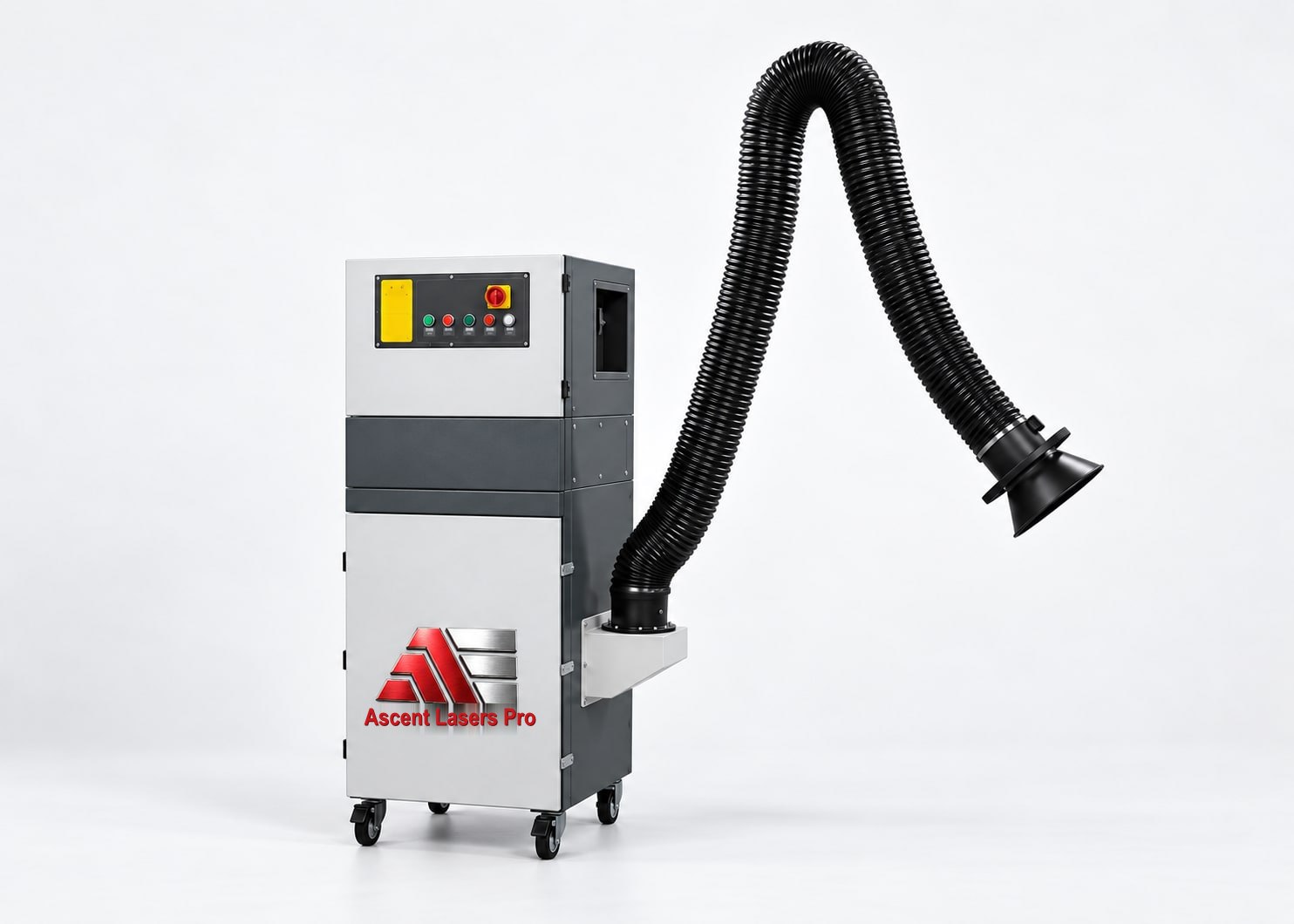
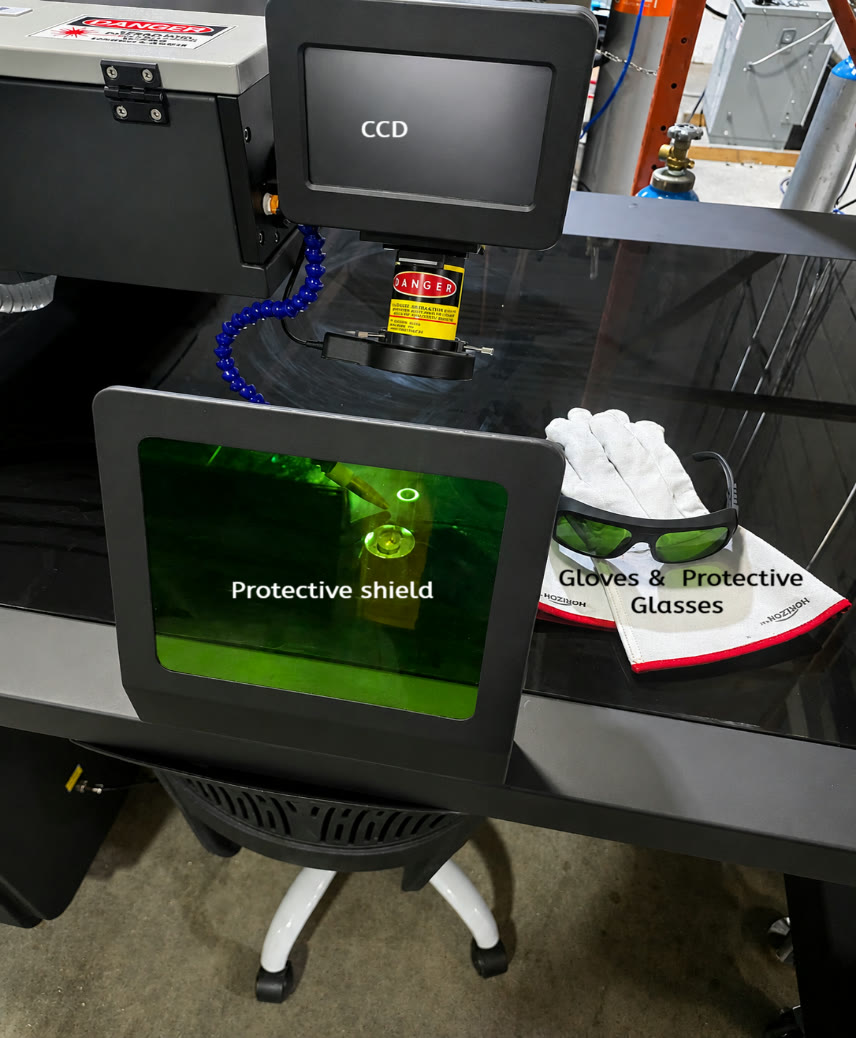
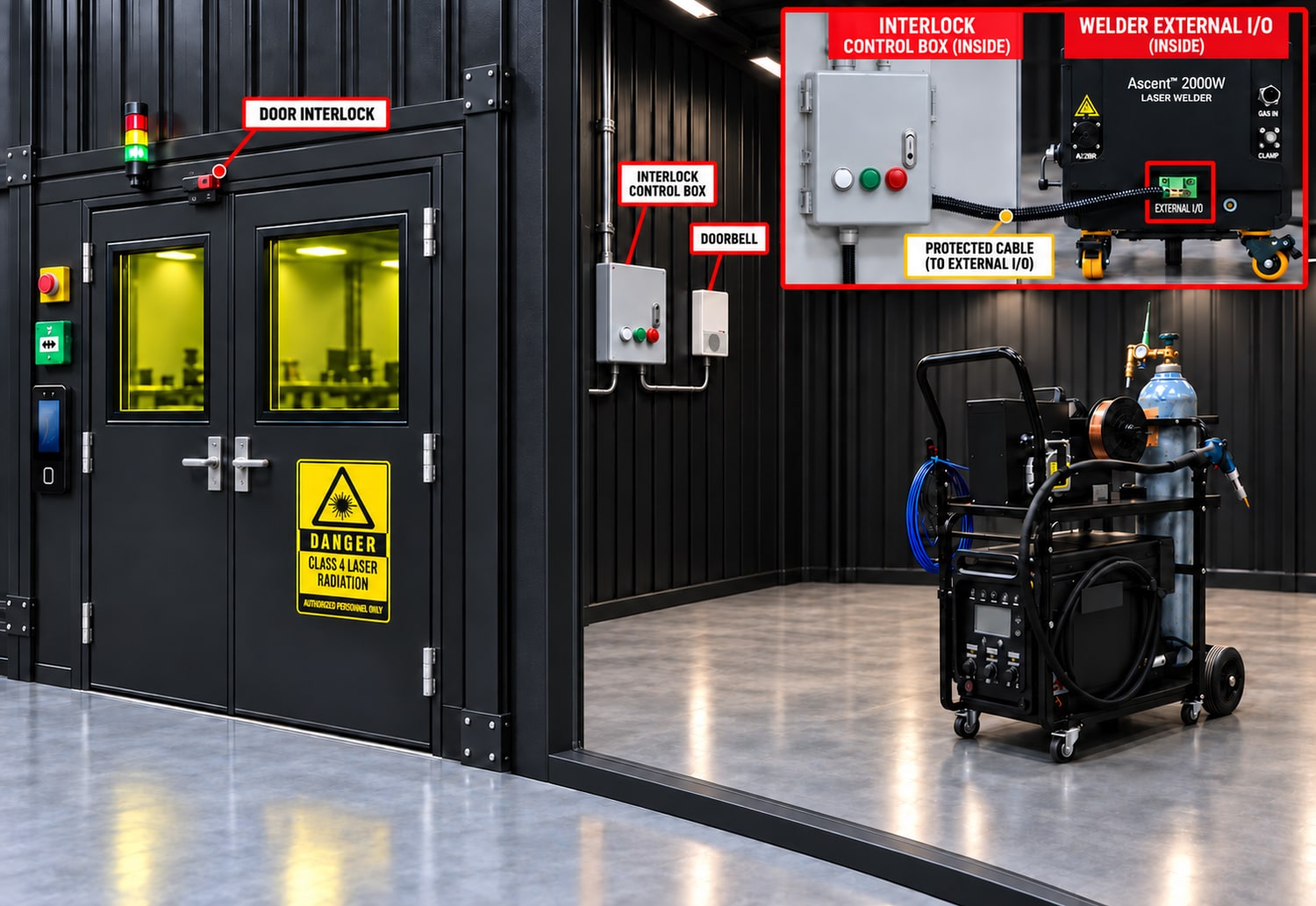
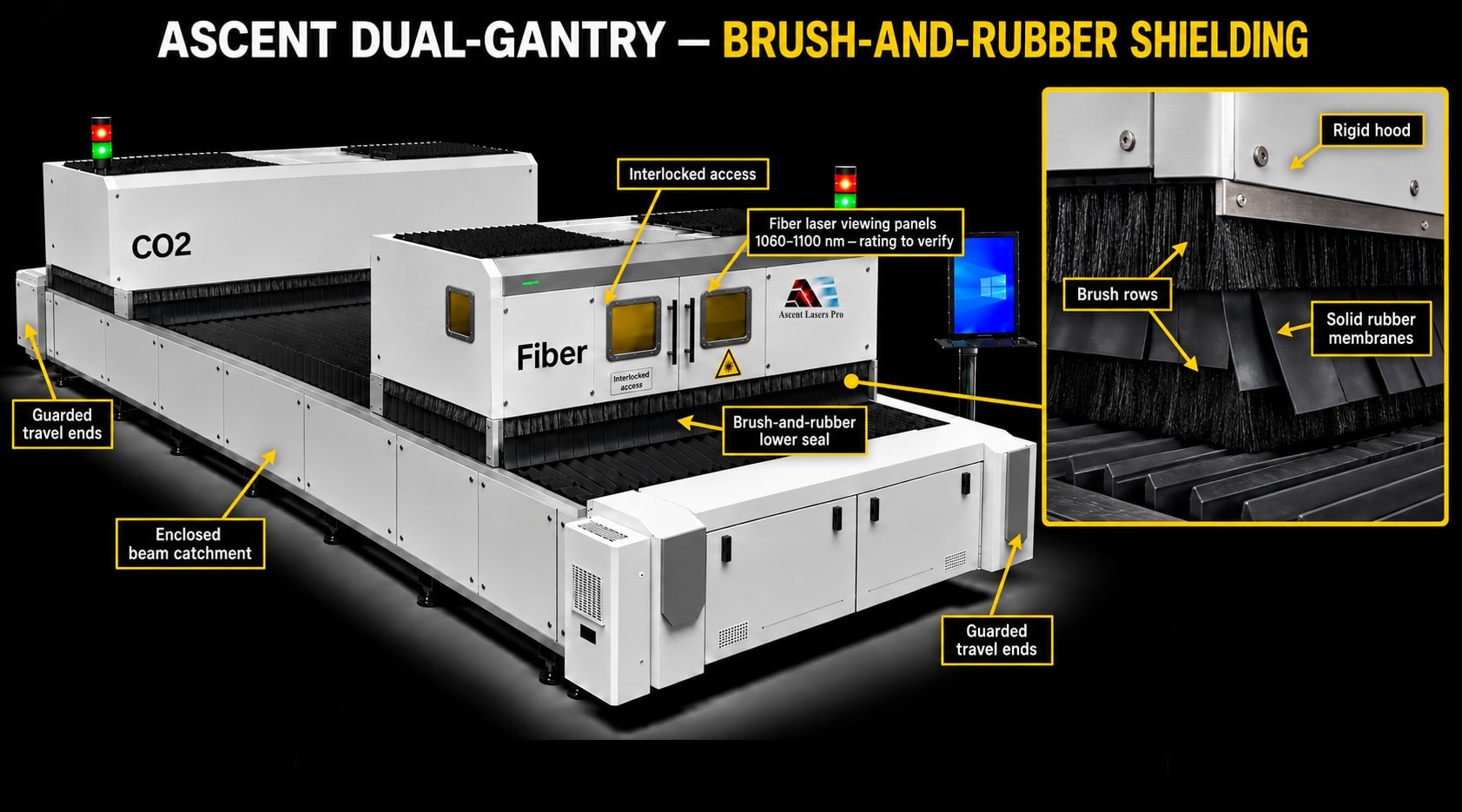
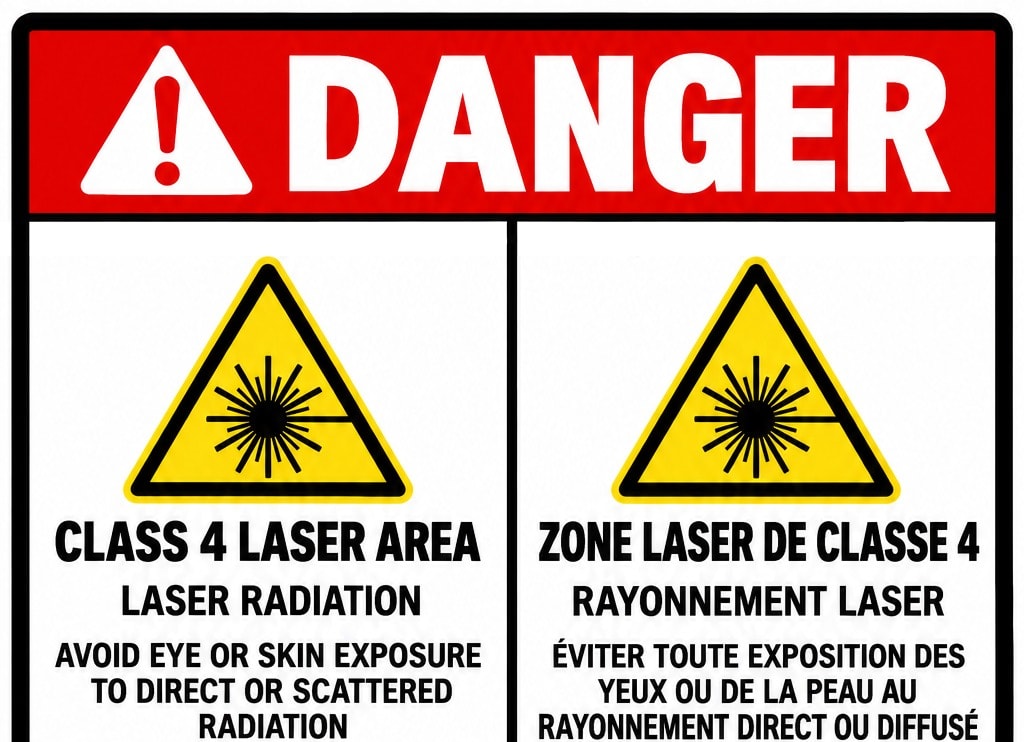
A machine that's easy to run still needs proper safety training. Industrial lasers can cause serious eye and skin injuries, start fires and give off harmful fumes. You need beam containment, controlled access, interlocks, fume extraction and the right protective equipment. Laser safety eyewear must match the laser's wavelength: minimum OD 5; prefer OD 7 or 8. OSHA's guidance calls for a hazard assessment, training and a managed laser safety program. See our laser safety page for details.
Cleaning and cutting help too
Two other laser tools take skilled steps out of the job:
- A laser cleaning machine strips rust, paint and oil from the joint area without sandblasting or chemicals. A new worker can learn it quickly, and clean joints make laser welds more forgiving.
- A CNC fiber laser cutter cuts parts from a program, so they come out the same every time. Accurately cut parts fit together with small, even gaps, which makes welding easier for everyone.
Setting up a new operator
- Start with safety training and a marked laser-controlled area. Minimum OD 5; prefer OD 7 or 8.
- Begin on simple lap and butt joints in thin stainless steel or aluminum. Those joints are the most forgiving.
- Save the settings that work for each material and thickness, label them and have everyone use the same ones.
- Fixture the parts and check gaps before every weld until it becomes a habit.
- Cut and inspect sample welds in the first weeks, so you find problems on scrap instead of on finished parts.
- Use remote support for refreshers instead of waiting for the next site visit.
Weighing the investment
Judge it by the total cost per accepted part. Count wages, payroll costs and benefits, training, supervision, the equipment or its financing, safety controls, extraction, consumables, maintenance and rework. A lower hourly wage only helps if the process still delivers the quality you need at a reasonable cost.
To put a number on it: the 2000W handheld welder costs USD $28,000, including shipping, installation and training. At the USD $32,000 a year from the production-time example, it would pay for itself in about 10 and a half months. That's before safety equipment and operating costs, and only if the freed-up hours become real savings or extra sales.
On the right jobs, a laser welder makes the work easier to learn and cheaper to do. New workers get a way into production, and your experienced fabricators get help with the routine work. The shop can cut labor time and take on more.
What Ascent provides
The Ascent 2000W handheld fiber laser welder costs USD $28,000 and the 3000W costs USD $34,000, including shipping, installation and training. The training takes 3 to 4 hours with an Ascent technician at your shop. For Canadian orders, the price is calculated in Canadian dollars at the exchange rate when the order is placed. The handheld laser welder has a 2-year warranty, and remote technical support lasts for the life of the machine. AnyDesk remote desktop software comes installed, so a technician can connect quickly to help or retrain an operator. Our technicians work from Buffalo, Toronto and Kentucky.
If finding experienced welders is slowing you down, contact us and tell us about your parts and your team.
Sources and basis for the examples
[1] American Welding Society, welding workforce data (2025): weldingworkforcedata.com
[2] U.S. Bureau of Labor Statistics, Welders, Cutters, Solderers, and Brazers, May 2025 wages: bls.gov
[3] Government of Canada Job Bank, Laser Welding Operator in Canada, wage reference period 2023–2024, updated November 19, 2025: jobbank.gc.ca
[4] OSHA Technical Manual, Section III Chapter 6, Laser Hazards: osha.gov
[5] TWI, "Handheld laser welding: what to consider" (2023): twi-global.com
[6] Politecnico di Milano, thesis on handheld laser welding with professional and first-time operators: politesi.polimi.it
Wage rates and production times in the savings tables are illustrative assumptions. Sources reviewed October 9, 2026.