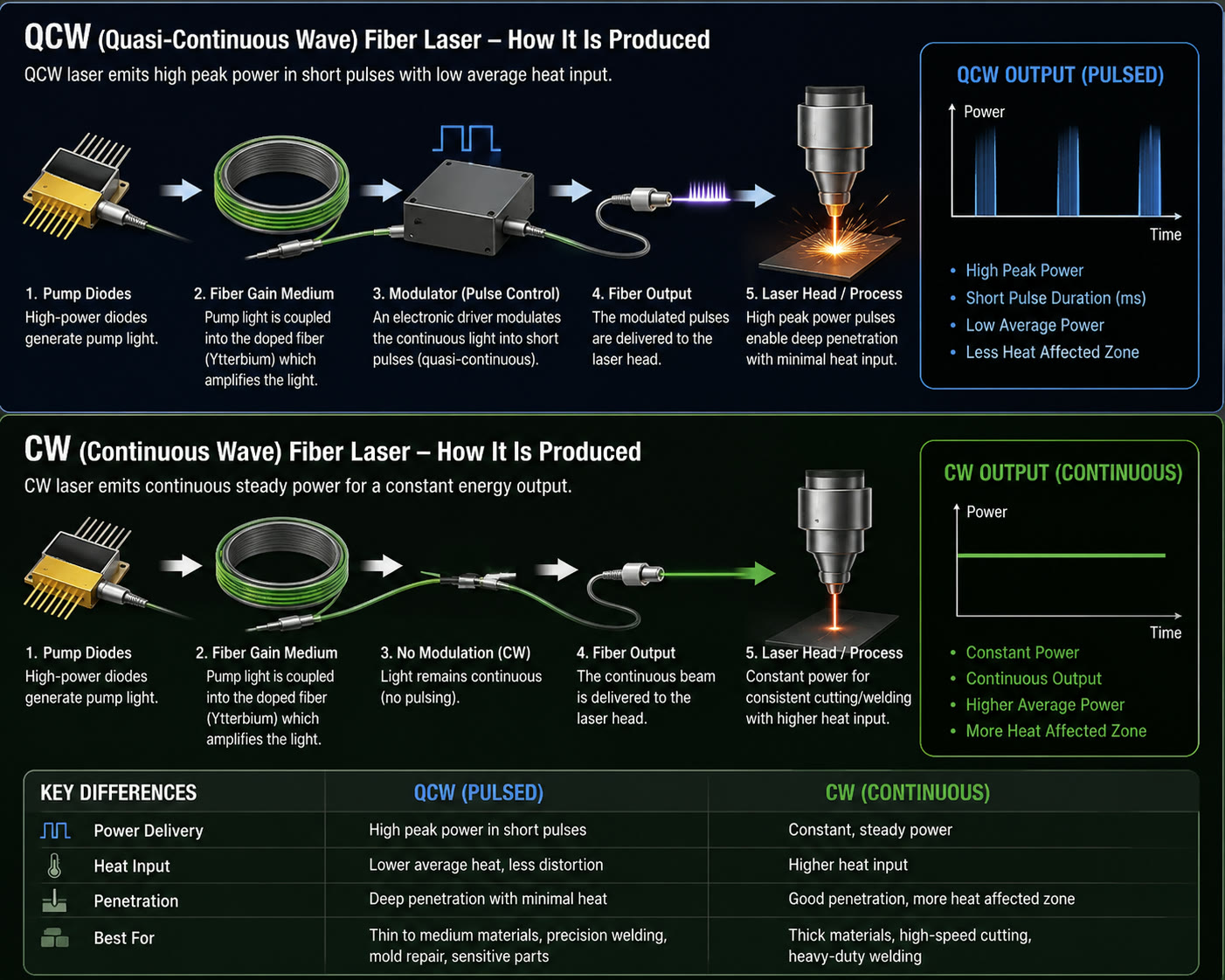
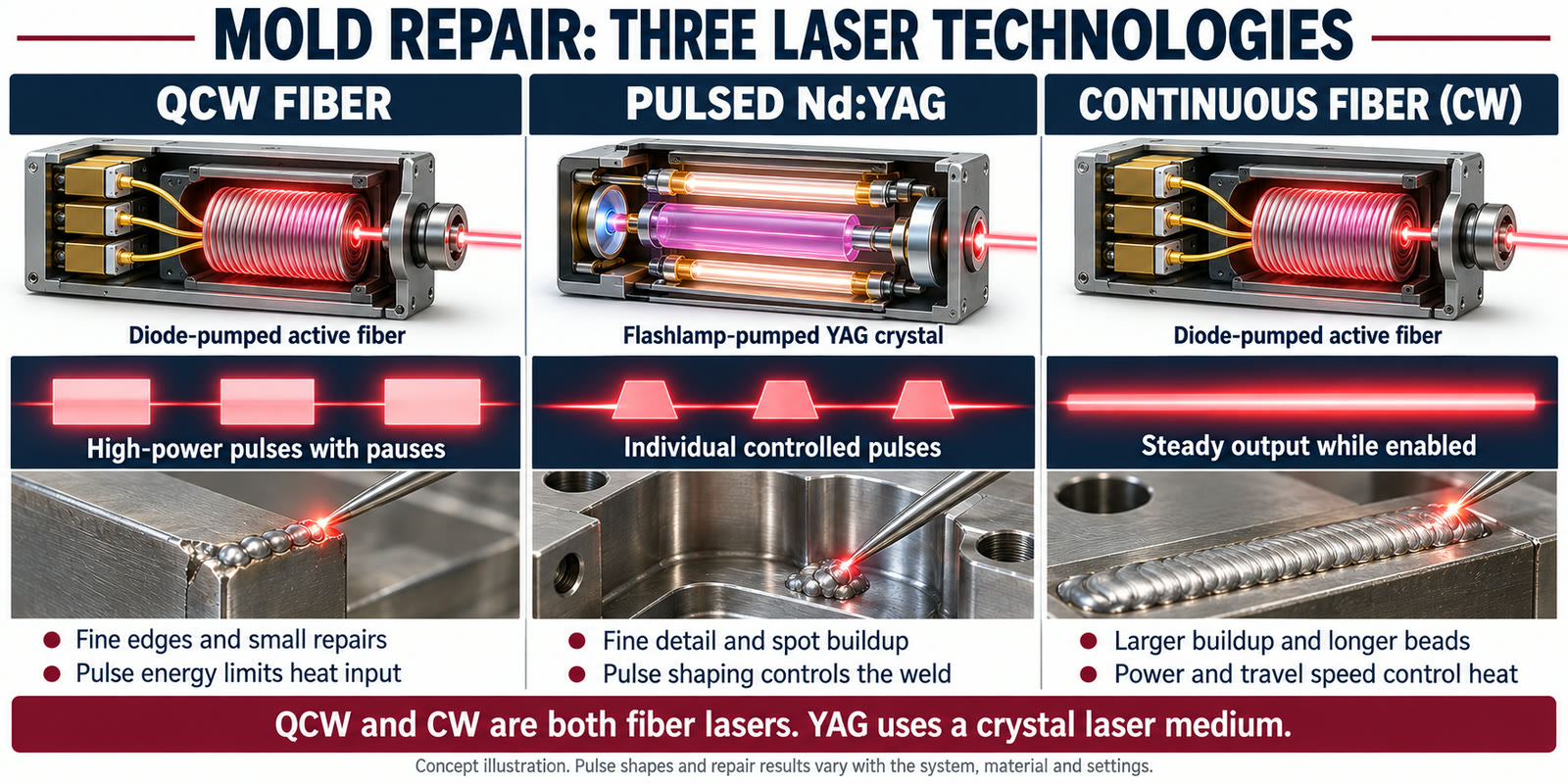
People shopping for a mold repair laser keep running into three terms, "YAG," "fiber" and "QCW," as if each were a separate product line. They are not quite that. "YAG" usually means a pulsed Nd:YAG laser, a crystal laser. "Fiber" describes how the beam is generated. "QCW" is a pulsed way of running a fiber laser. QCW is a fiber laser too, so the useful comparison is between three types: QCW fiber, pulsed Nd:YAG and continuous fiber (CW).
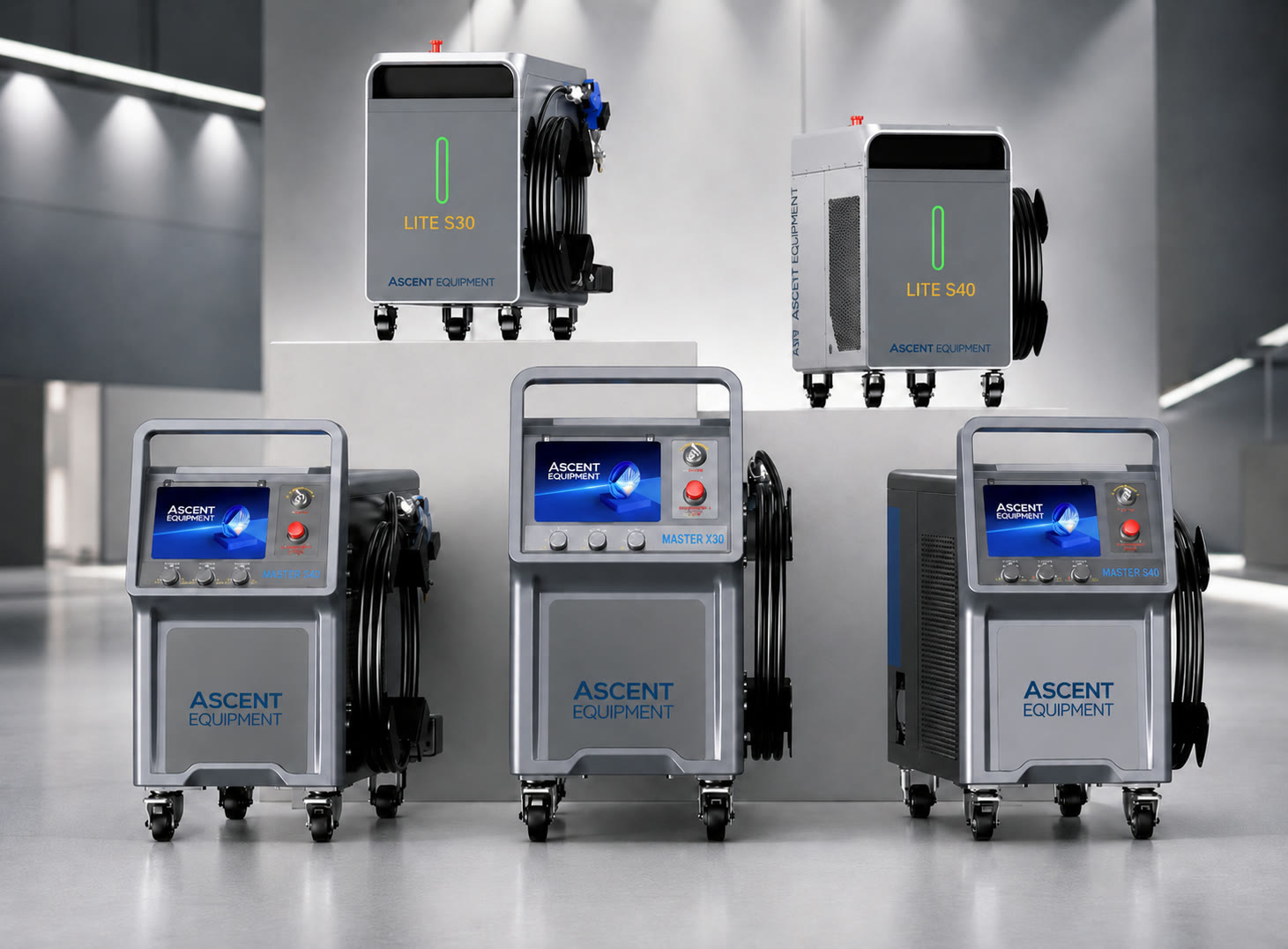
Ascent offers all three for mold repair:
- 150W and 300W QCW fiber lasers, with peak power of 1500W and 3000W
- 200W and 400W pulsed Nd:YAG lasers
- 1500W and 3000W continuous fiber (CW) lasers
How the three compare
| Feature | QCW fiber | Pulsed Nd:YAG | Continuous fiber (CW) |
|---|---|---|---|
| Laser medium | Fiber | Nd:YAG crystal | Fiber |
| Wavelength | About 1080 nm | 1064 nm | About 1080 nm |
| How the power is delivered | Powerful pulses with pauses between them | Short, individually controlled pulses | A steady beam |
| Average heat into the part | Low | Low | Higher |
| Electrical efficiency | 25% to 40% | 3% to 5% | Similar to QCW |
| Upkeep | No flash lamp to replace | Flash lamps, reflectors and optics wear | No flash lamp to replace |
| Typical role in mold repair | Precise repairs and controlled buildup of metal | Rebuilding worn edges, corners and small defects | Larger repair areas, faster on bigger fills |
The wavelength is nearly the same
YAG light is at 1064 nm and fiber lasers sit around 1080 nm. That small difference barely changes how tool steel, a copper insert or an aluminum die absorbs or reflects the beam. What really differs is how the power is delivered over time and how well the beam focuses.
Beam quality and spot size
A Nd:YAG rod heats unevenly while it runs, which distorts the beam inside the rod. This effect, called thermal lensing, is a known weakness of rod lasers, and it makes their beam harder to focus to a small spot. A fiber laser keeps a tighter, steadier beam, so more of the power lands exactly where you aim. On a hairline crack or a fine edge, that is the difference between a clean bead and one that spreads wider than you want.
Running costs
A flash-lamp-pumped Nd:YAG laser turns about 3% to 5% of its electrical input into light. A QCW fiber laser converts about 25% to 40%. The gap means a larger chiller, a higher power bill and more heat in the shop for the same output. A YAG flash lamp also wears out, typically after 500,000 to 2,000,000 pulses, and the reflectors and optics around it age too. A fiber source has no lamp to replace.
Reflective metals and peak power
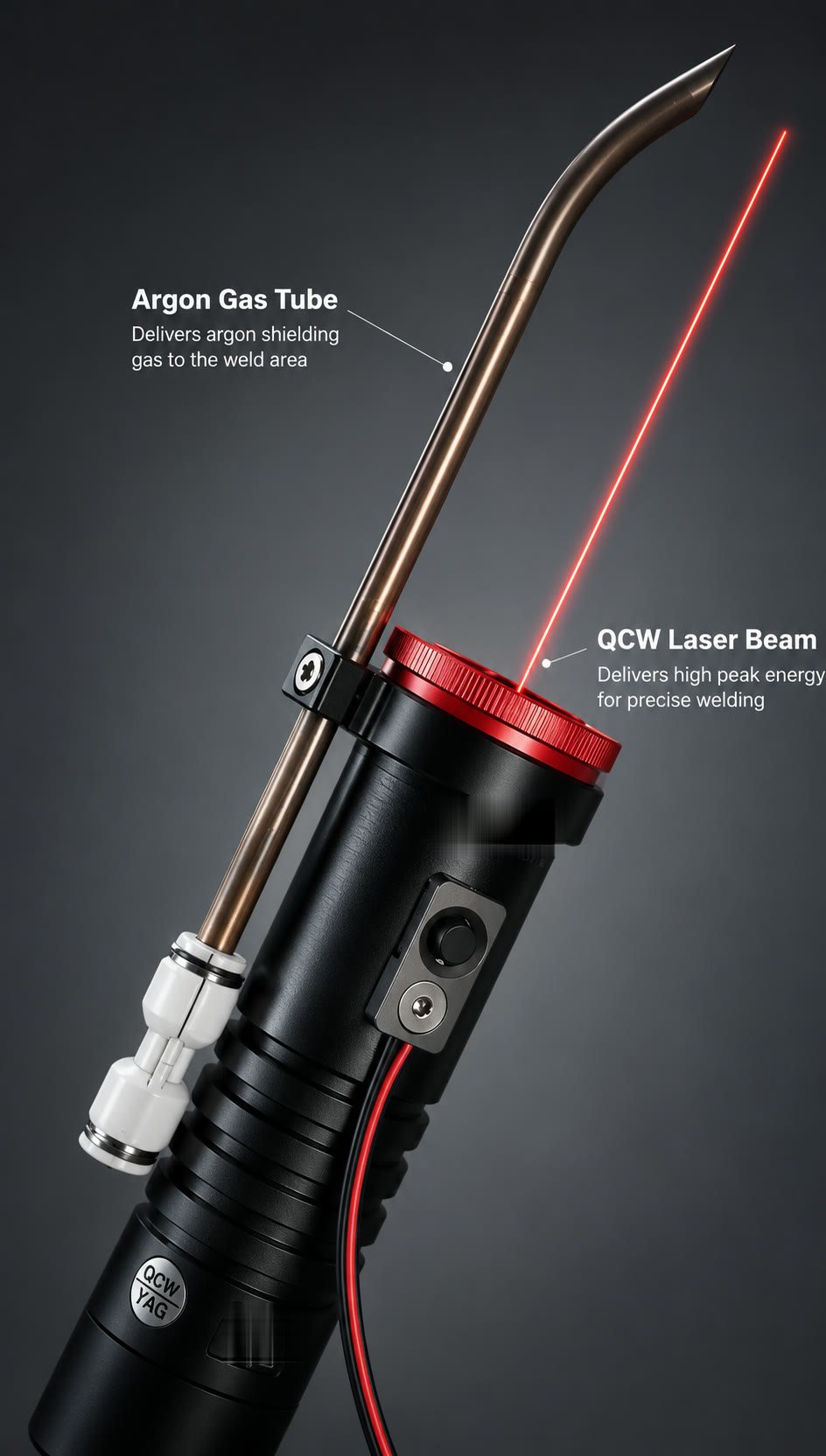
Much mold work involves bright, reflective metals: beryllium copper cooling inserts, polished cavity steel and aluminum die-casting tools. They can reflect most of the beam before a weld pool forms. A pulsed laser packs its energy into short bursts, so its peak power is far higher than its average rating. On a 300W QCW fiber laser, pulses peak at up to 3000W. That peak gets through the first reflection and starts a stable weld pool. A continuous laser at the same average power never makes that spike.
Matching the laser to the job
- Fine detail on tool steel. Pulsed Nd:YAG and QCW fiber both do well on common mold steels. QCW's lower average heat often means less grinding and polishing on a visible cavity surface.
- Reflective materials. Beryllium copper, brass and polished aluminum are where QCW's peak power helps most. A YAG system can weld them too, but consistent starts usually take more operator skill.
- Larger repair areas. Continuous fiber (CW) is often faster when there is more metal to build up. Because the beam is continuous, the heat has to be controlled carefully around delicate details.
Filler wire and the heat-affected zone
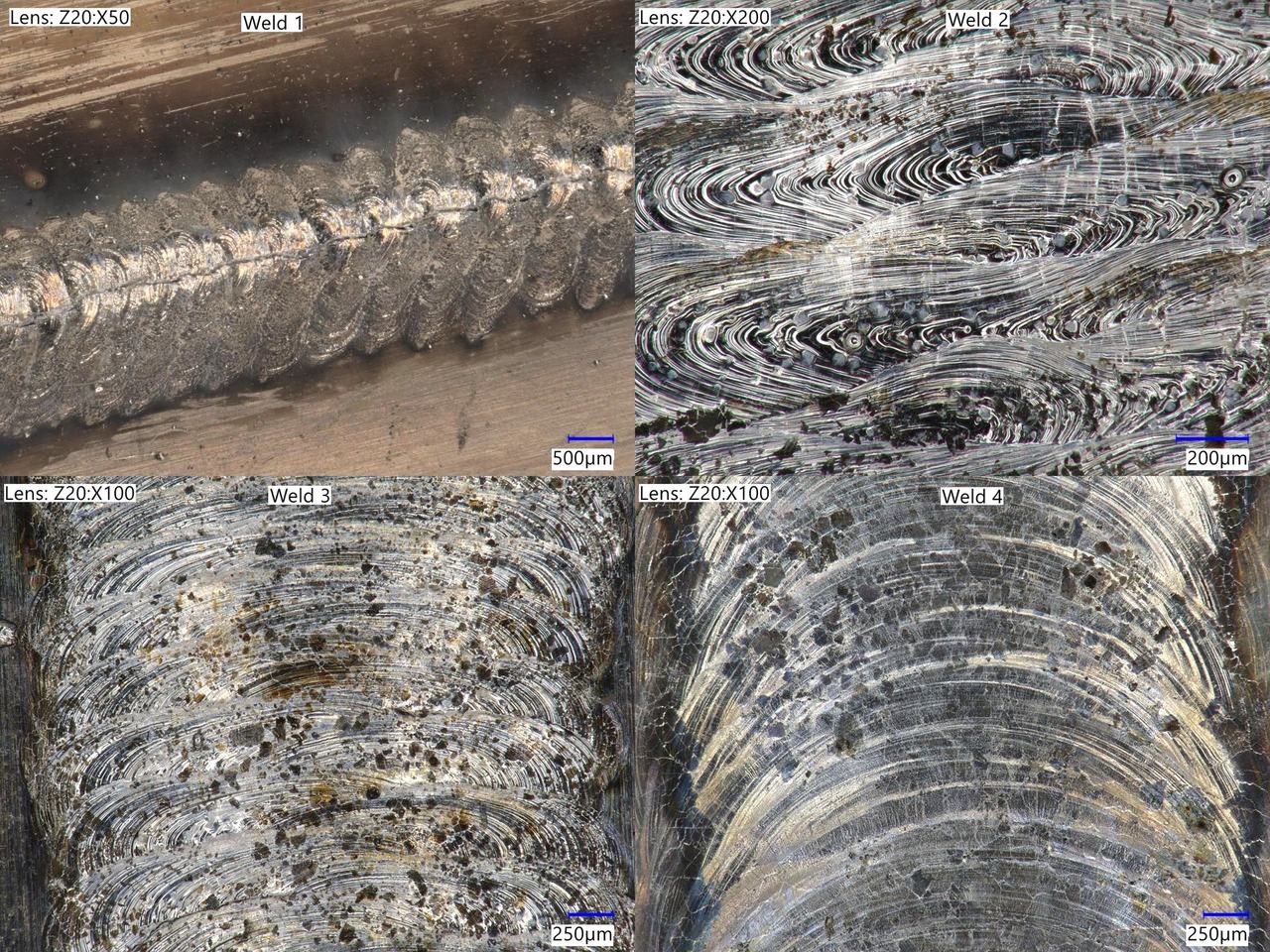
Whichever laser you use, choose filler wire that matches the base steel, such as H13 filler on H13 tooling and P20 on P20. The repair can then be machined, polished or EDM'd to match the surrounding cavity. Pulsed welding keeps the heat-affected zone narrow, which helps protect the hardness of the steel next to the repair. On heat-treated cavity steel, a wide softened zone beside a repair is a flaw in its own right.
Choosing for your shop
A shop already getting good results from pulsed YAG gains mainly lower running costs by moving to QCW fiber, plus better handling of reflective metals. A shop that rebuilds larger areas can add speed with continuous fiber. The right choice depends on the molds you repair and the size of the repairs.
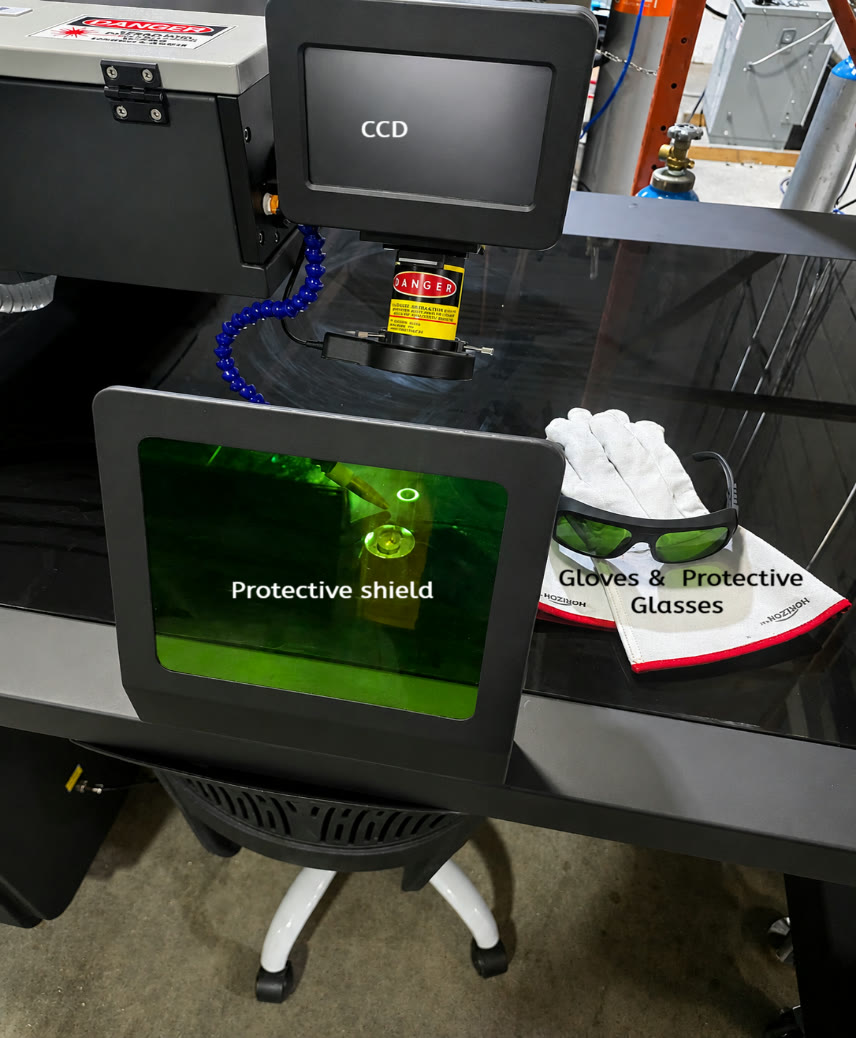
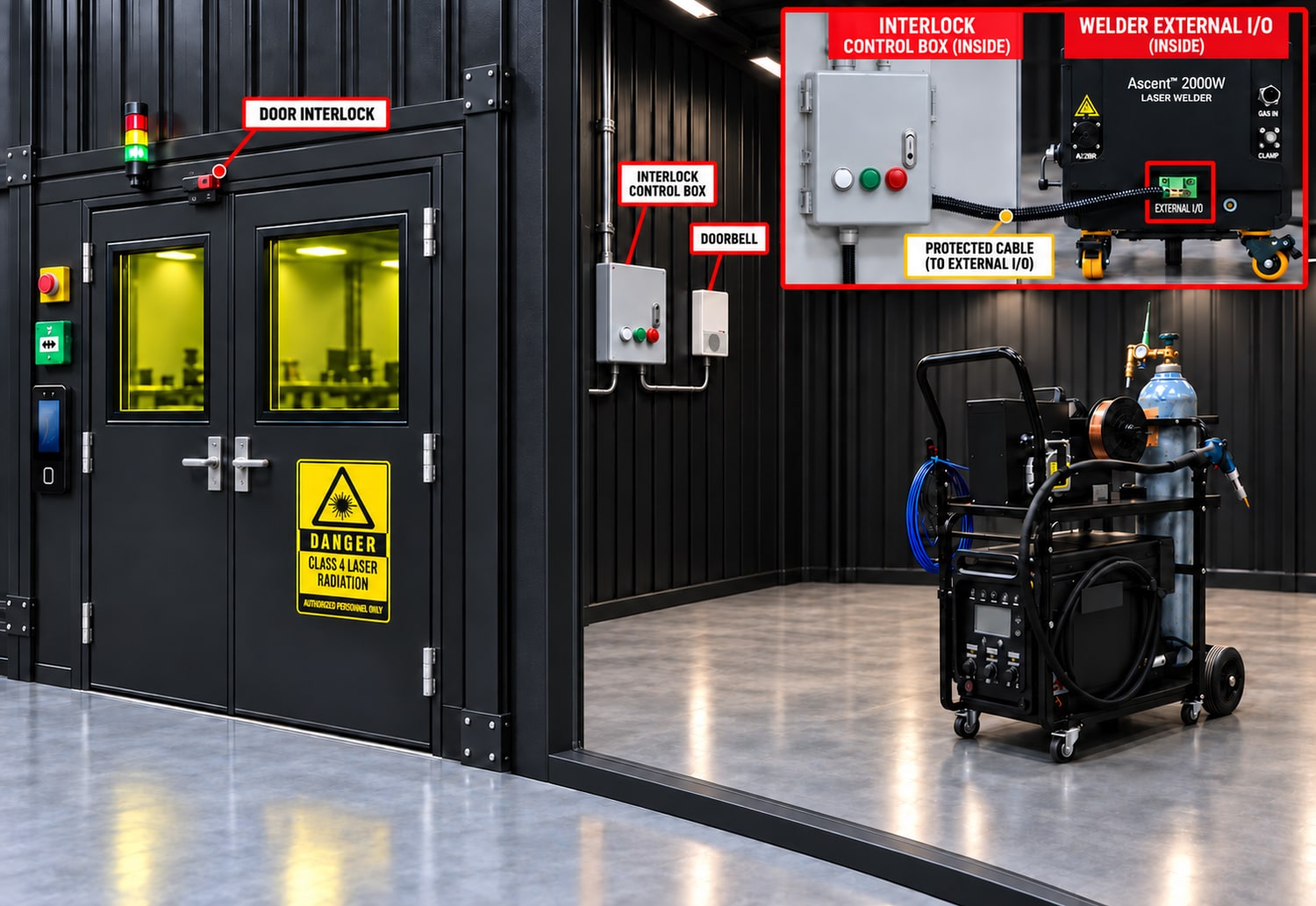
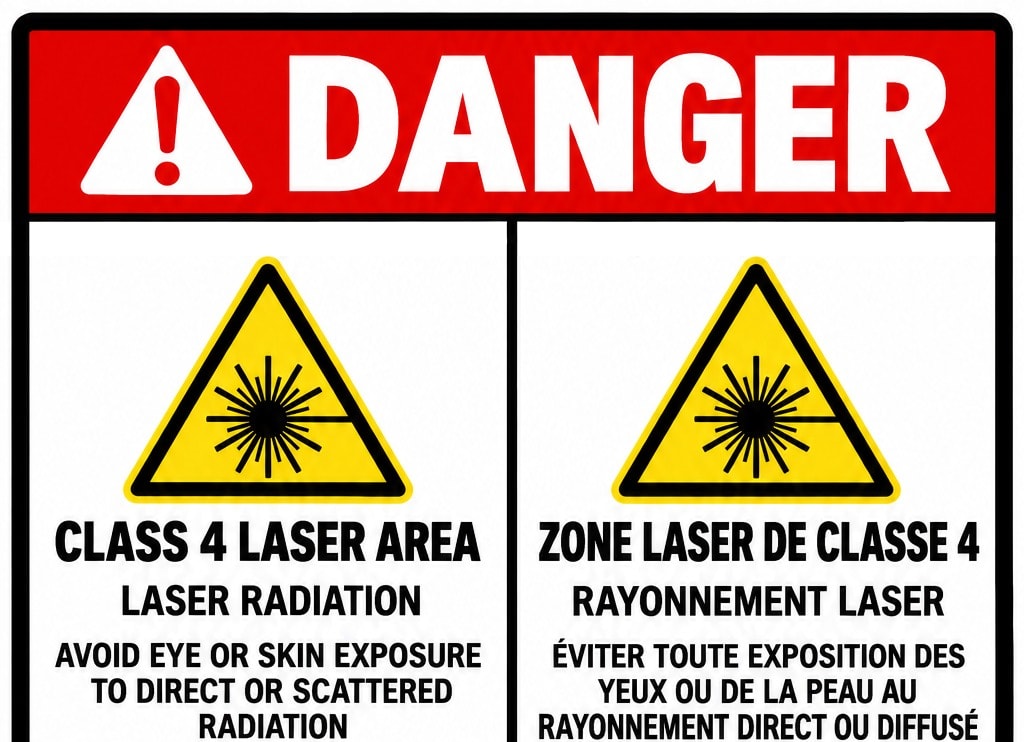
See the mold repair laser welder page for the system details, and read starting a mold repair business with laser welding if you are planning a new service. A mold repair laser is a Class 4 laser, so plan for laser eyewear (minimum OD 5; prefer OD 7 or 8), enclosure and fume extraction. To talk through which laser source fits your repairs, contact Ascent Lasers Pro.