Describe the job, test on your own parts and compare what cleaning really costs
A handheld laser cleaner earns its place if it removes what you need gone, fast enough to matter, and leaves the part underneath ready for the next step. Most of the work of choosing one happens before you look at a price. You describe the job, prove the machine on your own parts and plan for safety and fume extraction from the start.
If you're still sorting out the basic choices (pulsed or continuous wave, how much power, which cooling), read our guide to choosing a fiber laser cleaner first. This post picks up from there: how to test, compare and buy.
Write down the job first
Before you talk to suppliers, put the job on paper. A good description covers four things:
- The base material and its thickness. Carbon steel, stainless steel, aluminum and copper behave differently, and so do thin sheet, heavy plate, molds and precision rollers.
- What has to come off. Rust, paint, oxide, oil, adhesive or something else, how thick it is, how many layers there are and whether it has cured.
- The finish you'll accept. How much change in color, roughness or dimensions is allowed, and what the part has to be ready for next: welding, bonding or painting.
- How much work there is: square feet per hour, parts per shift and hours per day.
Add where the work happens. A cleaner that stays in one cell can be heavy and run on three-phase power. One that goes out to job sites has to fit through doors, ride in a truck or trailer and run on whatever power is there.
One machine can handle very different jobs, but not with the same settings. Settings that work on rust may not suit paint or cured adhesive. Expect to tune them for each job so the base metal doesn't get damaged.
Pick the laser type as a starting point
| Technology | Where to start | What to watch |
|---|---|---|
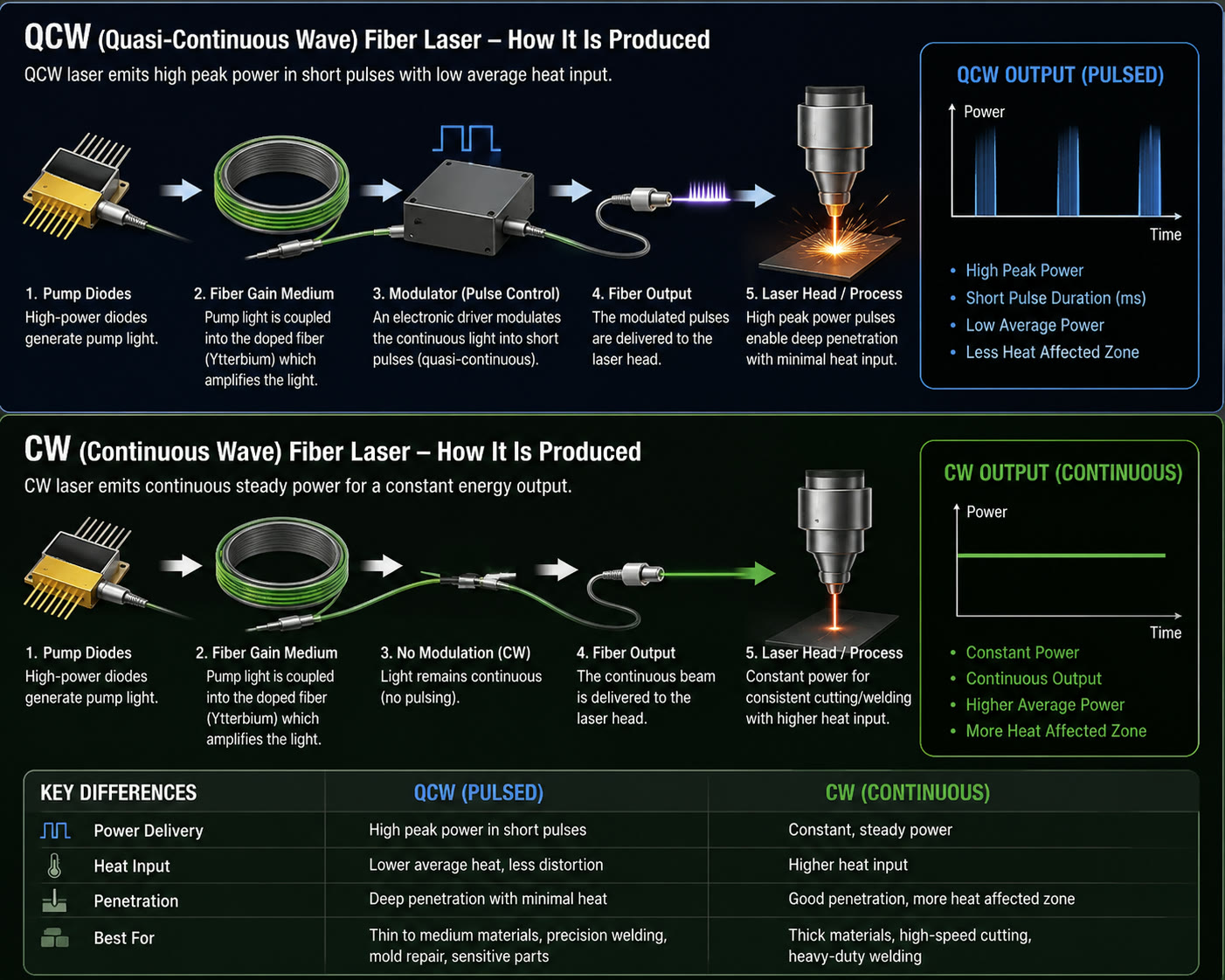
| Pulsed | Precision parts, molds, thin metal, aluminum and controlled coating removal | Gives more control over how energy and heat reach the part. The settings still need testing. |
| Continuous wave (CW) | Large, sturdy steel surfaces and heavy cleaning where some heat is acceptable | Can clean a lot of area for the money. Steady heat can change the surface or distort thin material. |
Use the table to decide what to test first, not as the final answer. A pulsed laser doesn't guarantee damage-free cleaning, and CW isn't right for every heavy deposit.
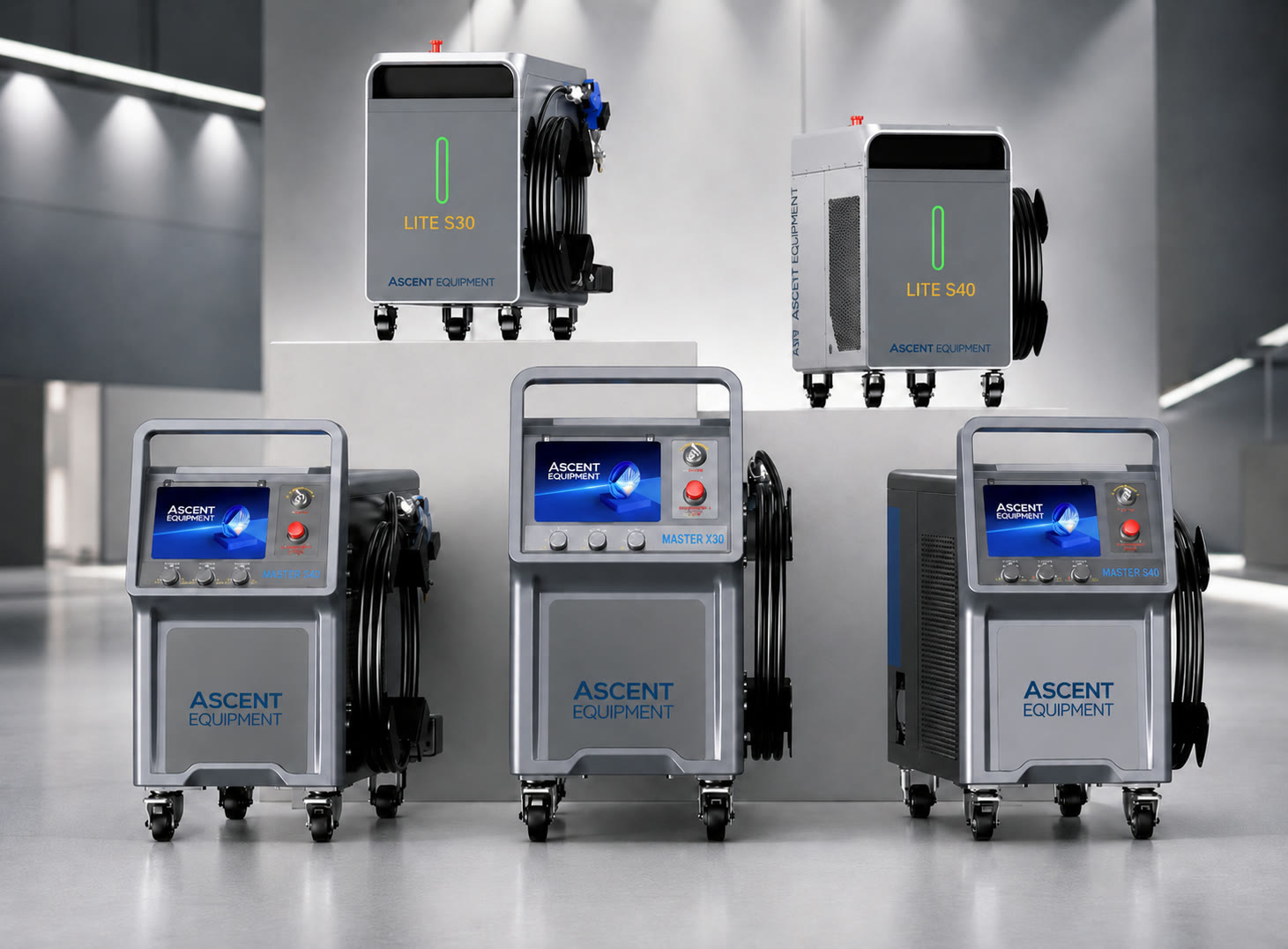
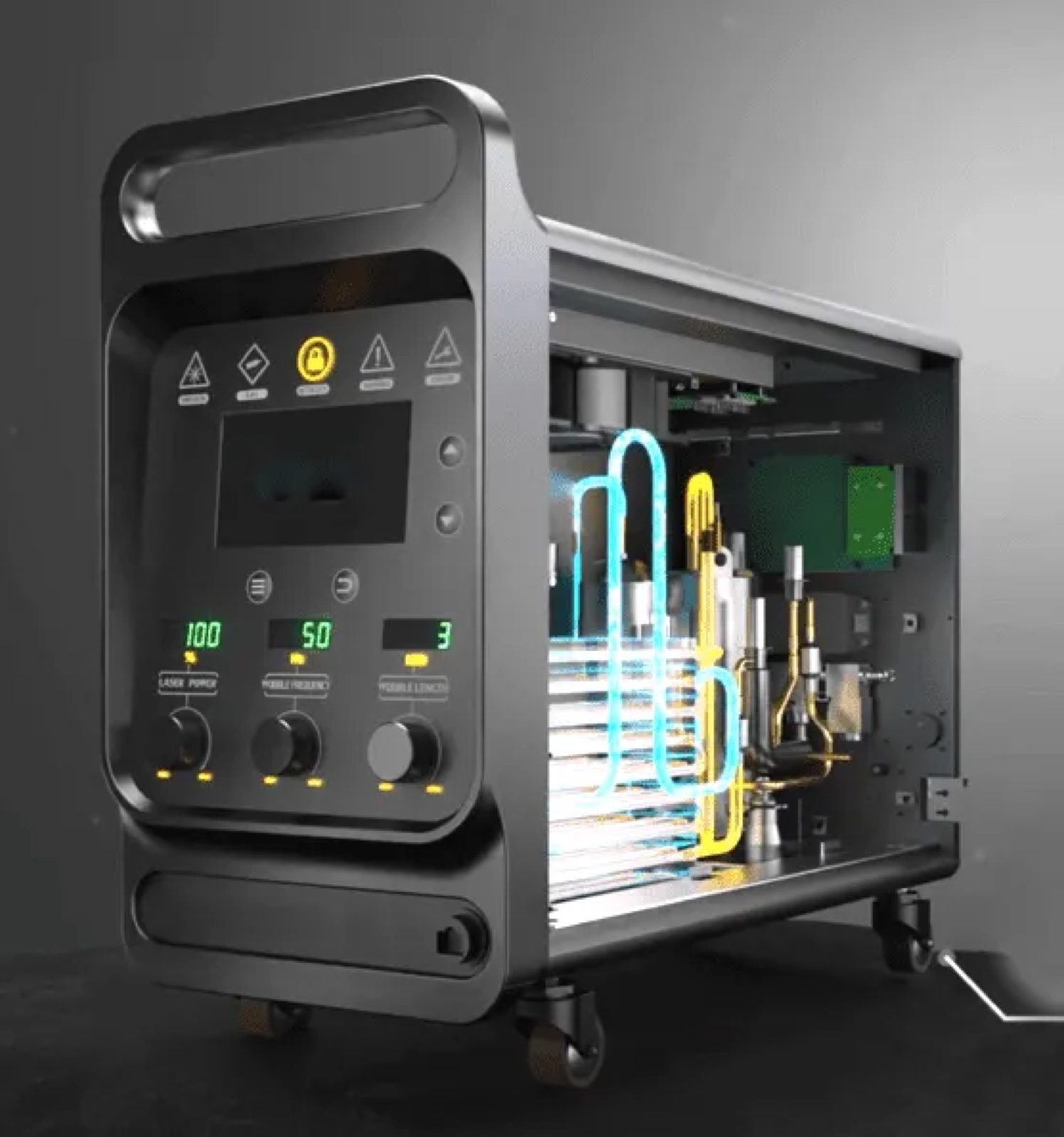
Ascent sells both: MASTER X continuous wave cleaners at 1500W, 2000W and 3000W, and water-cooled pulsed cleaners at 500W and 1000W.
Look past the wattage
Two machines with the same wattage on the label can clean very differently. These are the figures to compare:
| Specification | Why it matters |
|---|---|
| Average optical power | The laser energy delivered to the surface over time. It isn't the same as the power the machine draws from the supply. |
| Pulse energy, pulse duration and frequency | On pulsed machines, these decide how well a coating comes off and how much the base metal heats up. |
| Spot size and scan settings | They set how concentrated the energy is and how much surface each pass covers. |
| Working distance and usable scan width | They affect how easily you reach the surface, how even the result is and how fast you really clean. |
| Duty rating and cooling | They decide whether the machine can keep going for a full shift. |
The gap between laser power and electrical draw is bigger than most buyers expect. Ascent's 1000W pulsed cleaner puts out 1000W of laser power but can draw up to 6,000W from the supply, and the 500W model up to 4,000W. That affects your electrical service and, on mobile jobs, the generator.
On a pulsed machine, ask for the pulse figures as well as the average power. Ascent's pulsed systems fire pulses of 30 to 500 nanoseconds, with a pulse energy of 15 or 50 millijoules depending on the application. A supplier who won't give you these numbers is selling a machine you can't compare with anything else.
More watts don't automatically mean faster cleaning to a finish you'll accept. Compare the whole setup: the laser source, the scanning head, the optics and the settings.
Test it on your own parts
A demo on the supplier's sample only tells you how the machine does on the supplier's sample. Send representative parts of your own, including the worst condition you deal with, and ask for a written trial report that shows:
- How long it took to clean a measured area to your standard
- How many passes it took, and every setting used
- Surface temperature, discoloration, roughness and any distortion
- Any residue left behind, and whether the part is ready for the next step
- How the machine held up over a long run
A few simple checks make the report worth more. Mark out a measured area, such as one square foot, and time it from start to finished surface. Put temperature-indicating labels on thin parts, or check them with an infrared thermometer. Look into pits and corners with a magnifier, because that's where residue hides. For oil and grease, try a water-break test: water spreads out in an even sheet on a clean surface and breaks into beads where a film is left.
Then send the cleaned parts through the next step. Weld them, bond them or paint them, and test the result the way you test production parts.
One example: to remove cured adhesive from precision steel rollers, start by testing a pulsed system. Check both that the adhesive is gone and that the roller surface is undamaged, then choose the power from what the trial shows.
If the part gets painted afterward
Laser cleaning leaves a different surface from abrasive blasting. In research for the Virginia Department of Transportation on bridge steel, laser-cleaned surfaces came out smoother than grit-blasted ones. In one study, average roughness was about 5 micrometers after laser cleaning and about 10 after grit blasting. Paint still held about as well: pull-off strength averaged roughly 1,800 psi for both.
The same research found that the laser took the coatings, including lead-based paint, down to the mill scale and left the scale on the steel, while grit blasting removed the scale too. If your coating specification calls for a blast profile or bare steel without mill scale, ask the coating manufacturer whether a laser-cleaned surface qualifies. Then run a pull-off adhesion test on trial panels before you commit.
Handling, power and support
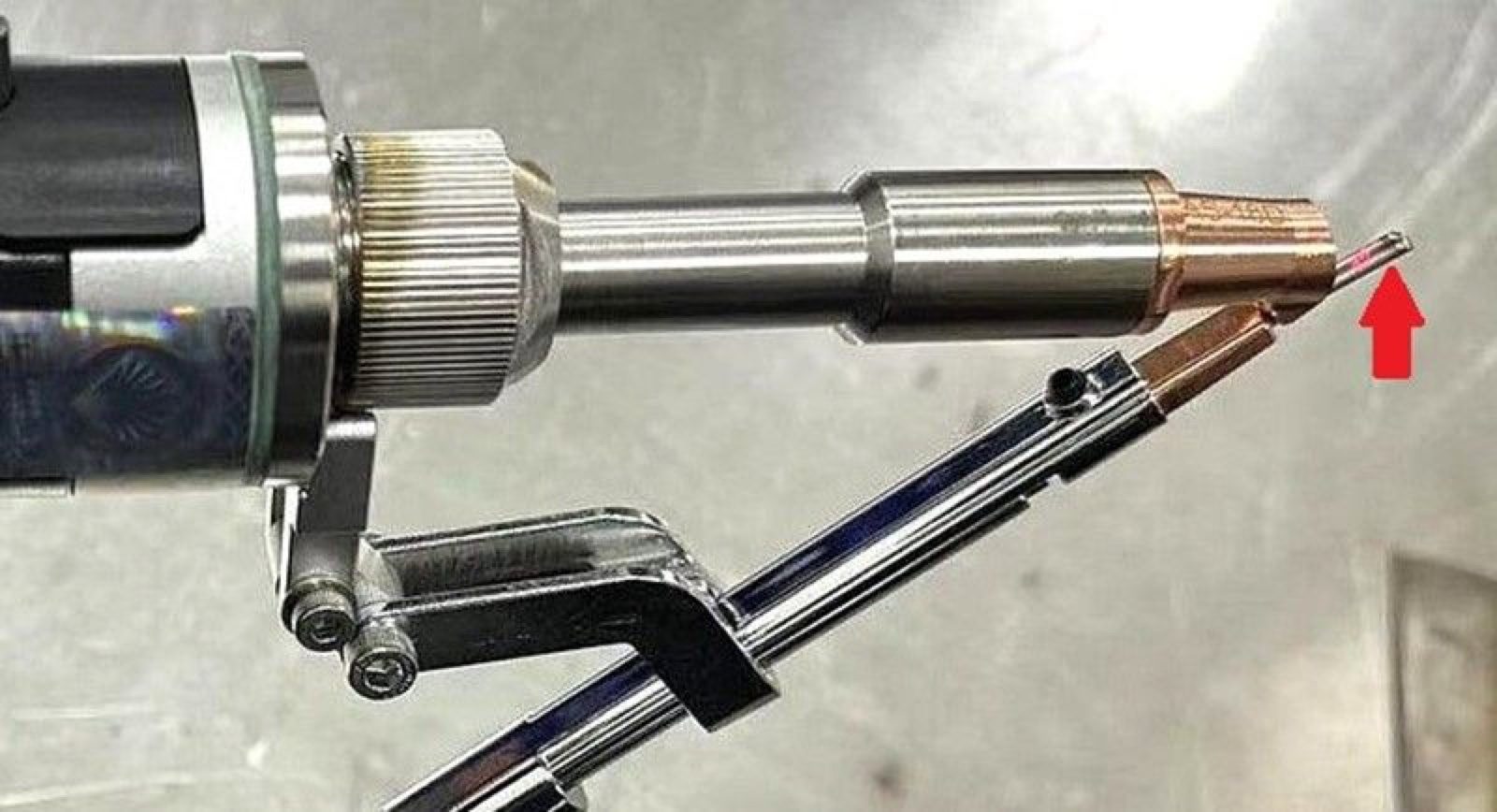
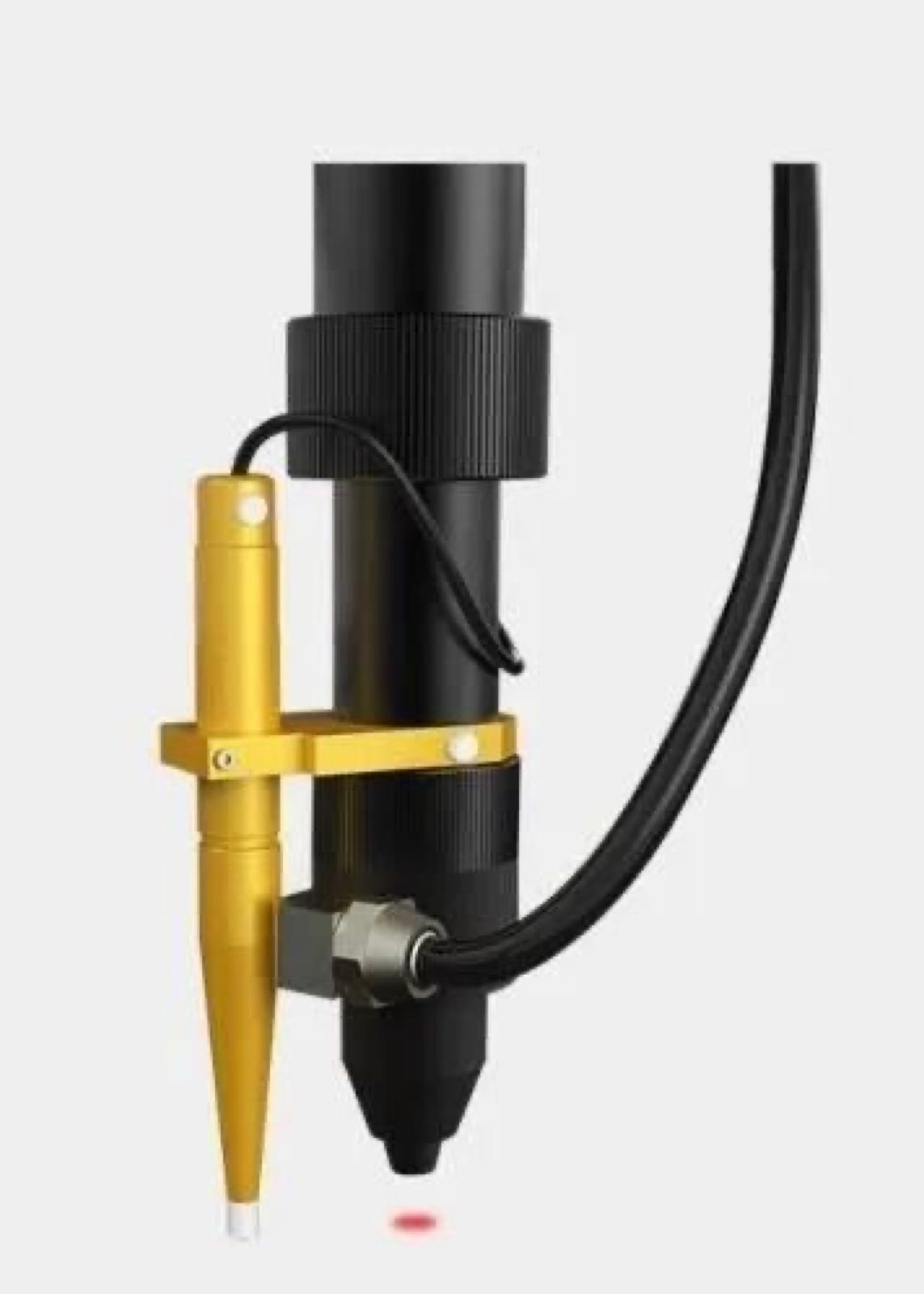
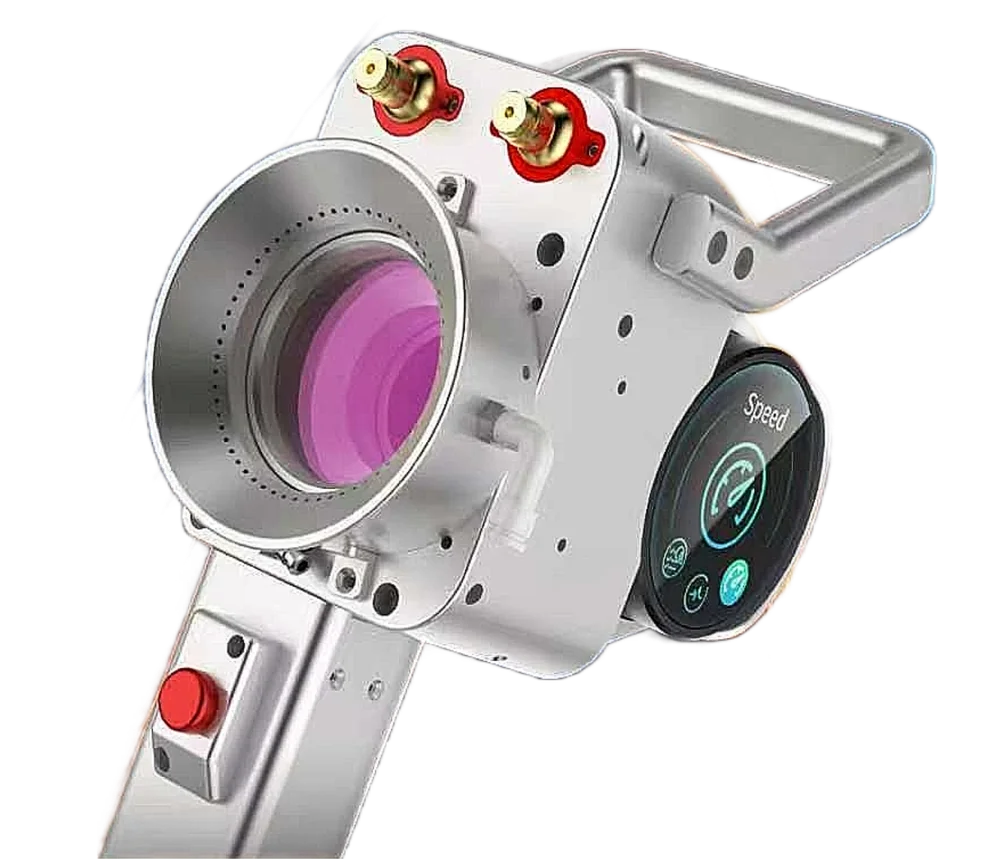
Operators hold the cleaning head for hours, so the details matter. Check the gun's weight, how flexible the cable is and whether the head reaches into corners. Then look at how easily the machine moves, what electrical supply it needs, how the cooling is maintained and what replacement protective lenses cost.
For comparison, the cleaning head on Ascent's MASTER X cleaners weighs 700 g (1.5 lb) or less and runs on a 10 m (32.8 ft) armored cable. The pulsed cleaning gun weighs 1.5 kg (3.3 lb). The MASTER X50C runs on single-phase 200 to 240V power, the X60C and X80C need three-phase 350 to 440V, and the pulsed systems run on 220V at 60 Hz. The X50C weighs 50 kg (110 lb), and the water-cooled pulsed cabinets weigh about three times as much.
For mobile work, get the machine's maximum electrical input and its startup requirements before you choose a generator. The fume extractor runs at the same time, and so does an air compressor if the cleaning head uses compressed air, so the generator has to carry them too.
From the supplier, ask for training on your own applications, saved cleaning settings, a written warranty, spare parts you can get quickly and a clear answer on how fast service responds. Find out exactly which installation, training and support are included in the quoted price.
Plan safety and fume extraction from the start
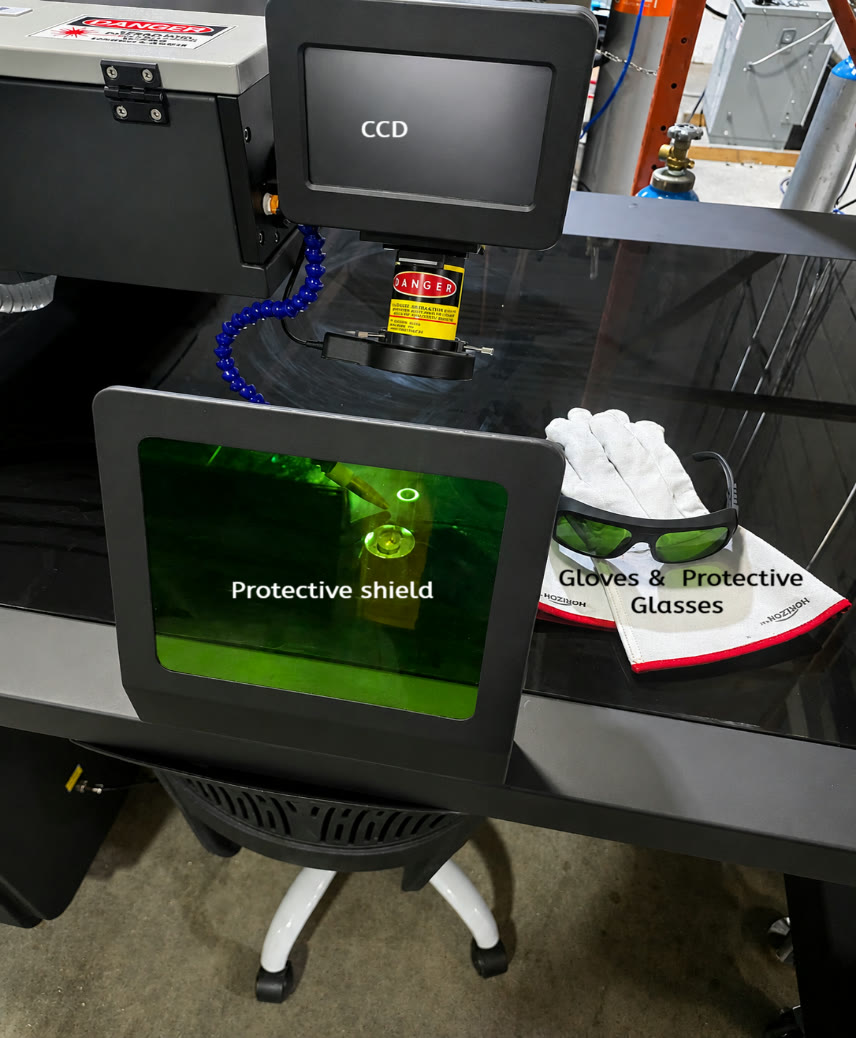
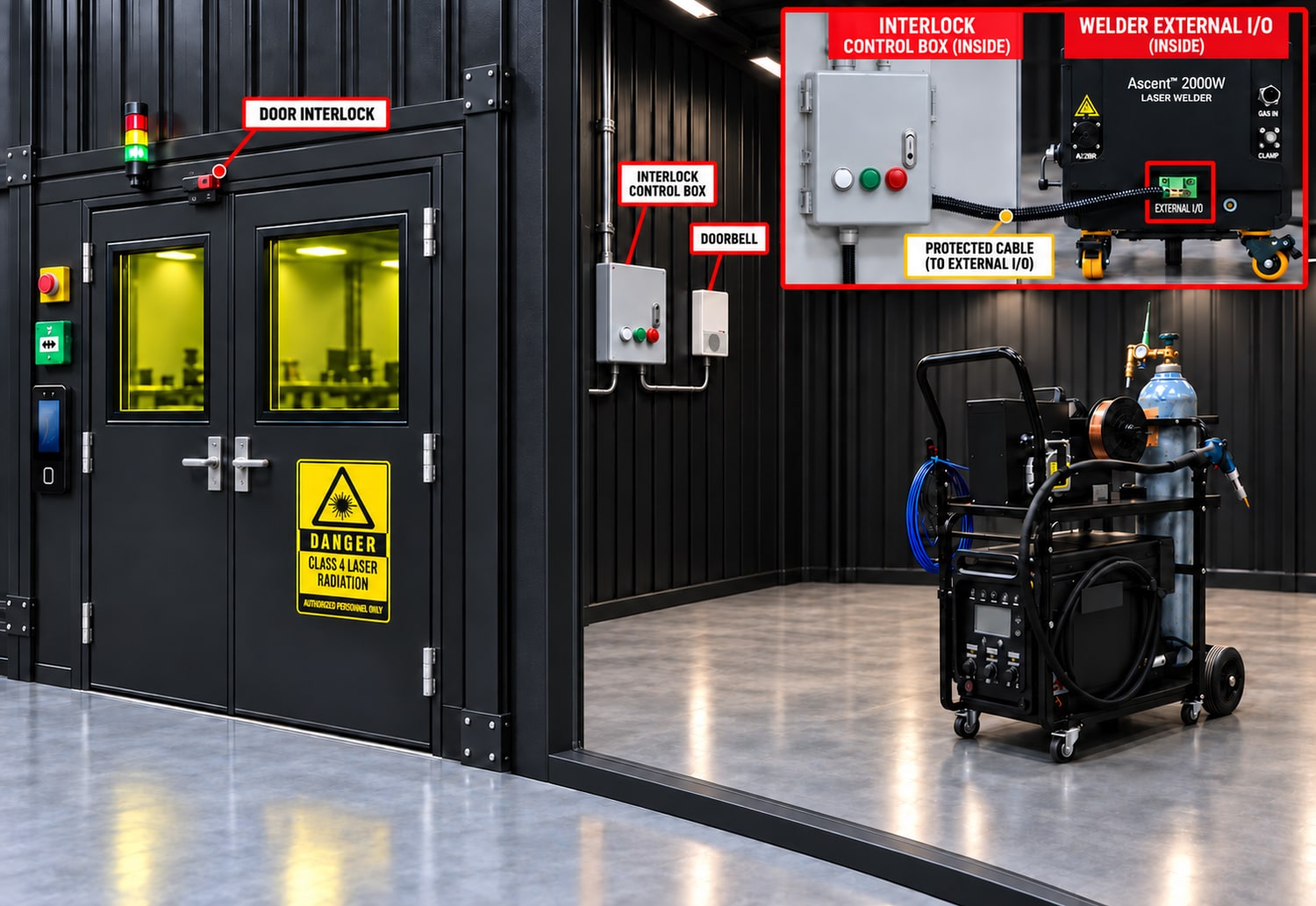
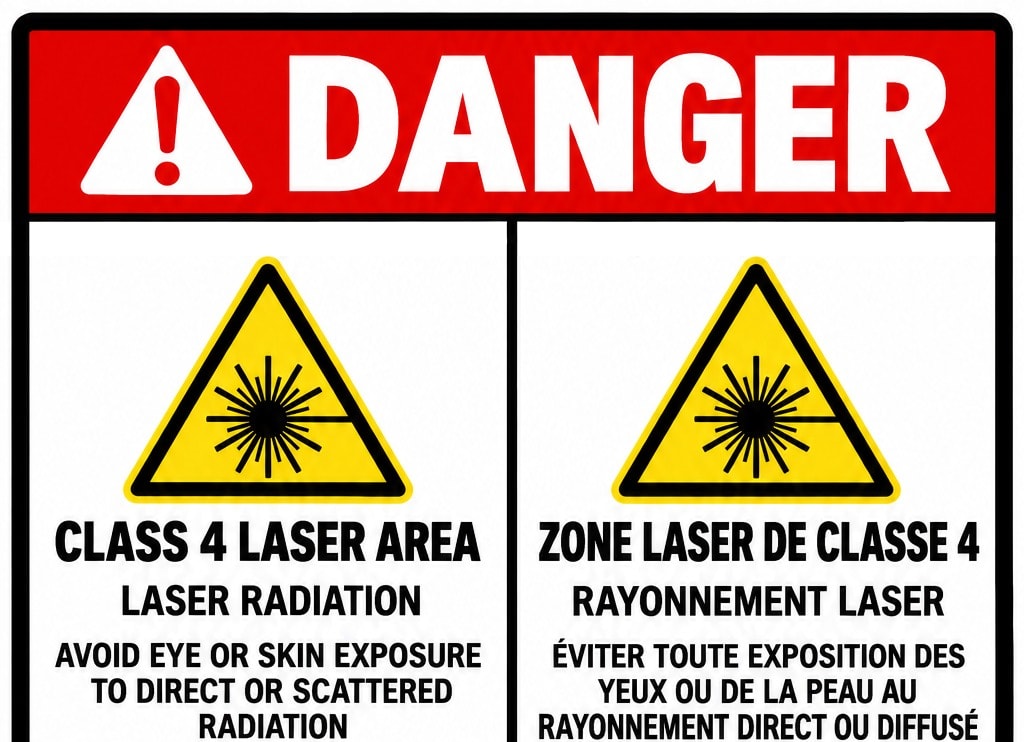
Industrial handheld laser cleaners with an open beam are generally Class 4 lasers. The beam and its reflections off metal can cause serious eye and skin injuries and start fires. A qualified laser safety assessment, usually led by a laser safety officer working to ANSI Z136.1, should set the controlled area, beam containment, reflection controls, access control, warning systems and operating procedures.
Choose laser eyewear for the actual wavelength and exposure. Fiber laser cleaners work around 1064 to 1080 nm, and Ascent's MASTER X cleaners run at 1080 nm. Minimum OD 5; prefer OD 7 or 8. Welding helmets and ordinary safety glasses don't protect against this beam. Operators need training in laser safety as well as in cleaning technique.
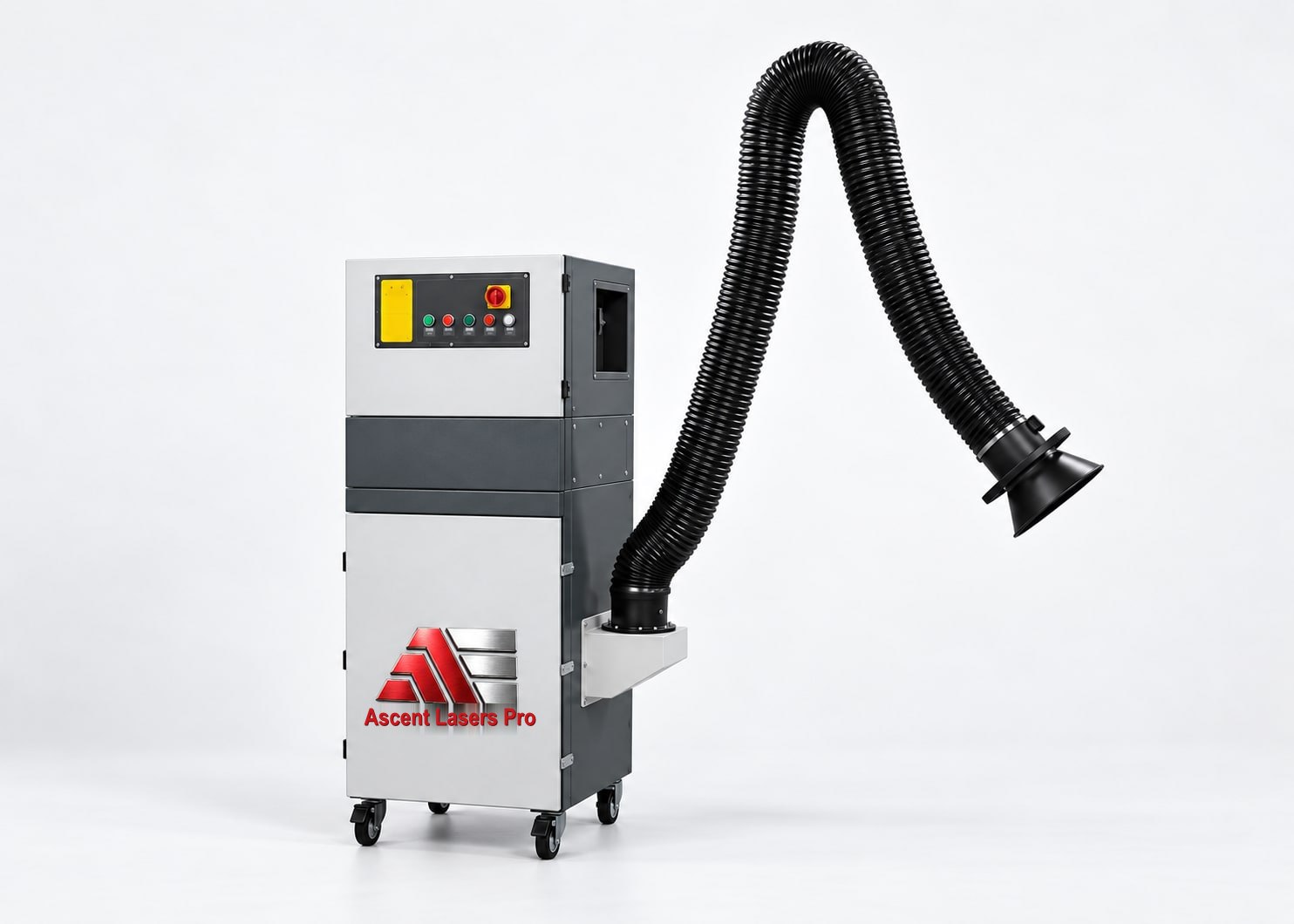
Fumes need the same attention. Laser cleaning turns the coating or contamination into fumes and fine particles, and taking a coating off doesn't take away its chemical hazards. Check what the coating is made of and read its safety data sheet before you clean, then set up local exhaust that suits what comes off. Watch for these in particular:
- Lead-based paint. OSHA's lead standards set an exposure limit of 50 micrograms per cubic meter, averaged over eight hours, and it applies whatever method takes the paint off. The employer has to find out whether workers may be exposed above the action level.
- Chromate primers, found on aircraft and some older equipment, which can release hexavalent chromium. OSHA regulates it under its chromium (VI) standards.
- Galvanized and zinc-rich coatings, which give off zinc oxide fume.
In the Virginia bridge work, engineering controls kept the laser operator's exposure well below OSHA's limits for every substance sampled. The waste collected from the lead paint still counted as hazardous waste, though. If respirators are needed, they have to be chosen through a workplace exposure assessment. A respirator protects the person wearing it. It doesn't capture the plume, it doesn't protect people nearby, and it doesn't replace protection from the beam.
More on the safety side is on our laser safety page. For shops in Canada, see our post on Class 4 laser regulations in Canada.
Work out the cost per square foot
The figure that matters is what it costs to clean one part, or one square foot, to your standard. Count equipment ownership, labor, electricity, extraction, filters, maintenance, protective lenses, setup time and rework. Measure throughput at the finish you need, rather than going by a short demo or an advertised top speed.
Here's an illustration with made-up round numbers:
| Machine A | Machine B | |
|---|---|---|
| Cost per hour (ownership, operator, power, extraction, lenses and filters) | $52 | $60 |
| Speed in the demo, on light rust | 120 sq ft/hour | 150 sq ft/hour |
| Cost per square foot in the demo | $0.43 | $0.40 |
| Speed on your worst parts, at your finish | 90 sq ft/hour | 75 sq ft/hour (two passes) |
| Cost per square foot on your parts | $0.58 | $0.80 |
In the demo, Machine B looks a little cheaper per square foot. On your parts, it costs about 38% more. Both hourly figures include an operator at $33 an hour, the total cost of an entry-level operator with benefits from our post on laser technology and entry-level workers. Put in your own numbers.
The rule for buying
Buy the system with the lowest total cost for cleaning you can accept. Back that choice with a written test on your own material and a practical plan for running the machine safely.
What Ascent provides
Ascent tests customers' parts before a sale. Send us samples, including your hardest cleaning job, and you can see how your own material cleans before you decide.
Ascent Lasers Pro sells fiber laser cleaning machines of both types. The MASTER X continuous wave cleaners come in 1500W, 2000W and 3000W, with refrigerant-cooled laser sources and process packages you select on the touchscreen. The pulsed cleaners come in 500W and 1000W. The price includes installation and operator training at your facility, and freight is extra. The cleaners have a 2-year warranty on workmanship and non-consumable parts, AnyDesk remote support software comes installed, and our technicians work from Buffalo, Toronto and Kentucky.
To arrange a test on your parts, or to talk through your materials and how much cleaning you do, contact us.
This guide supports equipment selection. Trials on your own parts and a site-specific safety assessment are needed before operation.
Sources
[1] Virginia Transportation Research Council, Innovative Coating Removal Techniques for Coated Bridge Steel, report FHWA/VTRC 20-R1 (2019): rosap.ntl.bts.gov
[2] W. Moffat, Implementation of Laser Ablation Coating Removal Technique for Steel Components on VDOT Bridges, MS thesis, University of Virginia (2019): libraetd.lib.virginia.edu
[3] W. Moffat, The Effects of Laser Cleaning and Induction Coating Removal on Recoating Adhesion of Steel Surfaces, PhD dissertation, University of Virginia (2023): libraetd.lib.virginia.edu
[4] OSHA, Lead in construction, 29 CFR 1926.62: osha.gov; Lead in general industry, 29 CFR 1910.1025: osha.gov
[5] OSHA, Chromium (VI), 29 CFR 1910.1026: osha.gov
[6] OSHA Technical Manual, Section III, Chapter 6, Laser Hazards: osha.gov
[7] Laser Institute of America, ANSI Z136 laser safety standards, including Z136.1, Safe Use of Lasers: lia.org
Ascent figures come from the laser cleaning machine page. Sources reviewed October 9, 2026.