
Call us: 1-800-927-5107 647-494-7800 ext. 1008

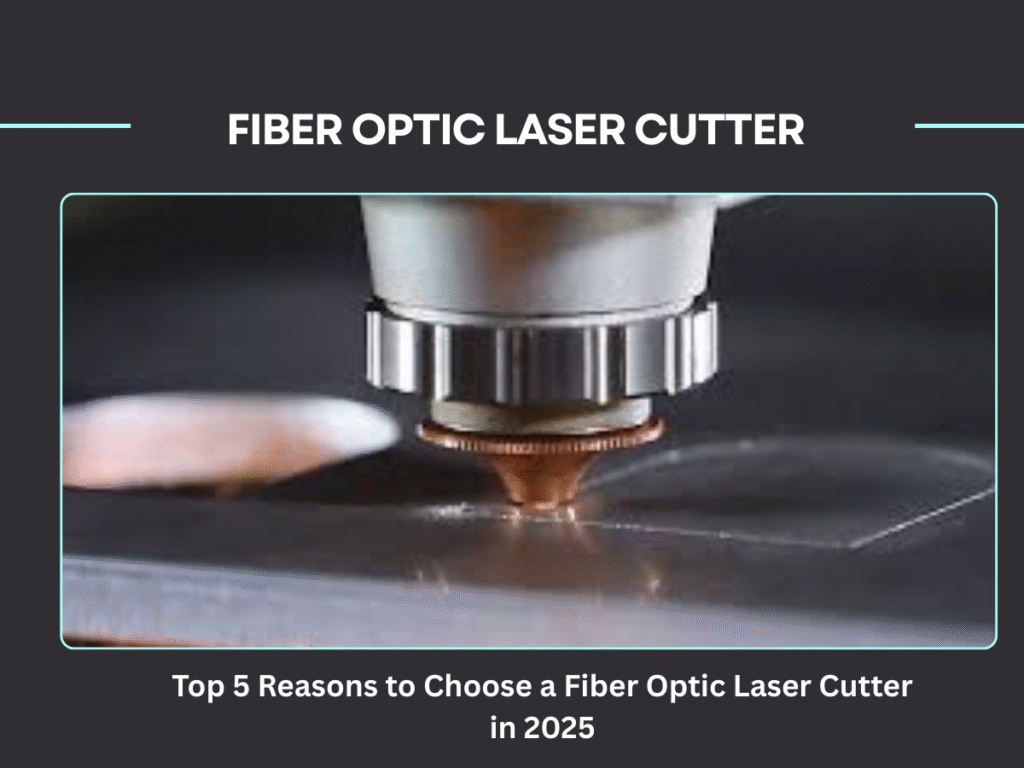
Top 5 Reasons to Choose a Fiber Optic Laser Cutter in 2025

If you cut metal, a fiber laser cutter is worth a serious look. It is faster than a CO₂ laser on metal, it needs less upkeep, and it costs less to run. These are the five main reasons shops choose one.

1. Faster cutting

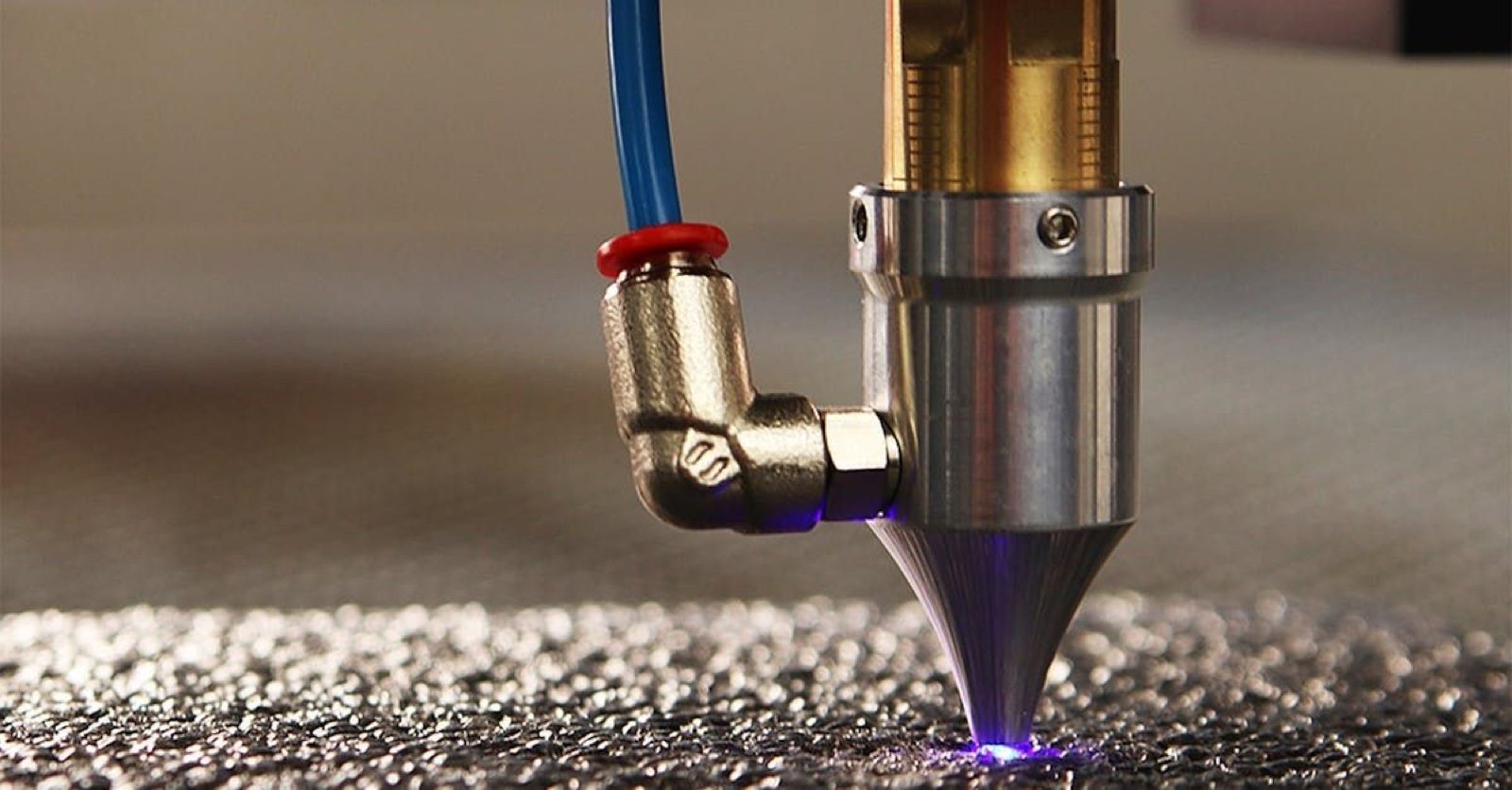
A fiber laser focuses a lot of energy on a very small spot, which lets it cut quickly without losing quality. That means more parts in less time and an easier time meeting tight deadlines. The Ascent fiber laser cutter has a maximum speed of 130 m/min, and a shuttle table lets the operator load the next sheet while one is being cut.

2. Cut quality

The concentrated energy gives cleaner, smoother cuts with little heat damage to the material, so there are fewer imperfections and less rework. The Ascent cutter lists a positioning accuracy of ±0.05 mm and a repeated positioning accuracy of ±0.02 mm.

3. A wide range of metals

Fiber lasers handle metals that older CO₂ lasers struggle with, because metal absorbs fiber laser light much better. The Ascent cutter cuts carbon steel, stainless steel, brass and aluminum, and the table on the product page gives the maximum thickness for each at each power. Carbon steel goes up to 0.8 in. at 3000W and 1.0 in. at 4000W. The Ascent dual gantry cutter also lists copper.

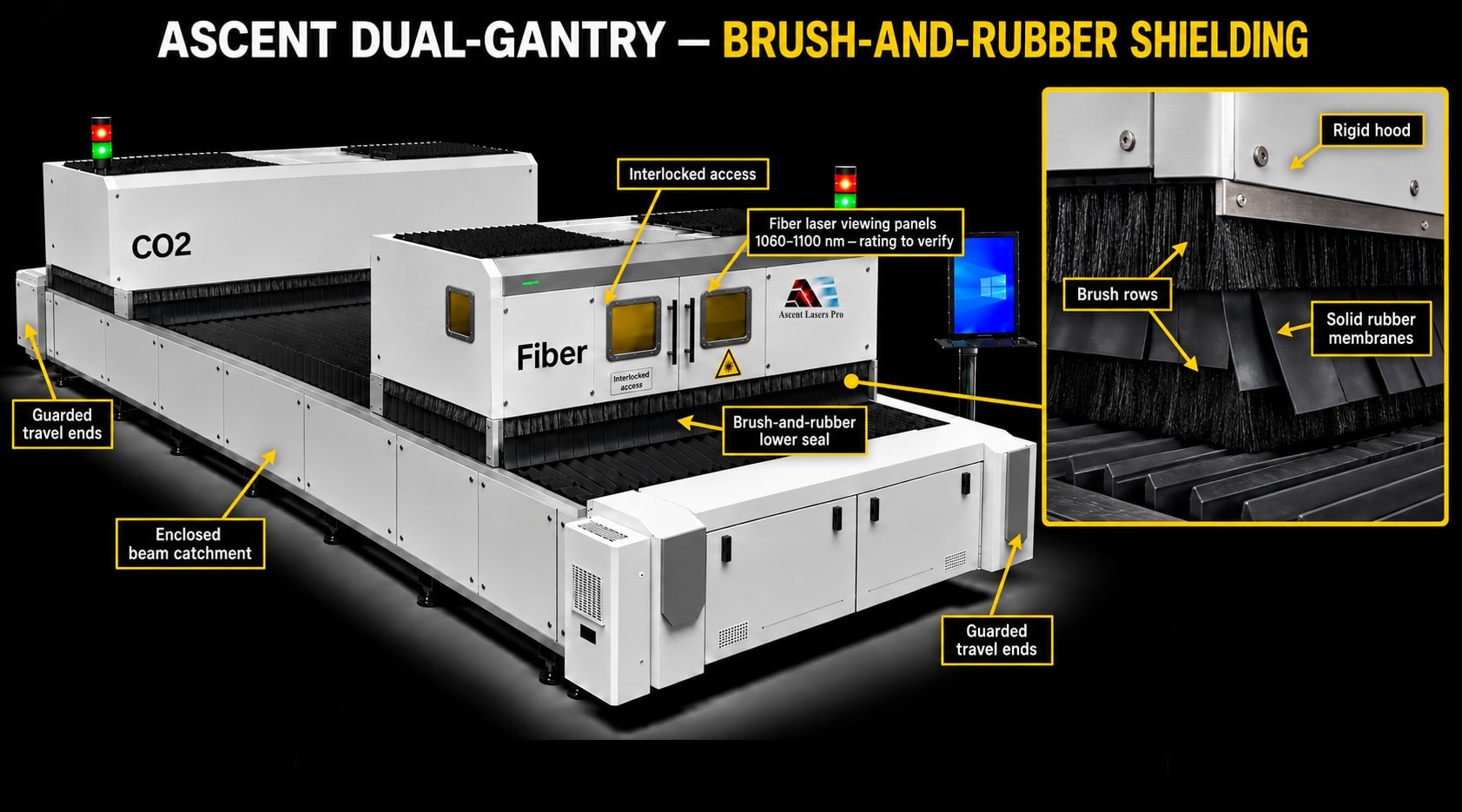
A fiber laser is a metal cutter. It is not the right laser for acrylic, wood or leather. For those, use a CO₂ laser, or choose a machine that has both, such as the Ascent dual gantry CO₂ and fiber laser cutter.

4. Low maintenance

A fiber laser source is solid state. There is no laser tube to replace and no mirrors to align inside the source, which means fewer parts to wear and less downtime than a CO₂ laser. You still need to clean the lenses, replace nozzles and protective lenses, and look after the cooling.

5. Cost and energy use

A fiber laser costs more to buy than some other machines, but it uses less energy than a CO₂ laser and needs less maintenance, so it often costs less to run. It still needs an assist gas, such as nitrogen, oxygen or compressed air, to blow the molten metal out of the cut. The Ascent cutter can cut aluminum on dry compressed air in place of nitrogen when the material and thickness allow.

Industries that use fiber laser cutters

  • Manufacturing and metalworking. Parts for machinery, automotive components and structural elements, with little heat distortion.
  • Automotive. Body parts, engine components and exhaust parts.
  • Aerospace. Metal parts that need precise cuts, including aluminum and titanium.
  • Electronics. Small, intricate components.
  • Jewelry and metal art. Detailed designs in metal.

A note on mold repair

A fiber laser cutter is not a mold repair tool. Mold repair uses a laser welder that adds metal to a worn spot. If that is what you need, see the Ascent mold repair laser welder.

Choosing a fiber laser cutter

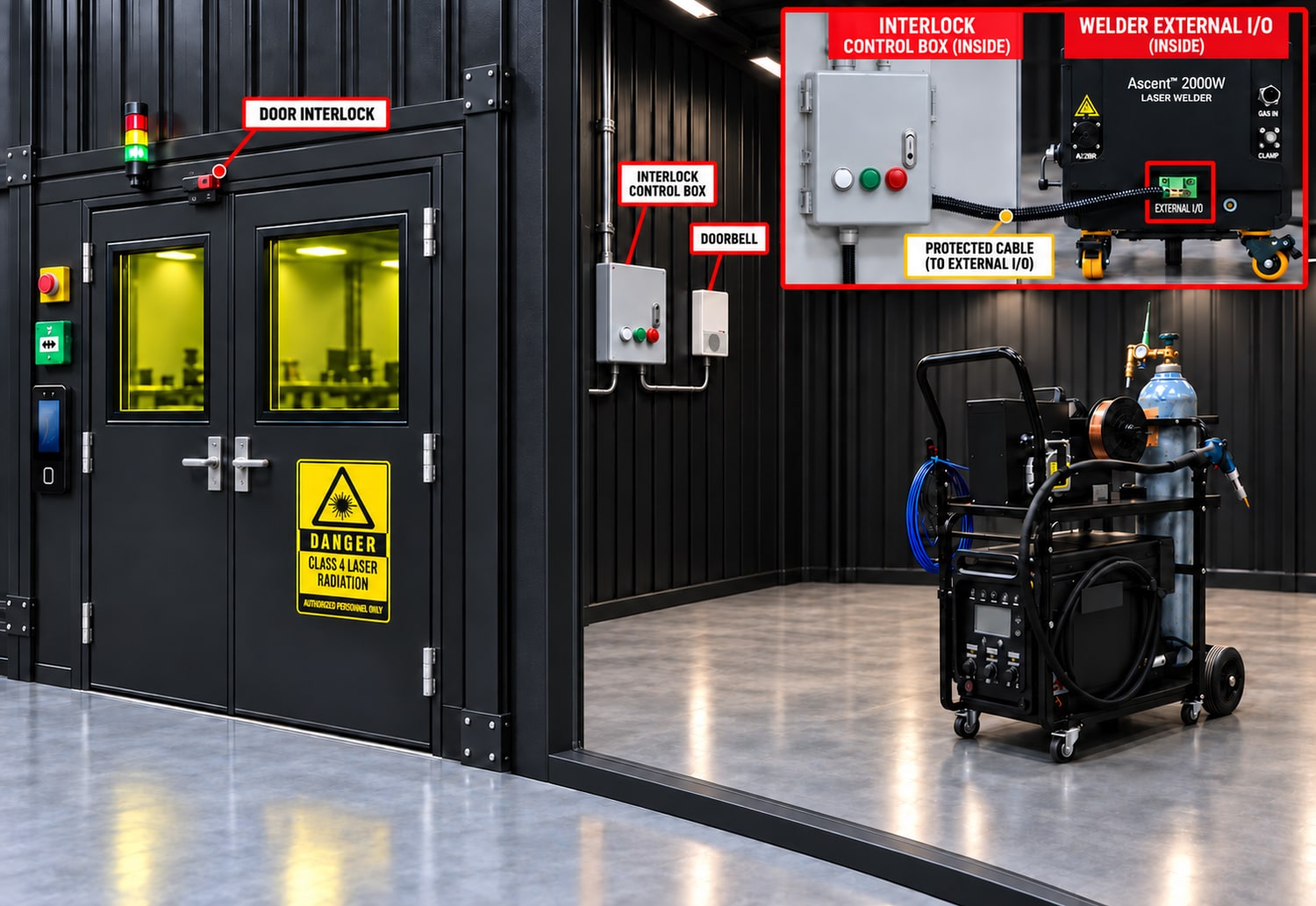
Match the power to the metals and thicknesses you cut, and check the work area, accuracy, safety enclosure and support. A fiber laser cutter is a Class 4 laser. See our laser safety page. Installation and operator training at your facility are included in the price of an Ascent cutter, and the 5x10 fiber cutter has a 1-year warranty on workmanship and non-consumable parts.

Ascent Lasers Pro sells fiber laser cutters for industrial and custom fabrication. Contact us to talk about your work.
← All articles
More from Ascent Lasers Pro

Related articles

How to Select a Handheld Laser Cleaning System
How to buy a handheld laser cleaner: describe the job, test on your own parts, look past the wattage, plan fume extraction and compare cost per square foot.
How Laser Technology Empowers Fabricators and Entry-Level Workers
Laser welders let entry-level workers do professional work on routine jobs. What they learn fast, what still takes skill, and what a shop can save.
Buying a Handheld Laser Welder: A Practical Checklist
Cooling, power, wire feeder, wobble head, torch weight, safety and warranty: the points that decide which handheld fiber laser welder fits your shop.
Your First Laser Welder: The Questions That Matter
Material, wattage, handheld or tabletop, pulsed or continuous, cooling, safety gear and quote terms: how to pick a first laser welder without overspending.
Inside the Ascent 2000W Handheld Fiber Laser Welder
What the Ascent 2000W handheld fiber laser welder brings to a shop: refrigerant cooling, a high-speed wobble head, a light torch and a complete kit.
How the Ascent 2000W Refrigeration Laser Welder Compares
The Ascent 2000W refrigeration laser welder next to typical air- and water-cooled handheld welders: cooling, duty cycle, torch weight, running cost and support.
Winning Over a Skeptical MIG or TIG Welder
How to get an experienced MIG or TIG welder to give laser welding a fair try: aluminum, the daily workflow, labor math, safety questions and a test weld.
Up to 4x Faster: What a 2000W Handheld Fiber Laser Welder Offers
Handheld fiber laser welders can travel up to 4x faster than traditional welding. Cooling, torch weight, included gear and what a 2000W machine can weld.
Laser Welding and the Cost of Aluminum Welding Labor
Skilled aluminum TIG welders are expensive and hard to hire. How training a production worker on a laser welder changes the labor math, with wage data.
Fit-Up and Gap Control in Laser Welding
A gap in a laser weld joint is a path for the beam. Fit-up tolerances, joint types, fixturing, copper backing bars and what to do when a gap stays open.
Setting Up a Laser Welding Workstation, Step by Step
Where to put a handheld laser welding station and how to lay it out: table height, safety zone, fume extraction, cables, fixtures and a daily checklist.
Is QCW Safer? Pulsed vs. Continuous Tabletop Laser Welding
QCW pulses put less heat into thin aluminum and stainless than CW, but both are Class 4 lasers. What a CCD camera and an enclosure really add to safety.
QCW Tabletop or 2000W Handheld: Which Laser Welder Fits Your Shop?
The Ascent QCW tabletop and handheld welder versus the 2000W handheld: typical work, heat input, speed, and which kind of shop should buy which.
Mold Repair Lasers Compared: QCW Fiber, Pulsed Nd:YAG and Continuous Fiber
QCW fiber, pulsed Nd:YAG and continuous fiber (CW) lasers for mold repair: beam quality, efficiency, peak power on reflective metals, filler wire and heat.
Which Materials Actually Stop a 1070nm Fiber Laser Beam?
Ordinary welding curtains don't stop a 1070nm fiber laser. Which absorbing and reflecting materials work as backing, barriers and beam stops, and which fail.
CO₂ or Fiber Laser Cutter? Match the Laser to the Material
CO₂ or fiber laser cutter? Which materials each one cuts, edge quality, speed, running costs and maintenance, and when it pays to run both.
Consumables for a Dual-Gantry CO₂ and Fiber Laser Cutter
Which parts wear out on the CO₂ and fiber sides of a dual-gantry laser cutter, how often to replace them, what spares to stock and how to budget for them.
CNC Router, CO₂ Laser or Fiber Laser: Choosing by Material
CNC router, CO₂ laser or fiber laser? A material-by-material look at what each machine handles, and where a dual-gantry CO₂ and fiber cutter fits.
How to Choose a Fiber Laser Cleaner: Pulsed vs. CW, Power and Cooling
Pulsed or continuous wave, low or high power, air or water cooling? What laser cleaners remove, the specs that matter, red flags and what to ask a supplier.
Class 4 Laser Regulations in Canada
Class 4 lasers in Canada: Health Canada product rules, bilingual labels, provincial workplace law, Alberta registration and what to ask for before you buy.
How Can a 300W Laser Cutter Improve Metal Fabrication?
How a 300W CO₂ laser cutter supports a metal fabrication shop by cutting acrylic templates, panels and prototypes while the metal machines stay on metal.

Talk to a laser specialist about your welding or cutting job

Contact us