
Call us: 1-800-927-5107 647-494-7800 ext. 1008

Consumables for a Dual-Gantry CO₂ and Fiber Laser Cutter

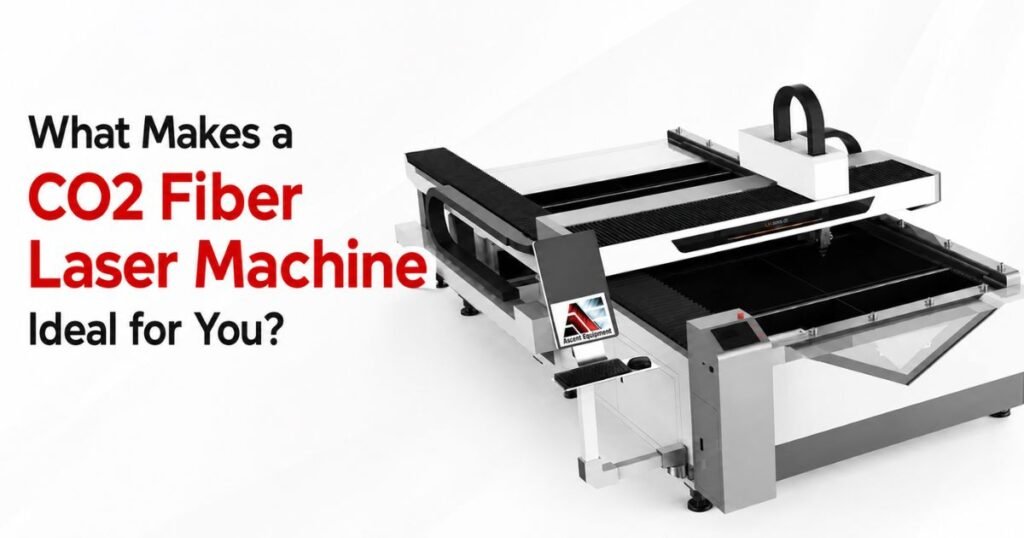
A dual-gantry laser cutter puts a CO₂ head for acrylic, wood and plastics and a fiber head for metal over one table. You are running two quite different technologies at once. The gain in throughput is large, and so is the bookkeeping: two sets of consumables to track, stock and budget.

This article covers what wears out on each side, how to tell when to replace it and what to keep on the shelf. You can buy consumables from Ascent Lasers Pro or from a reputable laser parts supplier.

Why the two sides wear differently

On the CO₂ side, the light starts in a gas-filled tube, travels along a path of mirrors and is focused by a lens. Every optical surface along that path can wear.

On the fiber side, the light is generated in a fiber and carried to the cutting head through a flexible cable. There is no tube and no mirror path, so the list of wearing parts is shorter.

Consumables compared

Consumable CO₂ side Fiber side When to replace
Cutting nozzles Yes Yes When damaged or clogged with spatter
Protective lens (cover glass) No Yes When dirty, pitted or damaged
Focus lens Yes Rarely When damaged
Mirrors Yes No When worn or damaged
Ceramic ring No Yes When cracked or worn
Laser tube Yes No As output drops with age
Air filters Yes Yes On the maker's schedule
Chiller coolant Yes Yes On the maker's schedule
Assist gas Compressed air Oxygen, nitrogen or compressed air As used

The CO₂ side

More parts sit in the beam path, so this side has more to wear: the laser tube, the focus lens, the mirrors, the cutting nozzles, lens tissue and cleaning fluid, chiller coolant and air filters.

The tube is the biggest single expense. A CO₂ tube wears with use. On the Ascent dual gantry cutter, its typical service life is 12,000 hours. Keep the optics clean, hold the chiller at the right temperature and avoid running the tube at full power all the time, and it will last longer.

The fiber side

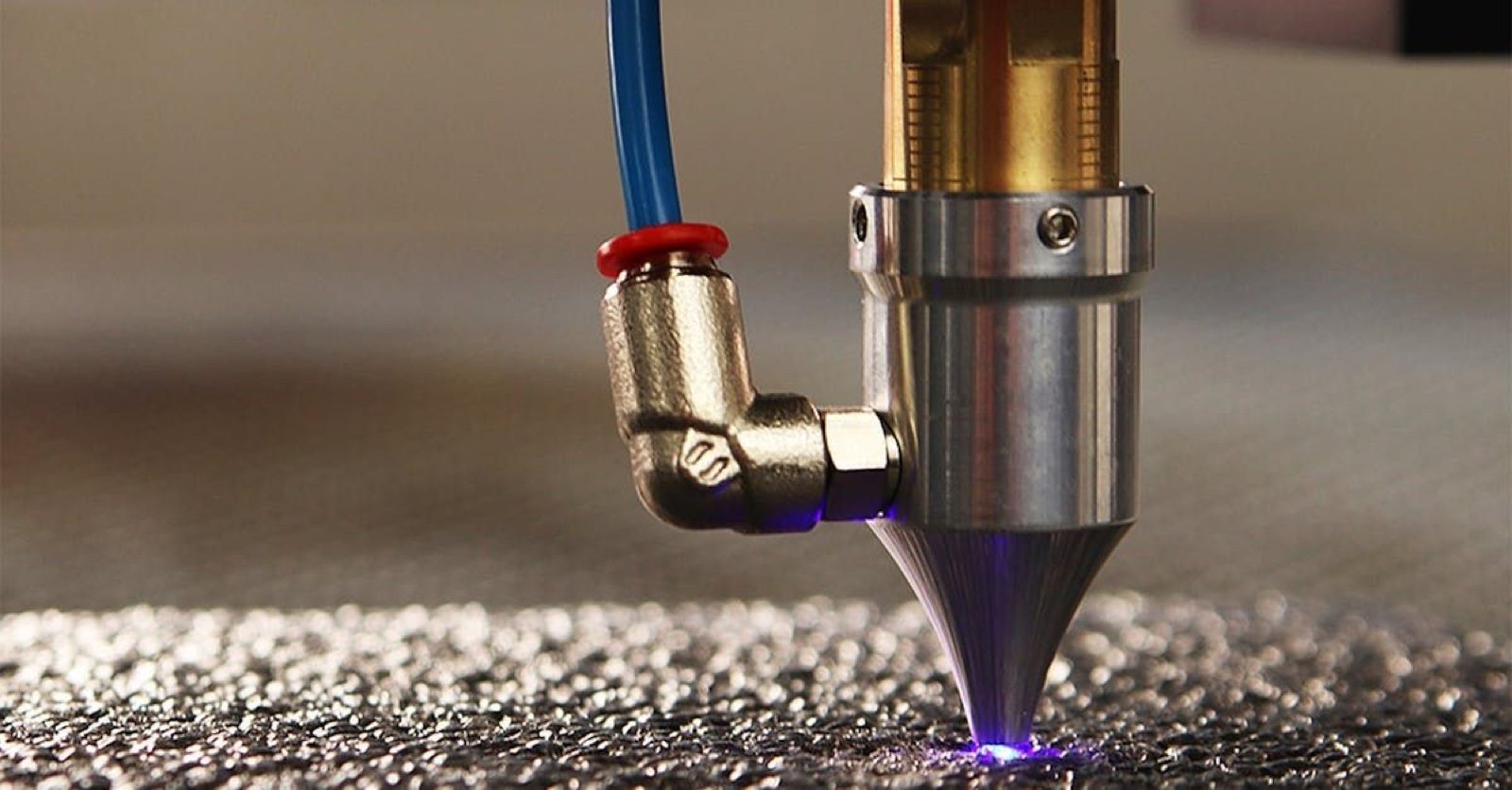
The list here is much shorter, which is one of fiber's practical advantages for cutting metal. Nozzles are replaced most often, then the protective lens in front of the focusing optics, the ceramic rings and O-rings. You will also use lens-cleaning supplies, chiller coolant, gas filters and assist gas.

The fiber laser source itself is not a routine consumable. The parts you will reorder regularly are nozzles, protective lenses and ceramic rings.

What comes with the Ascent machine

The Ascent dual gantry cutter ships with a starter set of consumables: 10 cutting nozzles, 5 protection lenses and 2 ceramic rings.

A spare parts kit worth keeping

For a single shift, this is a sensible minimum. Scale it up for two or three shifts.

CO₂ side:

  • A spare focus lens
  • A spare set of mirrors
  • Cutting nozzles in the diameters you use
  • A spare laser tube, if unplanned downtime would be costly
  • A lens-cleaning kit
  • The chiller coolant the maker specifies

Fiber side:

  • Cutting nozzles in assorted diameters
  • A good stock of protective lenses
  • Ceramic rings
  • Assorted O-rings
  • A lens-cleaning kit
  • Chiller coolant, as the chiller's specification requires

With these on the shelf, most maintenance becomes a short swap instead of a wait for parts. Protective lenses can go quickly in a busy shop, and running out of them is one of the easiest causes of downtime to avoid.

Budgeting

Consumable costs depend on hours of use, materials and how hard the machine runs. Cutting reflective metals and running long hours push costs up. Ask your supplier for current prices on the items above, and track what you actually use for the first few months to set your stock levels.

Warranty

On the Ascent dual gantry, the fiber laser source carries a 2-year warranty, all other non-consumable components 2 years, and the CO₂ laser source 1 year. Consumables are not covered, so plan for them in your budget.

Keeping the shelves full

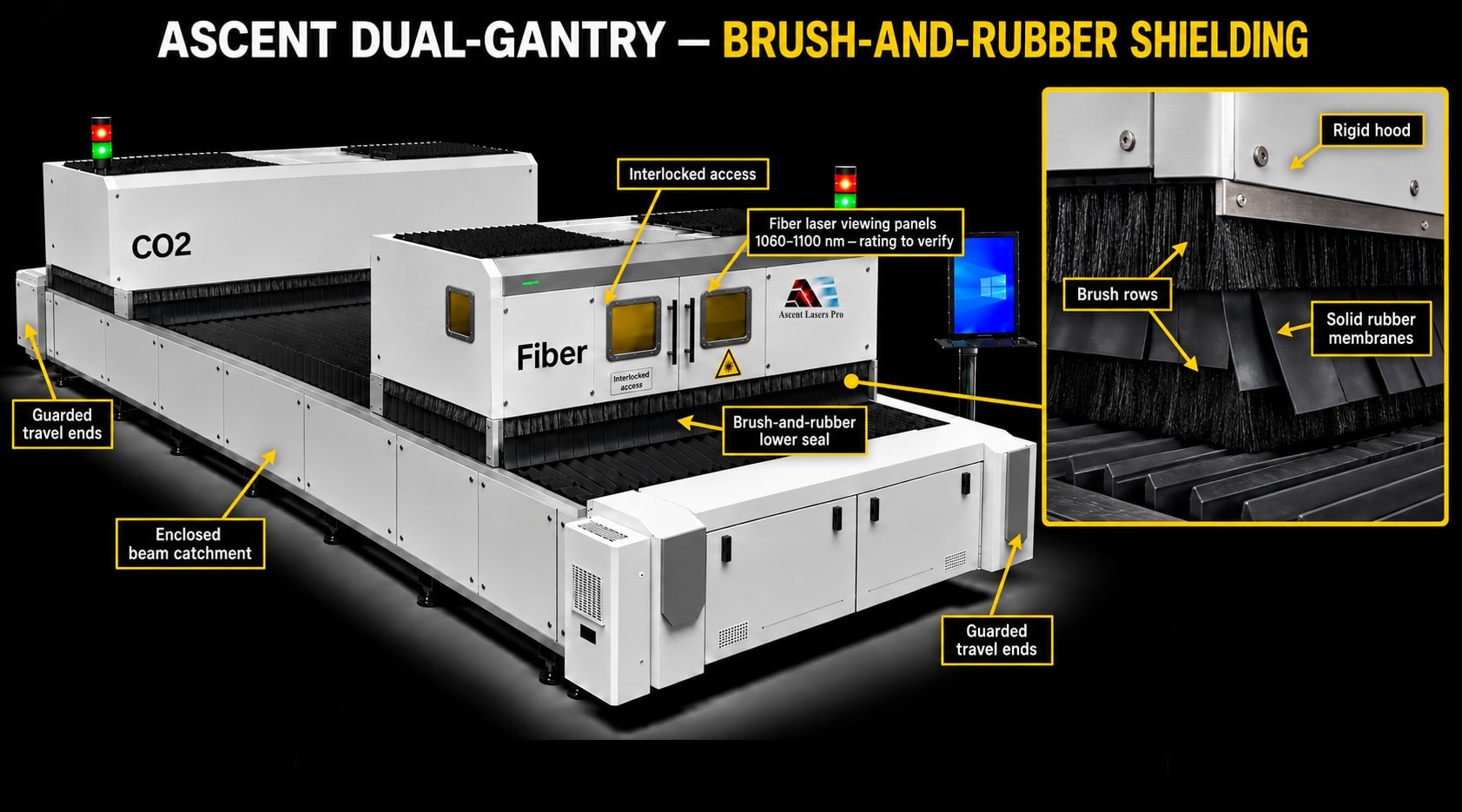
On the CO₂ side, look after the optical path. On the fiber side, keep the head clean and the bins of nozzles and protective lenses full. Neither is hard if you stay ahead of it. A dual gantry cutter is a Class 4 laser, so keep the covers or partitions in place and follow our laser safety guidance during maintenance.

For questions about consumables on the Ascent dual gantry, contact us or see the product page for the full specifications.
← All articles
More from Ascent Lasers Pro

Related articles

How to Select a Handheld Laser Cleaning System
How to buy a handheld laser cleaner: describe the job, test on your own parts, look past the wattage, plan fume extraction and compare cost per square foot.
How Laser Technology Empowers Fabricators and Entry-Level Workers
Laser welders let entry-level workers do professional work on routine jobs. What they learn fast, what still takes skill, and what a shop can save.
Buying a Handheld Laser Welder: A Practical Checklist
Cooling, power, wire feeder, wobble head, torch weight, safety and warranty: the points that decide which handheld fiber laser welder fits your shop.
Your First Laser Welder: The Questions That Matter
Material, wattage, handheld or tabletop, pulsed or continuous, cooling, safety gear and quote terms: how to pick a first laser welder without overspending.
Inside the Ascent 2000W Handheld Fiber Laser Welder
What the Ascent 2000W handheld fiber laser welder brings to a shop: refrigerant cooling, a high-speed wobble head, a light torch and a complete kit.
How the Ascent 2000W Refrigeration Laser Welder Compares
The Ascent 2000W refrigeration laser welder next to typical air- and water-cooled handheld welders: cooling, duty cycle, torch weight, running cost and support.
Winning Over a Skeptical MIG or TIG Welder
How to get an experienced MIG or TIG welder to give laser welding a fair try: aluminum, the daily workflow, labor math, safety questions and a test weld.
Up to 4x Faster: What a 2000W Handheld Fiber Laser Welder Offers
Handheld fiber laser welders can travel up to 4x faster than traditional welding. Cooling, torch weight, included gear and what a 2000W machine can weld.
Laser Welding and the Cost of Aluminum Welding Labor
Skilled aluminum TIG welders are expensive and hard to hire. How training a production worker on a laser welder changes the labor math, with wage data.
Fit-Up and Gap Control in Laser Welding
A gap in a laser weld joint is a path for the beam. Fit-up tolerances, joint types, fixturing, copper backing bars and what to do when a gap stays open.
Setting Up a Laser Welding Workstation, Step by Step
Where to put a handheld laser welding station and how to lay it out: table height, safety zone, fume extraction, cables, fixtures and a daily checklist.
Is QCW Safer? Pulsed vs. Continuous Tabletop Laser Welding
QCW pulses put less heat into thin aluminum and stainless than CW, but both are Class 4 lasers. What a CCD camera and an enclosure really add to safety.
QCW Tabletop or 2000W Handheld: Which Laser Welder Fits Your Shop?
The Ascent QCW tabletop and handheld welder versus the 2000W handheld: typical work, heat input, speed, and which kind of shop should buy which.
Mold Repair Lasers Compared: QCW Fiber, Pulsed Nd:YAG and Continuous Fiber
QCW fiber, pulsed Nd:YAG and continuous fiber (CW) lasers for mold repair: beam quality, efficiency, peak power on reflective metals, filler wire and heat.
Which Materials Actually Stop a 1070nm Fiber Laser Beam?
Ordinary welding curtains don't stop a 1070nm fiber laser. Which absorbing and reflecting materials work as backing, barriers and beam stops, and which fail.
CO₂ or Fiber Laser Cutter? Match the Laser to the Material
CO₂ or fiber laser cutter? Which materials each one cuts, edge quality, speed, running costs and maintenance, and when it pays to run both.
CNC Router, CO₂ Laser or Fiber Laser: Choosing by Material
CNC router, CO₂ laser or fiber laser? A material-by-material look at what each machine handles, and where a dual-gantry CO₂ and fiber cutter fits.
How to Choose a Fiber Laser Cleaner: Pulsed vs. CW, Power and Cooling
Pulsed or continuous wave, low or high power, air or water cooling? What laser cleaners remove, the specs that matter, red flags and what to ask a supplier.
Class 4 Laser Regulations in Canada
Class 4 lasers in Canada: Health Canada product rules, bilingual labels, provincial workplace law, Alberta registration and what to ask for before you buy.
How Can a 300W Laser Cutter Improve Metal Fabrication?
How a 300W CO₂ laser cutter supports a metal fabrication shop by cutting acrylic templates, panels and prototypes while the metal machines stay on metal.
What Makes a CO2 Fiber Laser Machine Ideal for Manufacturers?
How a combination CO₂ and fiber laser machine helps manufacturers cut metals and nonmetals, and what to check before you buy.

Talk to a laser specialist about your welding or cutting job

Contact us