
Call us: 1-800-927-5107 647-494-7800 ext. 1008

Laser Engraving vs. Laser Cutting: Understanding the Key Differences

Laser engraving and laser cutting both use a focused beam, and both are common in manufacturing and in craft work. They do different jobs, though. This article explains the differences so you can pick the right one for a project.

What laser engraving is

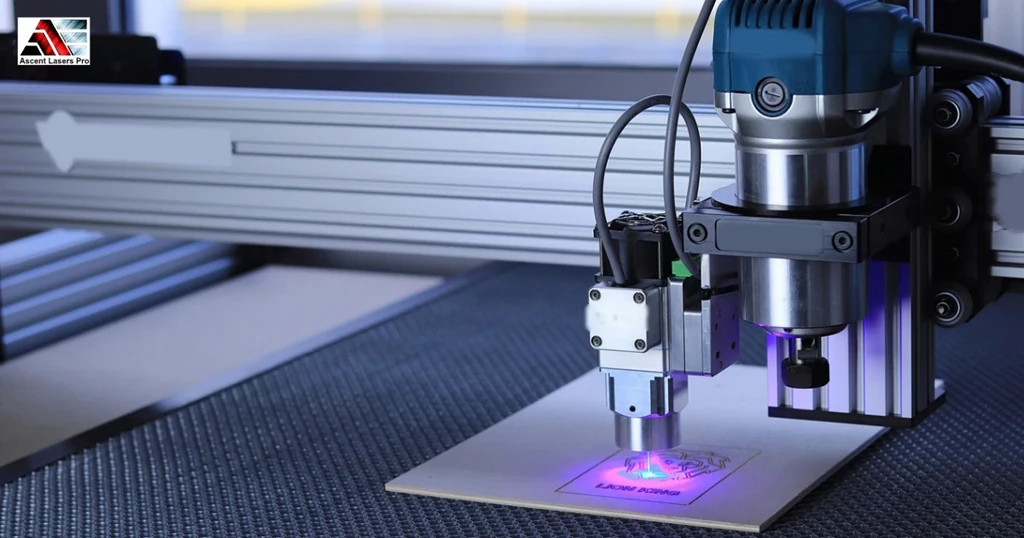
Laser engraving uses a focused beam to make a design, pattern or text on the surface of a material. The beam's heat burns or vaporizes the top layer and leaves a permanent mark. How deep it goes depends on the settings and the material. Engraving does not cut through the part. It leaves a shallow mark.

It is the usual choice for fine detail: names and logos on wood, leather, glass, acrylic and other products, and identification such as serial numbers. A CO₂ laser cutter and engraver engraves nonmetals. For bare metal, a fiber laser is the right tool.

What laser cutting is

Laser cutting uses a stronger beam to cut completely through a material, so the beam melts, burns or vaporizes it along a path. The result is a clean, accurate edge. Cutters handle a wide range of materials and thicknesses: a CO₂ laser cuts nonmetals such as wood, acrylic and leather, and a fiber laser cuts metal.

Key differences

Purpose

Engraving marks or decorates a surface. Cutting separates a material to make parts and shapes from a larger sheet.

Depth

Engraving affects only the top layer and leaves the rest intact. Cutting goes all the way through and divides the material.

Precision

Both are accurate. Cutting can follow very fine and intricate outlines with tight tolerances. Engraving adds detail and texture to the surface.

Materials

A CO₂ laser engraves and cuts nonmetals, and a fiber laser engraves and cuts metals. Thickness is the limit on cutting. Engraving has no such limit, because it only marks the surface.

Speed

Cutting through a material generally takes longer than marking its surface, and cutting time grows with thickness.

Applications

Engraving is used for branding, labeling and decoration, for example gifts, awards and promotional items. Cutting is used in manufacturing and prototyping, and for parts that need to separate from the main material.

When to use each

Engraving. Use it when you need to mark or decorate a surface: trophies, plaques, personalized gifts, and serial numbers, barcodes or logos on products. It also suits materials that cannot take the heat of cutting.

Cutting. Use it when you need to separate material or make precise shapes: parts for manufacturing, custom patterns and prototypes.

Choosing

The right choice depends on the material and the job. Many projects use both: cut the part, then engrave it. A CO₂ machine such as the Ascent 130W cutter and engraver does both on nonmetals. For metal, look at a fiber laser cutter, such as the Ascent fiber laser cutter.

Ascent Lasers Pro sells machines for both kinds of work and installs them at your facility. Operator training is included in the price. Contact us to talk about your project.
← All articles
More from Ascent Lasers Pro

Related articles

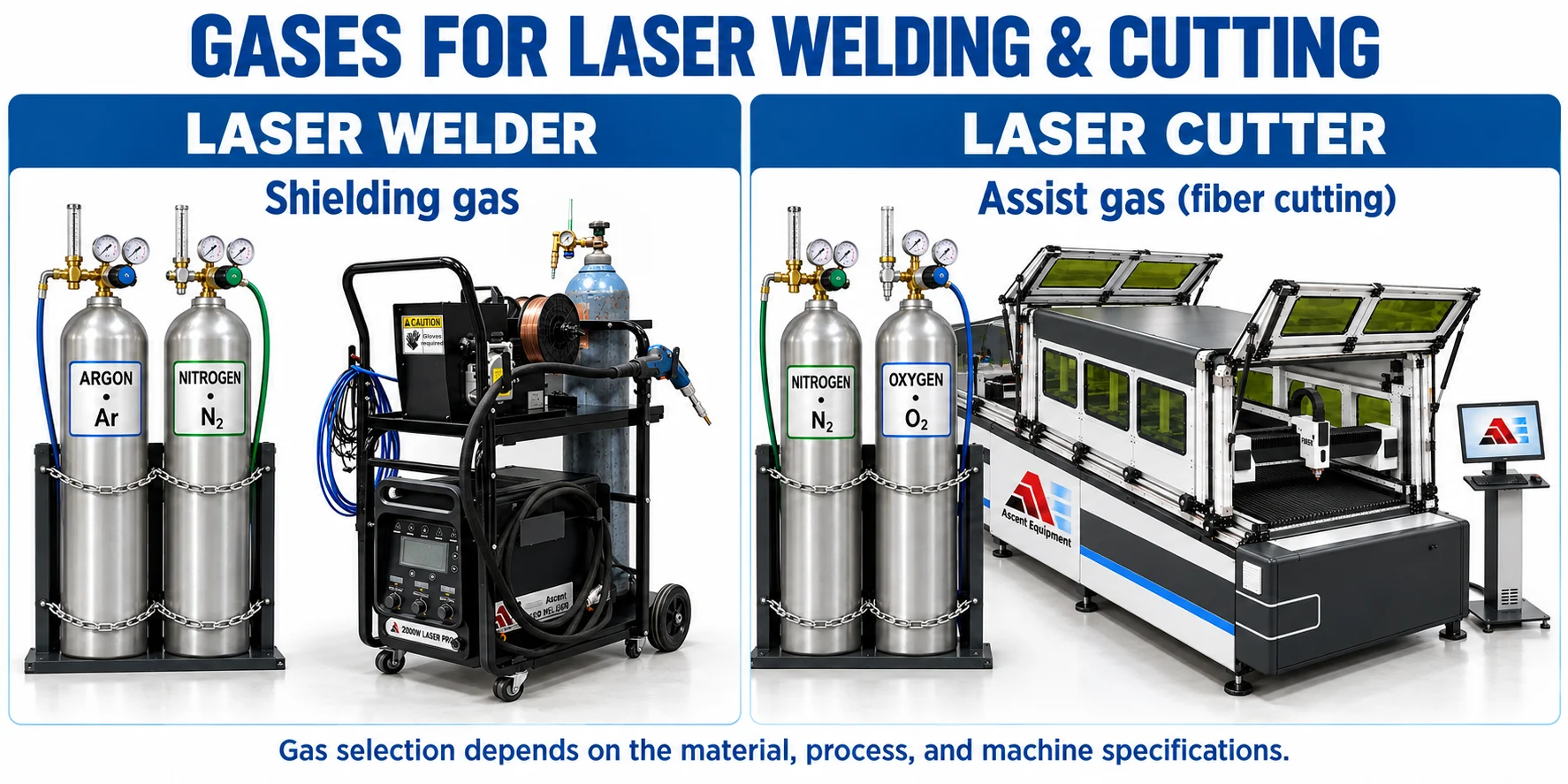
Shielding and Assist Gas for Laser Welding and Cutting
Which gas to use for laser welding and laser cutting, how to plan a supply that keeps up, what gas costs per good part, and how to handle cylinders safely.
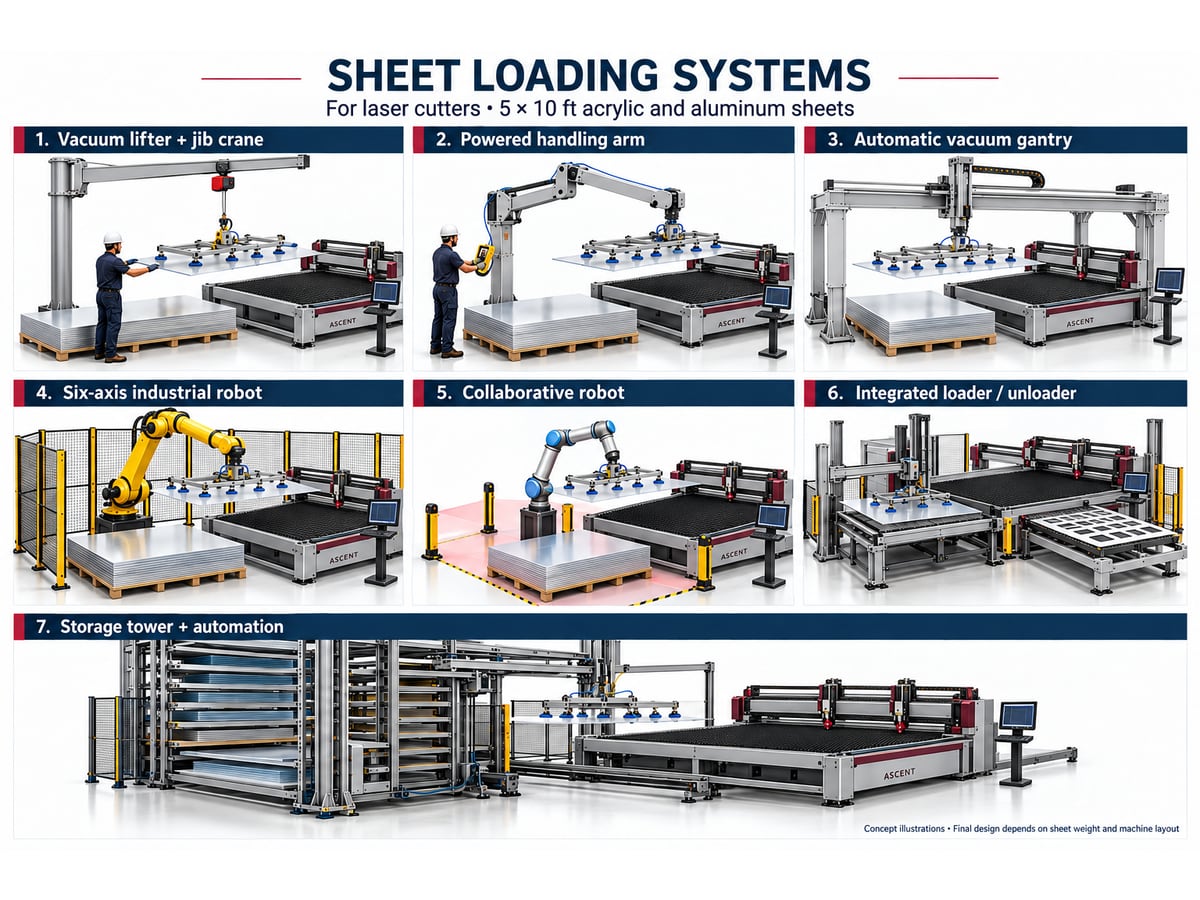
Sheet Loading for Laser Cutters: Options and Budget Costs
Seven ways to load 5 × 10 ft acrylic and aluminum sheets onto a laser cutter, from vacuum lifters to storage towers, with sheet weights and budget costs.
Cobots and Industrial Robots in Fiber Laser Welding
Cobot or industrial robot for fiber laser welding? How they differ, six automation examples, what a cell costs and why both need laser protection.
How Laser Technology Is Transforming Industry
Laser cutting, welding, cleaning and mold repair are changing how shops make parts: where the savings come from, how new workers learn and where AI fits in.
How to Select a Handheld Laser Cleaning System
How to buy a handheld laser cleaner: describe the job, test on your own parts, look past the wattage, plan fume extraction and compare cost per square foot.
How Laser Technology Empowers Fabricators and Entry-Level Workers
Laser welders let entry-level workers do professional work on routine jobs. What they learn fast, what still takes skill, and what a shop can save.
Buying a Handheld Laser Welder: A Practical Checklist
Cooling, power, wire feeder, wobble head, torch weight, safety and warranty: the points that decide which handheld fiber laser welder fits your shop.
Inside the Ascent 2000W Handheld Fiber Laser Welder
What the Ascent 2000W handheld fiber laser welder brings to a shop: refrigerant cooling, a high-speed wobble head, a light torch and a complete kit.
How the Ascent 2000W Refrigeration Laser Welder Compares
The Ascent 2000W refrigeration laser welder next to typical air- and water-cooled handheld welders: cooling, duty cycle, torch weight, running cost and support.
Winning Over a Skeptical MIG or TIG Welder
How to get an experienced MIG or TIG welder to give laser welding a fair try: aluminum, the daily workflow, labor math, safety questions and a test weld.
Up to 4x Faster: What a 2000W Handheld Fiber Laser Welder Offers
Handheld fiber laser welders can travel up to 4x faster than traditional welding. Cooling, torch weight, included gear and what a 2000W machine can weld.
Laser Welding and the Cost of Aluminum Welding Labor
Skilled aluminum TIG welders are expensive and hard to hire. How training a production worker on a laser welder changes the labor math, with wage data.
Fit-Up and Gap Control in Laser Welding
A gap in a laser weld joint is a path for the beam. Fit-up tolerances, joint types, fixturing, copper backing bars and what to do when a gap stays open.
Setting Up for a Handheld Laser Welder, Step by Step
Get your shop ready for a handheld laser welder: power, gas, the laser-controlled area, fume extraction, table height, cables, fixtures and a daily checklist.
Is QCW Safer? Pulsed vs. Continuous Tabletop Laser Welding
QCW pulses put less heat into thin aluminum and stainless than CW, but both are Class 4 lasers. What a CCD camera and an enclosure really add to safety.
QCW Tabletop or 2000W Handheld: Which Laser Welder Fits Your Shop?
The Ascent QCW tabletop and handheld welder versus the 2000W handheld: typical work, heat input, speed, and which kind of shop should buy which.
Mold Repair Lasers Compared: QCW Fiber, Pulsed Nd:YAG and Continuous Fiber
QCW fiber, pulsed Nd:YAG and continuous fiber (CW) lasers for mold repair: beam quality, efficiency, peak power on reflective metals, filler wire and heat.
Which Materials Actually Stop a 1070nm Fiber Laser Beam?
Ordinary welding curtains don't stop a 1070nm fiber laser. Which absorbing and reflecting materials work as backing, barriers and beam stops, and which fail.

Talk to a laser specialist about your welding or cutting job

Contact us