
Most conversations with a buyer start with price. Our first step is to find out what you need, usually by asking about the product you plan to make.
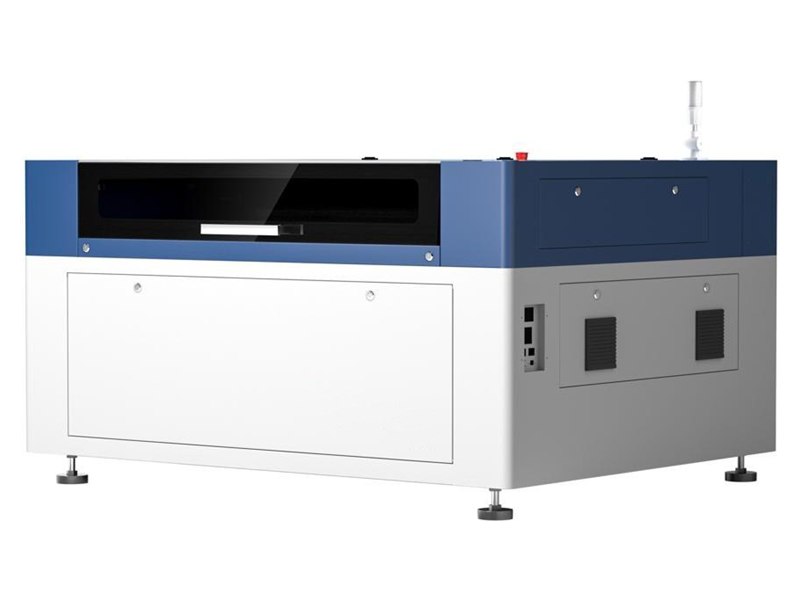
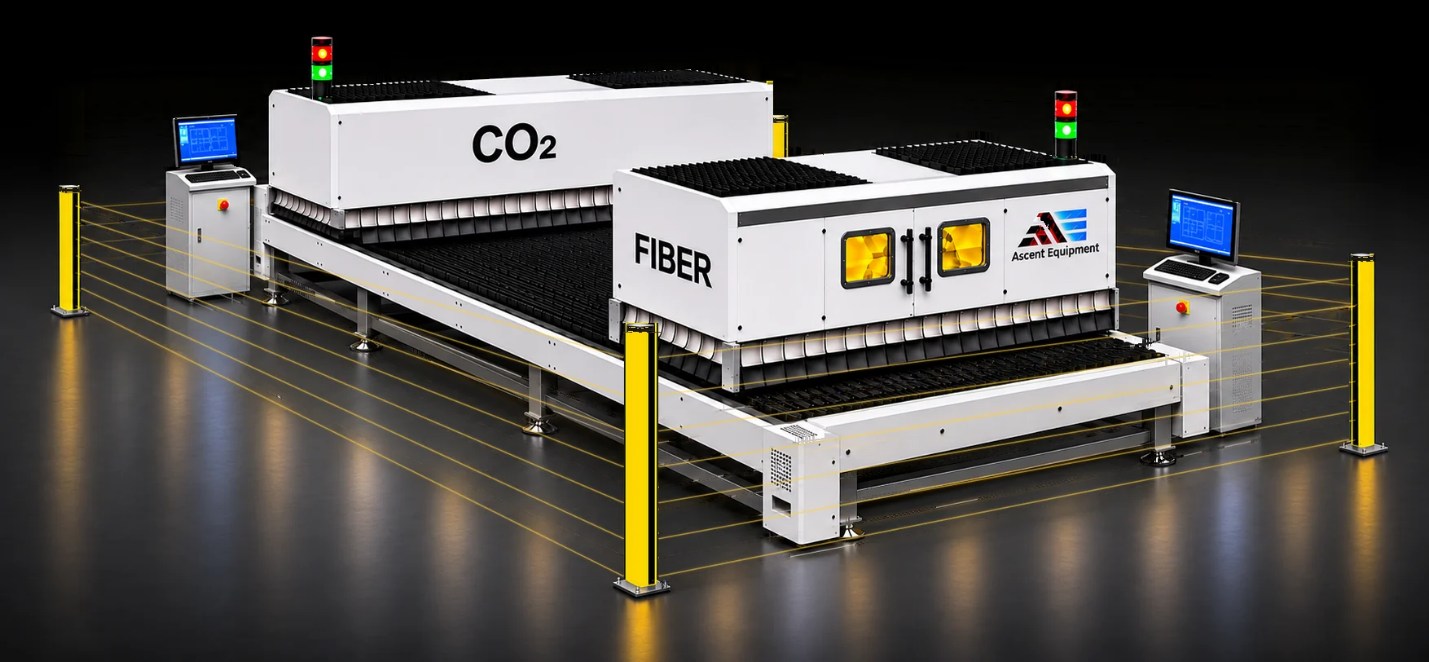
The example in this article is the most expensive machine we sell, a dual-gantry laser cutter. We've already compared CO₂ and fiber lasers material by material, and our laser safety page sets out the requirements, including covers and enclosures.
Two questions come first. What do you cut in a normal week, and which parts do you pay someone else to make?
The answers change the purchase. A shop that runs acrylic all day is in a different position from one that orders its aluminum parts already laser-cut. If you do both, consider the dual-gantry cutter: one gantry carries a CO₂ laser that handles acrylic and similar materials, while the second holds the fiber source for metals. Lining up machine prices from several quotes is simple. The harder job is estimating what it takes to get the machine producing and what it can take off the cost of your current jobs.
We work through both below. The electrical figures come from a recent installation plan.
What it takes to start producing
Total acquisition cost covers buying, installing and commissioning the machine, plus training the people who will run it. Have each supplier spell out what the quote contains and what is left for you to arrange.
| Item to budget | What to settle before ordering |
|---|---|
| Machine and options | Table size, laser types and wattage, controls, software and accessories |
| Shipping and placement | Delivery terms, unloading, forklift or rigging fees, and setting it in position |
| Power | Voltage, phase and capacity needed, and whether a transformer, disconnect, new wiring or a service upgrade is involved |
| Fumes and debris | What comes with the machine, what you provide, and the setup for your materials |
| Air and gas | The compressor, dryer, filters or gas supply your jobs call for |
| Setup and training | Who commissions it, what the training includes and whether travel is billed |
| First supplies | Starter consumables, spares, laser eyewear, and stock for test cuts and practice |
Some of this is already covered when the machine comes from us. Shipping, installation at your facility and operator training are included. Remote desktop software is installed on our laser cutters before delivery, software updates cost nothing, and remote technical support lasts for the life of the machine, from technicians in Buffalo, Toronto and Kentucky.
One pair of OD 8 goggles ships with every Ascent laser cutter. A second operator or helper near the machine means buying more pairs. Minimum OD 5; prefer OD 7 or 8.
Requirements at your building
Our installation layout for this machine shows how many trades get involved before it cuts anything.
- Space: the machine itself is 17.5 ft long and 7.5 ft wide (5.3 m by 2.3 m). The layout gives it 27.5 ft by 20.5 ft (8.4 m by 6.2 m), so three sides stay open for loading.
- Electricity: the fiber laser and the extraction fan take 380 V, three-phase with neutral. The CO₂ laser, the pair of water chillers and the air pump run on 220 V. The machine must be grounded.
- Air: your own compressed air supply at 73 psi (5 bar).
- Gas: oxygen when cutting carbon steel, nitrogen when cutting stainless steel or aluminum.
- Fumes: collectors for fumes and debris are standard equipment. The layout sends both lasers into one duct that vents outside, and an added collector for fumes and dust is optional.
None of this is free, and much of it comes from other companies. The electrical share is usually the largest.
The electrical bill, worked through
The same cutter can cost very different amounts to install. If suitable power is already close to where it will sit, a short run may be enough. If not, you could be paying for a transformer, distribution equipment and a much longer cable.
Our example is a shop with a common 208 V, three-phase, 200 A service. Neither 380 V nor 220 V was available there, which meant planning for transformers, disconnects, a small 220 V breaker panel, a starter for the extraction fan and the cabling. We checked each line against published prices from US electrical distributors and matched every part to its real load. The result is about $12,500–$20,100 in electrical equipment, or about $17,800–$35,700 installed.
| Budget line | Estimate |
|---|---|
| Transformers | $7,578–$7,615 |
| Fused disconnects (two) | $1,786–$3,130 |
| Distribution box, breaker panel, contactor, switch and fan starter | $2,750–$7,250 |
| Transformer protection switches, if required | $0–$1,500 |
| Cable runs, 50 ft each | $400–$612 |
| Equipment subtotal | $12,514–$20,107 |
| Electrician labor | $5,300–$15,600 |
| Installed total | $17,814–$35,707 |
Distributor list prices as of November 2026. Freight, sales tax, permits and any service upgrade are extra.
Here is what sits behind those numbers:
- The single-phase 220 V equipment adds up to roughly 10–11 kW, which an off-the-shelf 15 kVA single-phase transformer can carry. For 380 V we used a stock 45 kVA unit with the exact voltages, listed near $5,100.
- Indoors, a NEMA 1 switch or a dust-tight NEMA 12 is enough, at about $900–$1,600.
- Switches and breakers are chosen by load. The CO₂ laser, for one, pulls only about 18–23 A.
- For labor we assumed a master electrician plus helper at $100–$130 per hour. Treat that as our estimate, and collect fixed prices for the complete job from three or more licensed contractors.
- Your electrician may want a fused switch in front of each transformer. We set aside up to $1,500 for it, so raise the point before the budget is final.
Confirm your service can carry it
The costliest electrical item isn't in that table. It is a service upgrade. With the cutter, two chillers, the air pump and the extraction fan all running, the draw on the 208 V service is roughly 91–162 A, depending on the fan. Cutting goes on for hours, so the electrical code treats this as a continuous load and applies 125 percent, giving 114–203 A. With a large fan on a 200 A service, little or no capacity is left for lighting, offices or air conditioning.
Before budgeting, request the past 12 months of peak-demand records for your building from the utility. Hand them to the electrician with a nameplate reading from every machine. If an upgrade is needed, it involves the utility and gets its own quote.
Take these questions to your electrician
- Going by the nameplates (cutter, two chillers, air pump and fume collector), what voltage, current and phase does each unit call for?
- Where is a neutral required in addition to the phase conductors?
- With continuous loads counted at 125 percent, can the present service handle them?
- Which enclosure rating does the mounting location really call for?
- Have the transformers, switches and breakers been matched to the real loads?
- Are the permit and inspection in the price?
Then put one to your machine supplier: is every component, chillers included, built for 60 Hz? That is the North American frequency, and installation day is a bad time to discover a 50 Hz part.
Which jobs will pay it off?
Picture a job shop that routes its own acrylic parts and buys its aluminum parts from a cutting service. A dual gantry would put both materials on one table. The thing to find out is what that would be worth on a normal workday.
Test the acrylic work with your normal material, thickness and part shapes. Time it from loading the sheet to parts ready for the next step, including any edge finishing you do now. For the aluminum, pull your supplier's invoices, with freight and rush fees. Then work out what the same parts would cost to make yourself in labor, material, assist gas and consumables.
Count the times both lasers would be wanted together. With one table between them, a lengthy acrylic run can leave an urgent metal order waiting. If that happens routinely, compare the dual gantry with the installed price and capacity of two dedicated cutters, remembering that two machines need power, extraction and floor space twice. A week of real orders will tell you more about this than a cutting-speed chart.
Savings against running costs
Here is an illustration with round numbers. A shop invests $150,000 installed. It plans to stop sending out $72,000 of work each year and to save $18,000 a year of labor on what it already produces. It budgets $30,000 a year of extra operating cost for the new work and equipment, covering operator time, material, utilities, consumables and maintenance.
| Per year | Example figure |
|---|---|
| Outsourcing no longer paid | $72,000 |
| Production labor saved | $18,000 |
| Added operating costs | ($30,000) |
| Net gain per year | $60,000 |
| Time to recover the $150,000 | 2.5 years |
Swap in your own quotes and job records. The installed figure has to include every line from the first table, including freight, power, extraction, air and first supplies. The electrical work in the example above, about $17,800–$35,700, equals roughly four to seven months of that $60,000 yearly saving.
Treat saved labor as cash when it lowers a real expense such as overtime or temporary help. If the same people stay on payroll and use the hours to complete more orders, value those hours by the additional orders you could really fill and sell. If you are financing the machine, estimate cash flow month by month, with the payments and a gradual rise in production.
Ask us about any detail you like. Our expertise is the machine, and yours is your shop.
We can cut sample parts so you can see how the edges look, how long handling takes, what finishing is left and how the change from acrylic to aluminum goes. With those in hand, you can decide what the cutter is worth to you, from delivery until it has begun to earn back its cost.