
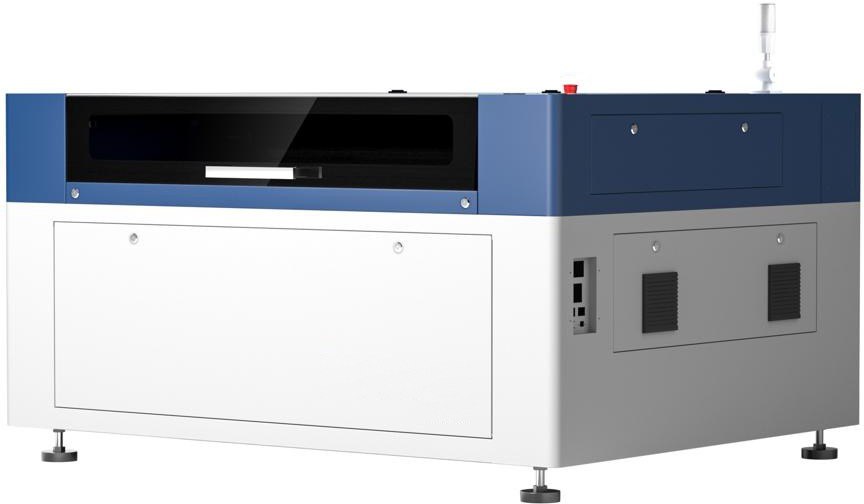
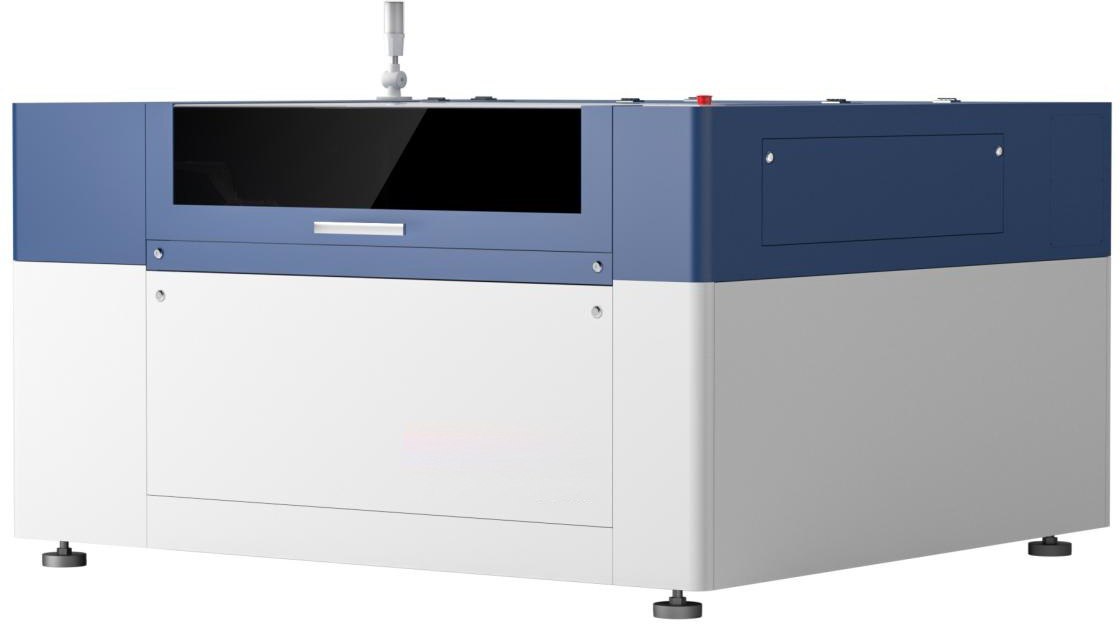
A CO2 laser cuts and engraves acrylic, wood, MDF, leather, rubber, paper and many other nonmetals. In photos the machines look much alike. They differ in the things that decide whether one fits your shop: the bed size, the laser power, how the head is driven, how the beam is focused, and what the machine needs from your building.
This guide takes those choices one at a time. The examples are the five Ascent machines that carry a CO2 laser, from a cutter/engraver with a 60W tube to a dual-gantry machine that cuts acrylic and steel at the same time.
The five machines at a glance
| Machine | Bed | CO2 laser | What stands out |
|---|---|---|---|
| Medium-Size CO2 Laser Cutter/Engraver (A-DURA 9, 13, 16) | 35.4 x 23.6 in to 63.0 x 39.4 in | 60W to 300W | Belt drive for fast engraving, motorized table, rotary option |
| Small-Size CO2 Laser Cutter/Engraver (A-MIX 13) | 51.2 x 39.4 in | 300W, 450W or 600W | Ball screws, servo motors and an autofocus head |
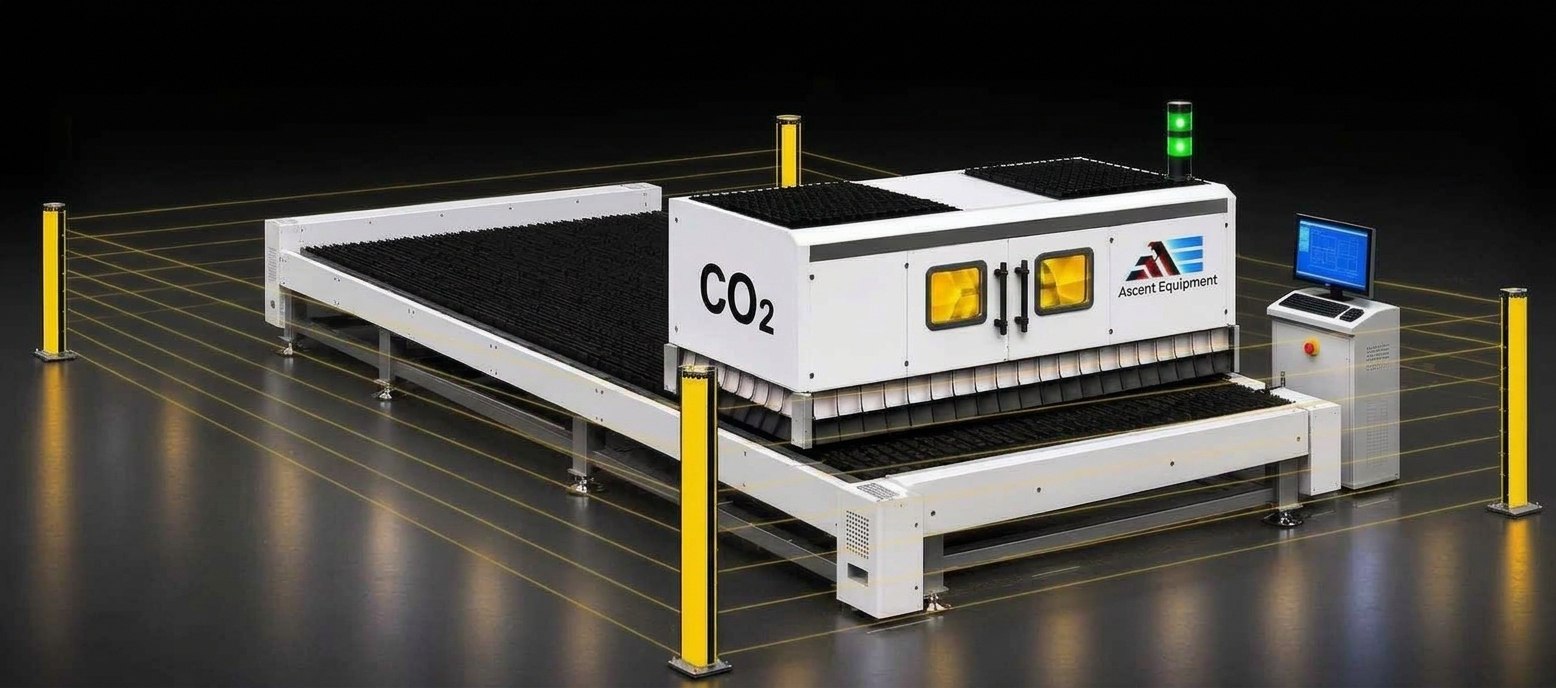
| 5 ft x 10 ft CO2 Laser Cutter | 5 x 10 ft, or 4 x 8 ft | 300W, 500W or 600W | Covered gantry with a camera, infrared safety curtain |
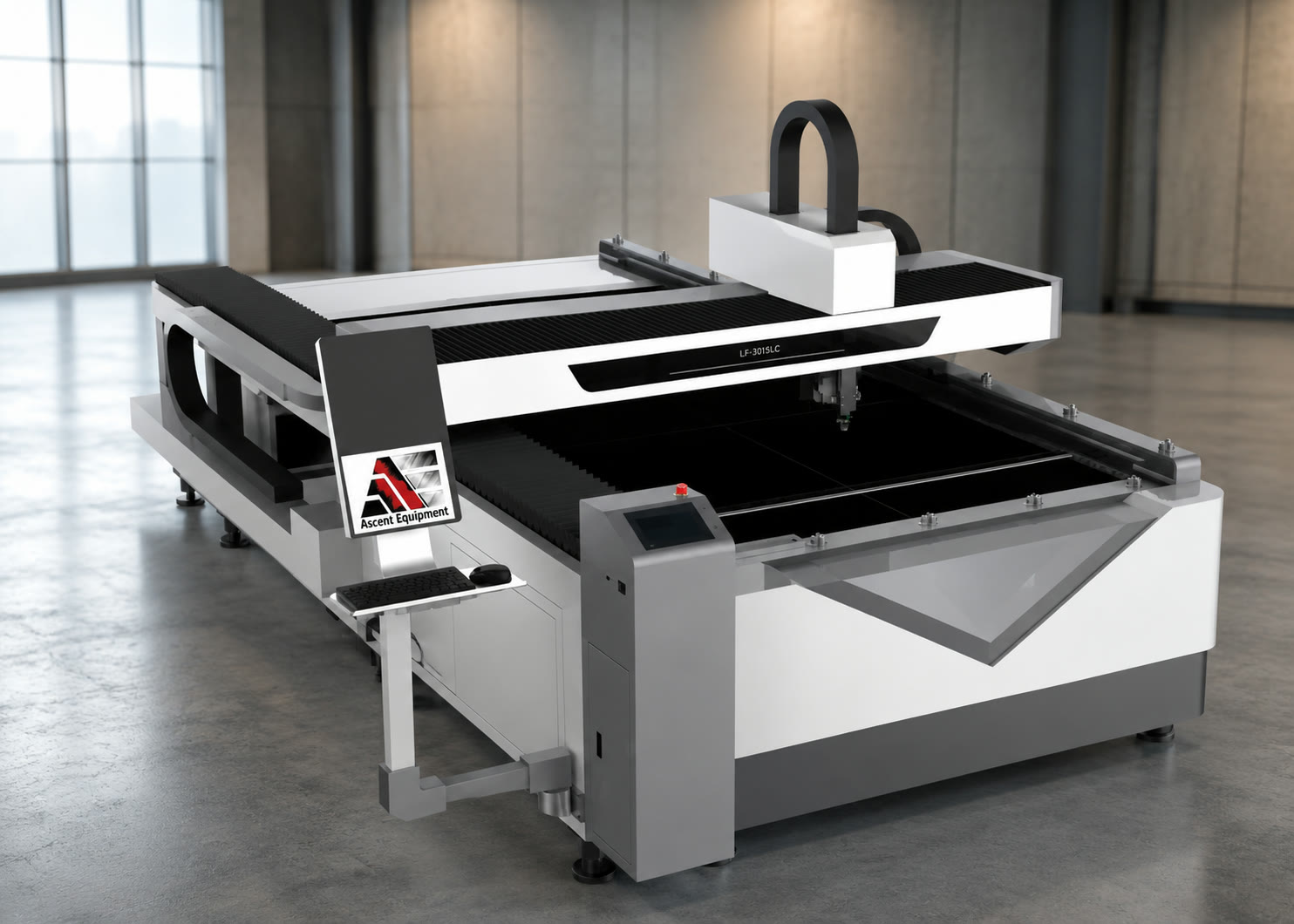
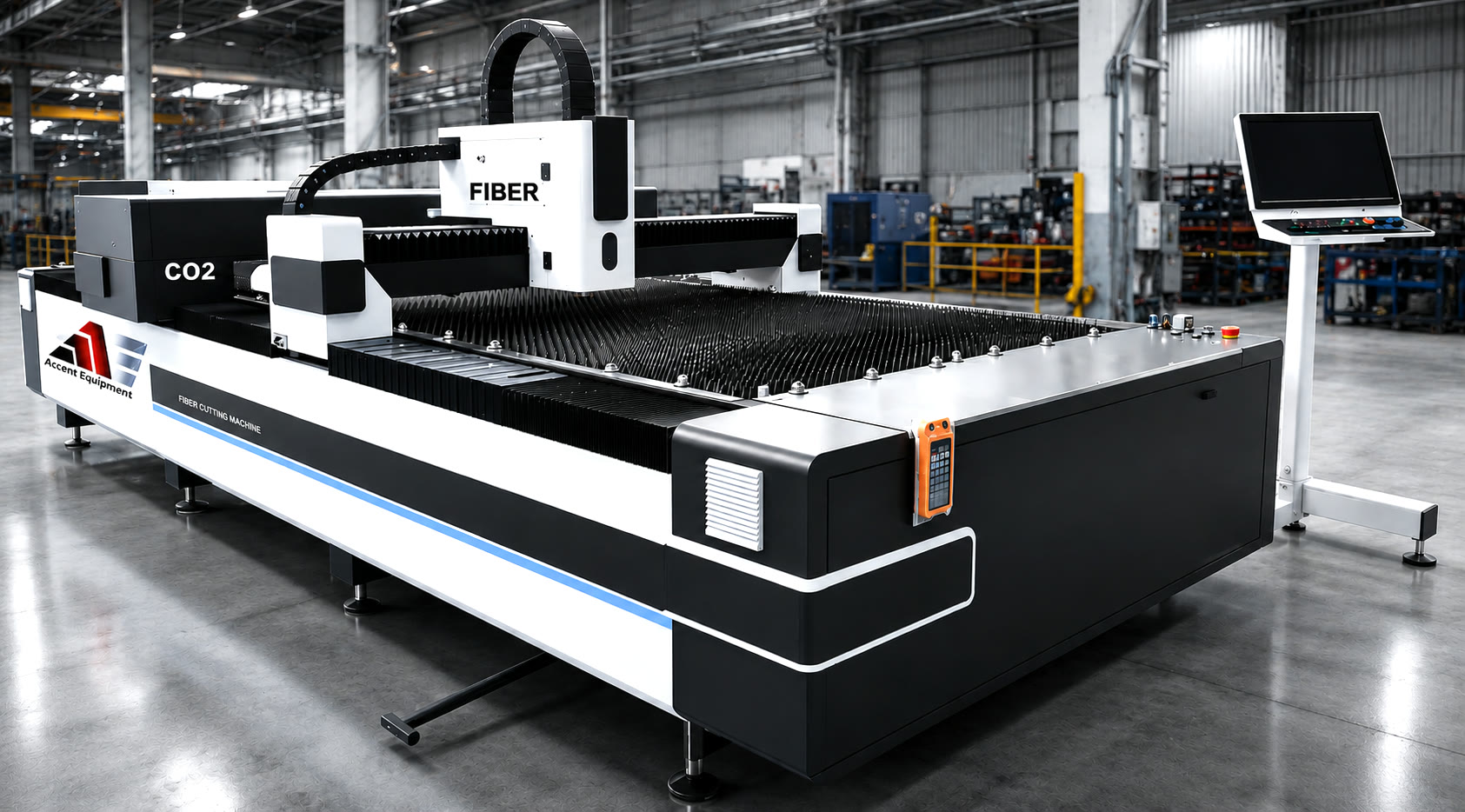
| Combination CO2 and Fiber Laser Cutter | 4 x 8 ft | 150W, plus fiber up to 3000W | Cuts metal and nonmetal on one bed |
| Dual Gantry CO2 and Fiber Laser Cutter | 5 x 10 ft or 6 x 12 ft | 300W, 500W or 600W, plus 3000W or 6000W fiber | Two gantries cut two materials at once |
1. Start with your materials
A CO2 laser works at a wavelength that nonmetals absorb well, which is why it is the usual choice for acrylic, wood, plywood, MDF, leather, rubber, fabric and paper. It is not the tool for cutting sheet metal. If metal is part of your work, you need a fiber laser, either as a second machine or on the same machine (see the last section).
Some materials should never go under a laser at all. PVC, vinyl and other chlorinated plastics give off chlorine or hydrogen chloride gas when they are cut. The gas is dangerous to breathe, and it corrodes the optics and the metal parts of the machine. University safety offices add PTFE (Teflon) and other halogen-containing plastics to the list. If you are not sure what a sheet is made of, read its safety data sheet before you cut it.
2. Size the bed to your sheets
Measure the largest sheet you cut today and the largest you expect to cut. A bed that takes the full sheet saves a saw cut before every job, and it lets you nest more parts per sheet.
Then look at the machine around the bed. The A-DURA 13, with a 51.2 x 35.4 in (1,300 x 900 mm) bed, measures 75.2 x 55.1 x 40.6 in and weighs 926 lb (420 kg). The A-MIX 13, with a slightly larger 51.2 x 39.4 in (1,300 x 1,000 mm) bed, measures 80.7 x 70.9 x 46.5 in and weighs 2,205 lb (1,000 kg). Check door widths and the path from the truck to the floor before you order.
3. Match the laser power to the thickness
More power cuts thicker material and cuts it faster. Power you never use still costs money, though, in the tube, the chiller and the electrical service. Start from the thickest sheet you cut every week, not the thickest you might cut once a year.
| Machine and CO2 power | Acrylic | MDF | Wood board or plywood |
|---|---|---|---|
| Combination, 150W | 0.98 in (25 mm), at 0.03–0.07 in/s (0.8–1.8 mm/s) | Not listed | Wood board 0.47 in (12 mm) |
| A-MIX 13, 300W | 0.79 in (20 mm) | 0.39 in (10 mm) | Wood board 0.59 in (15 mm) |
| 5 ft x 10 ft and dual gantry, 300W or 500W | 0.98 in (25 mm) | 0.59 in (15 mm) | Plywood 0.79 in (20 mm) |
| 5 ft x 10 ft and dual gantry, 600W | 1.18 in (30 mm) | 0.79 in (20 mm) | Plywood 1.18 in (30 mm) |
The A-DURA has no thickness chart. Its rating is a cutting speed of 11.8 in/s (300 mm/s) in 0.04 in (1 mm) plywood. Treat every figure as a maximum and test your own sheet: edge quality drops off as you get close to the limit.
4. Decide how much you engrave and how much you cut
Every machine in this guide engraves as well as cuts, but they are built with different priorities, and the drive system shows it.
A belt drive with stepper motors keeps the moving parts light. That suits raster engraving, which is thousands of short, fast strokes back and forth. The A-DURA engraves at up to 47.2 in/s (1,200 mm/s) at 1,000 dpi.
Ball screws with servo motors are stiffer and heavier, and they are built for cutting performance and stability. Their top speed is lower. The A-MIX 13 runs at up to 19.7 in/s (500 mm/s), with servo motors turning at up to 2,000 rpm, and the combination machine moves at up to the same 19.7 in/s (30 m/min).
If most of your hours go to engraving logos, photos and text, favor a fast belt-driven machine. If most go to cutting thick sheet, favor a rigid ball-screw machine with more power. For fine detail, both the A-DURA and the A-MIX 13 engrave letters as small as 0.04 in (1 mm).
5. Focus, table height and round parts
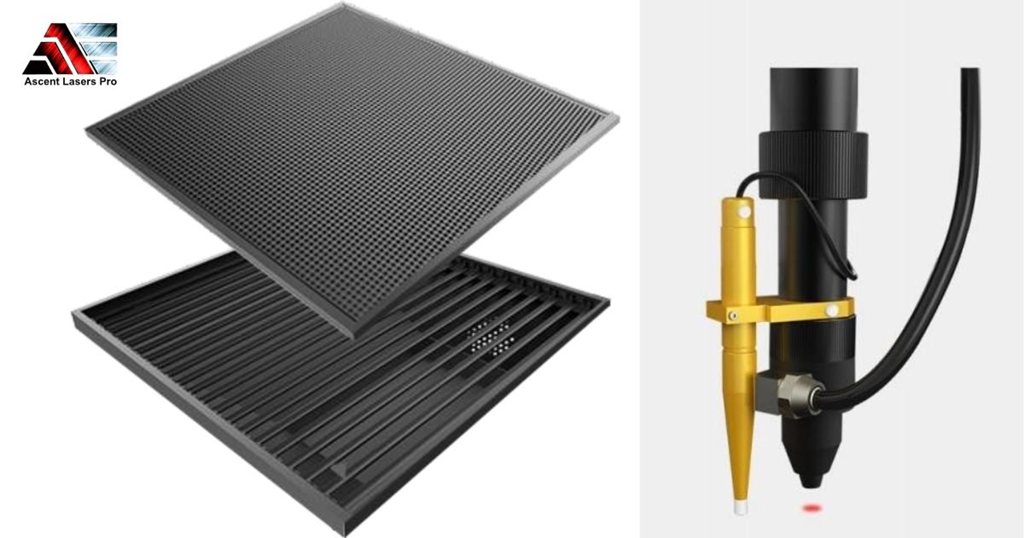
Focus has to be set to the top of the material. An autofocus head does it for you: on the A-MIX 13 the head finds the right height each time the material thickness changes, and height following is an option. On a manual-focus machine such as the A-DURA, the operator sets it.
Table travel matters if you work on anything taller than a flat sheet. The A-DURA table rises and falls 10.2 in (260 mm) under motor power, which leaves room for large objects and for the optional rotary that turns round items under the beam.
Look at the worktable too. A blade table holds the sheet on thin slats with little contact, which suits thicker material. A honeycomb table supports thin sheets and small parts better. The A-DURA comes with a blade table and offers a honeycomb table as an option, and the A-MIX 13 has a blade table.
6. The laser tube and its cooling
Most CO2 cutters in this class use a sealed glass tube cooled by a water chiller. RF metal tubes are air-cooled and last longer, but they cost more. On a glass-tube machine the chiller is sized to the tube: the A-DURA uses a CW3000 for 80W, a CW5000 or CW5200 for 100W to 135W, and a CW6000 for 300W.
Tubes wear out with use. Ask for the rated life and for the warranty on the tube itself, which is often shorter than the warranty on the machine. The A-DURA tube, for example, is rated for 3,000 hours and carries 6 months, while the machine carries 1 year and the guide rails 3 years.
7. Fumes, air assist and ventilation
Cutting acrylic, wood and MDF makes smoke and fumes, and the machine has to get rid of them. The machines in this guide handle it in different ways:
- A-DURA: an external 550W exhaust blower.
- A-MIX 13: two 750W blowers built in, which remove about 95% of the dust and smoke.
- 5 ft x 10 ft CO2 Laser Cutter: an improved fume collection system, with a fume extractor as an option.
- Dual gantry: fume collection is standard, with a collector for smell and fumes on the CO2 side and a debris collector on the fiber side.
- Combination machine: an exhaust fan built in; collectors for fumes and debris are options.
Plan to vent outdoors, or to filter the air if you cannot. Our post on fume and debris collection explains how a multi-stage collector handles each material.
Air assist blows the smoke away from the cut and keeps flames down. The A-DURA comes with a 135W air pump and offers dual air assist. The 5 ft x 10 ft CO2 Laser Cutter comes with an oil-free air compressor. The A-MIX 13 needs a compressor that you supply, with at least 29 psi (0.2 MPa) and 1.5 hp (1.1 kW).
8. Power supply, floor space and delivery
Ask for the electrical requirements before anything else, because they can change your installation budget. The A-DURA runs on 220V AC, 50 or 60 Hz. The A-MIX 13 also runs on 220V and draws 5 kW at 20 A with a 300W tube. The combination machine needs 380V three-phase, and the dual gantry needs 380V three-phase plus 220V single-phase. US plants usually have 208V or 480V three-phase and Canadian plants 600V, so those two machines need a transformer, which Ascent can supply with UL/CSA certification. The 5 ft x 10 ft CO2 Laser Cutter depends on the power you choose; ask us.
Plan the delivery as well. The A-MIX 13 ships at 2,425 lb (1,100 kg) and comes off the truck with a forklift fitted with extension forks, or with a crane. Have an electrician check your service before the machine arrives.
9. Safety and compliance
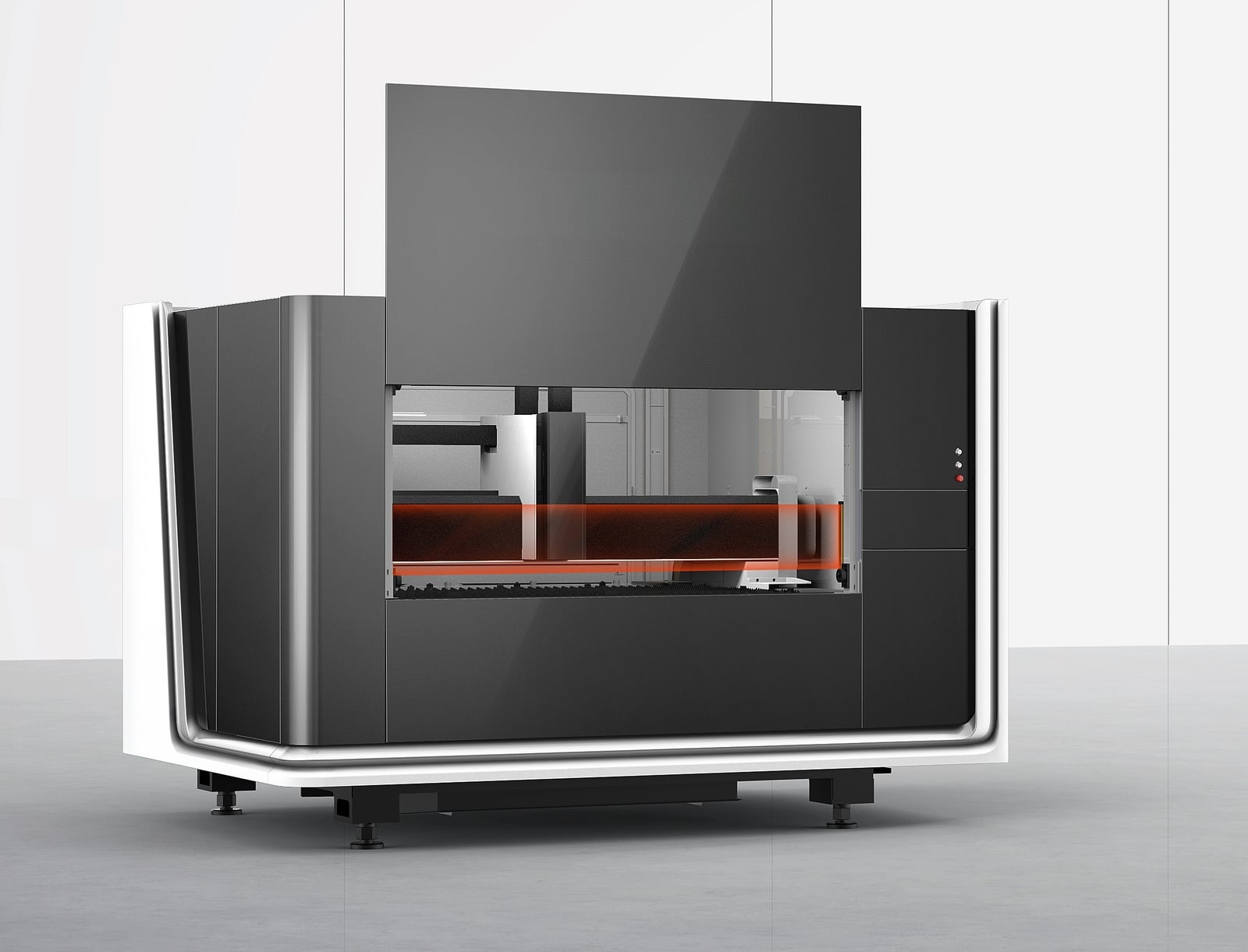
Inside the cabinet, a CO2 cutter holds a Class 4 laser. The enclosure and its interlocks are what make it safe to work beside. The A-DURA stops when the lid is opened and has water-flow protection. The 5 ft x 10 ft CO2 Laser Cutter has a covered gantry and an invisible infrared safety curtain around the machine. The dual gantry is enclosed by slide covers or by laser-rated partitions.
Ascent ships one pair of OD 8 laser safety goggles with every laser cutter. Minimum OD 5; prefer OD 7 or 8.
In the US, laser products must meet FDA's performance standard for laser products (21 CFR 1040.10 and 1040.11). The maker files a report on each model with FDA's Center for Devices and Radiological Health, which assigns an accession number. Ask the seller for that number. Ascent has one for each of its lasers. Our laser safety page covers eyewear, rooms and partitions in more detail.
10. When you also cut metal
If you cut steel, stainless or aluminum as well as acrylic and wood, the question becomes whether to put a fiber laser and a CO2 laser on one machine. There are two ways to do it.
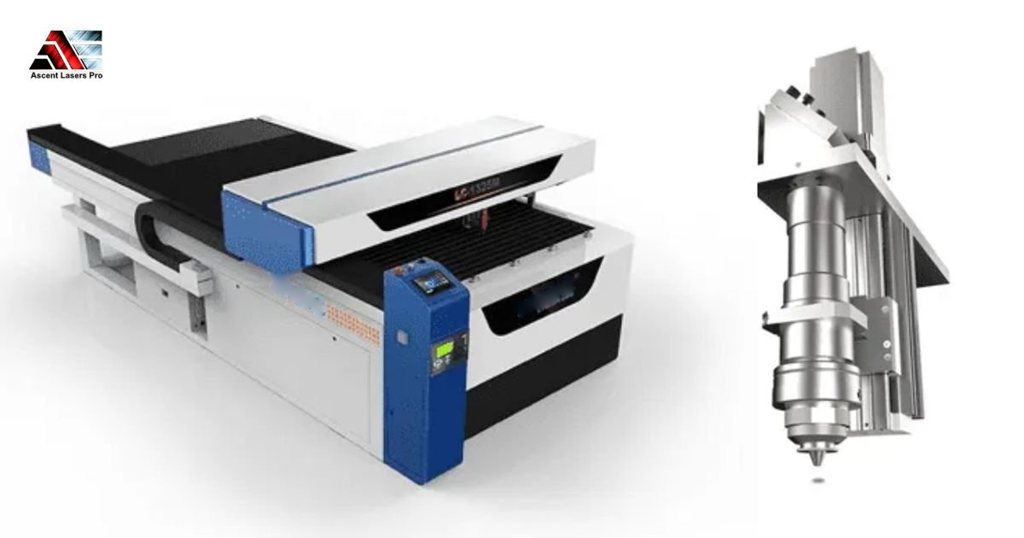
- The combination CO2 and fiber laser cutter (Ascent-LF1325-FC) puts a 150W CO2 laser and a fiber laser of up to 3000W over one 4 x 8 ft bed, driven by servo motors and ball screws. Metal and nonmetal jobs run in the same workflow, one after the other.
- The dual gantry CO2 and fiber laser cutter has a separate gantry for each laser over one 5 x 10 ft or 6 x 12 ft bed: 300W, 500W or 600W CO2, and 3000W or 6000W fiber. The two gantries cut at the same time, so one operator can run acrylic on one side and steel on the other.
Choose the fiber power when you order. It is fixed by the laser source built into the machine and is not upgraded later.
Questions buyers ask
Can a CO2 laser cut metal?
Not as a sheet-metal cutter. Use a fiber laser for metal. The dual-gantry and combination machines carry both lasers.
How many watts do I need for 1 in acrylic?
On the 5 ft x 10 ft CO2 Laser Cutter and the CO2 side of the dual gantry, 300W or 500W is rated for 0.98 in (25 mm) acrylic, and 600W for 1.18 in (30 mm).
Is a ball-screw machine slower at engraving?
Its top speed is lower: 19.7 in/s (500 mm/s) on the A-MIX 13, against engraving at up to 47.2 in/s (1,200 mm/s) on the belt-driven A-DURA.
Do I need my own air compressor?
It depends on the machine. The A-DURA comes with an air pump and the 5 ft x 10 ft CO2 Laser Cutter with an oil-free compressor. The A-MIX 13 needs one you supply, with at least 29 psi (0.2 MPa) and 1.5 hp (1.1 kW).
What is included when I buy from Ascent?
Shipping, installation and training are included with every Ascent machine.