
Call us: 1-800-927-5107 647-494-7800 ext. 1008

How to Choose the Right QCW Laser Welding Machine for Your Workshop

A clean weld saves hours of rework, and a poor one can hold up a whole job. As metal parts get thinner and designs more detailed, many shops want a welder with fine control over heat. A QCW laser welding machine is built for that. This guide covers how to choose one for your workshop.

What QCW means

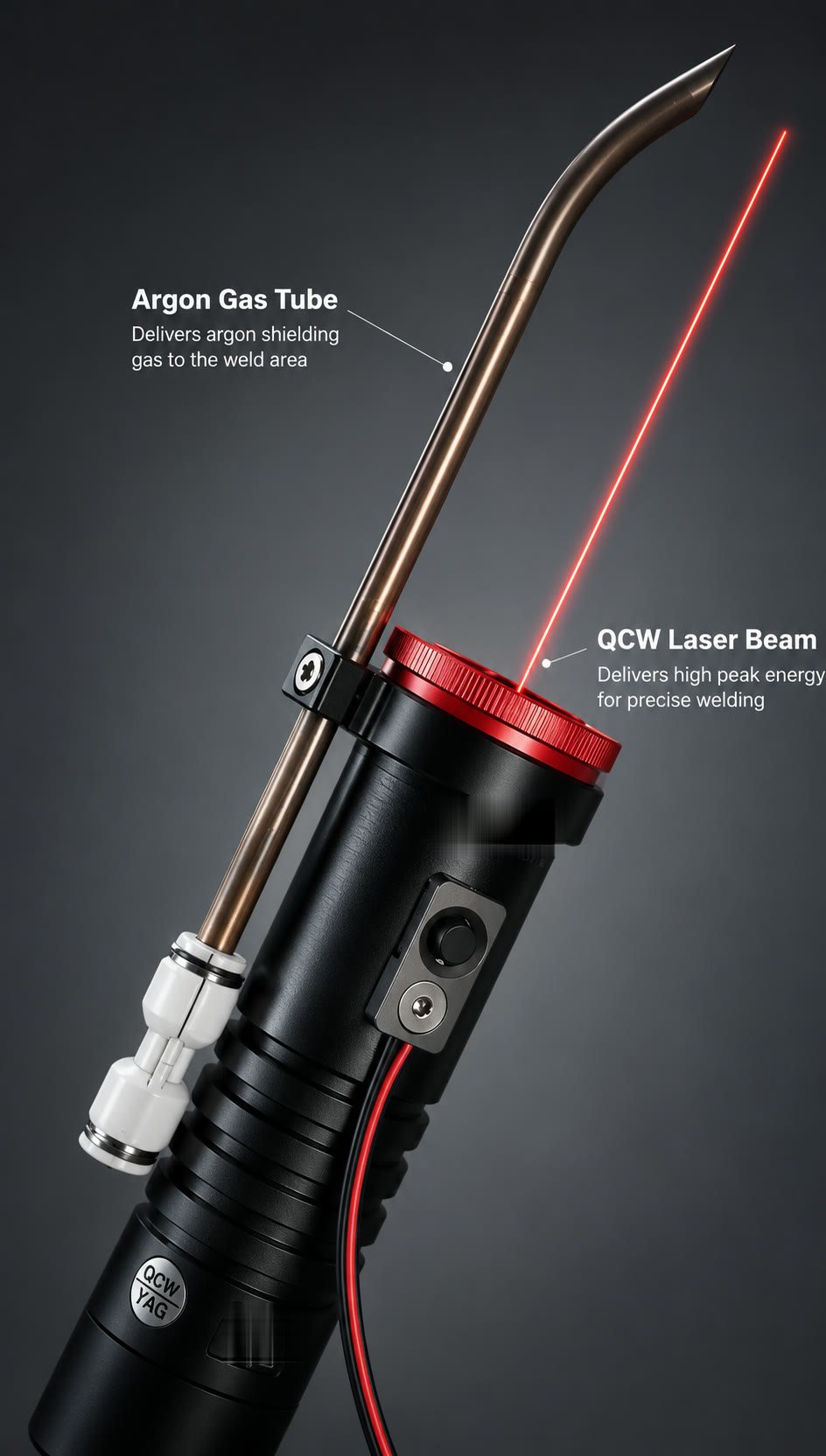
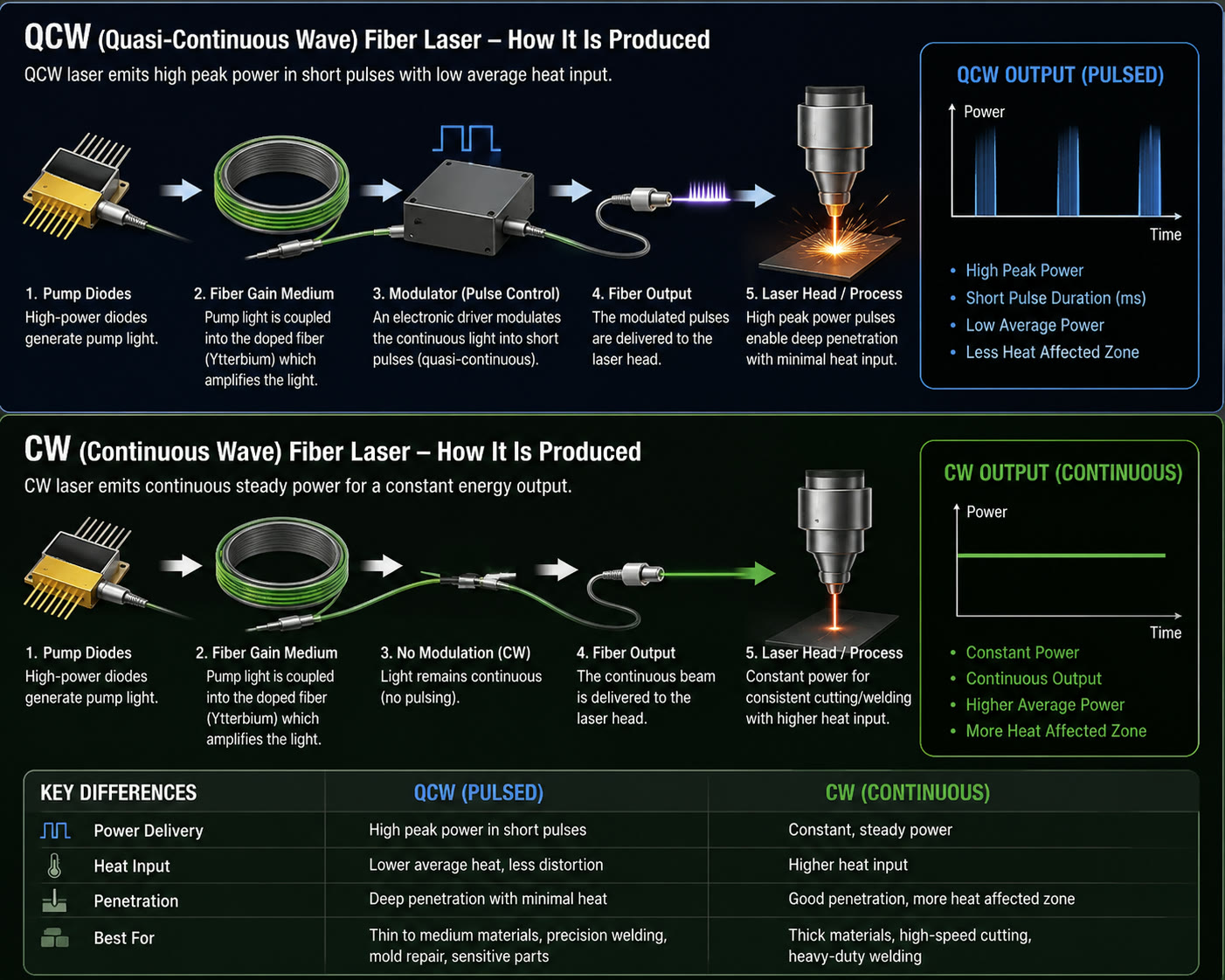
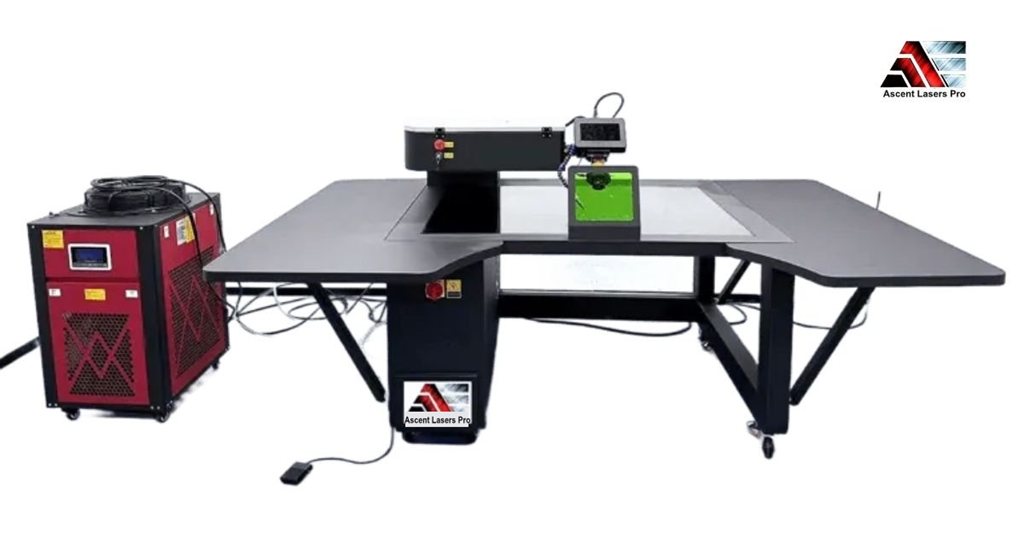
QCW stands for quasi-continuous wave. A QCW laser sends short, strong pulses instead of a nonstop beam. Heat stays controlled, and the weld still penetrates well. That makes QCW systems a good fit for thin metals, detailed joints and parts that cannot take much heat. The Ascent QCW tabletop and handheld welder has a 300W QCW source whose pulses peak at up to 3,000W.

Start with your workshop, not the specifications

Every shop is different. Some weld small precision parts, some run short production batches, and some do repairs on many kinds of metal. Ask yourself:

  • What materials do we weld most often?
  • How thin or thick are the parts?
  • How skilled are the operators?
  • How much space do we have?

When the answers are clear, the choice gets easier.

Materials and thickness

QCW works best where accuracy and heat control matter. The Ascent QCW welder welds stainless steel, aluminum, galvanized steel and brass. Its published thicknesses are:

  • Aluminum sheet from 0.020 in. to 0.063 in.
  • A flat aluminum panel up to 0.080 in. on a side wall up to 0.063 in.
  • Stainless steel up to 0.040 in.

Thin sheet benefits most, because low heat input reduces warping and burn-through and leaves a cleaner joint.

Power

Higher power is not always better. For QCW welding, low to mid power suits thin parts, and the pulse energy matters as much as the average wattage. Match the power to the real job. That gives you better control and protects delicate parts.

Tabletop or handheld

Shops often have to choose between a fixed station and a handheld torch. Handheld suits jobs that change often, parts of different sizes and repair work. A fixed setup suits repeat production, parts already in fixtures and plans for automation.

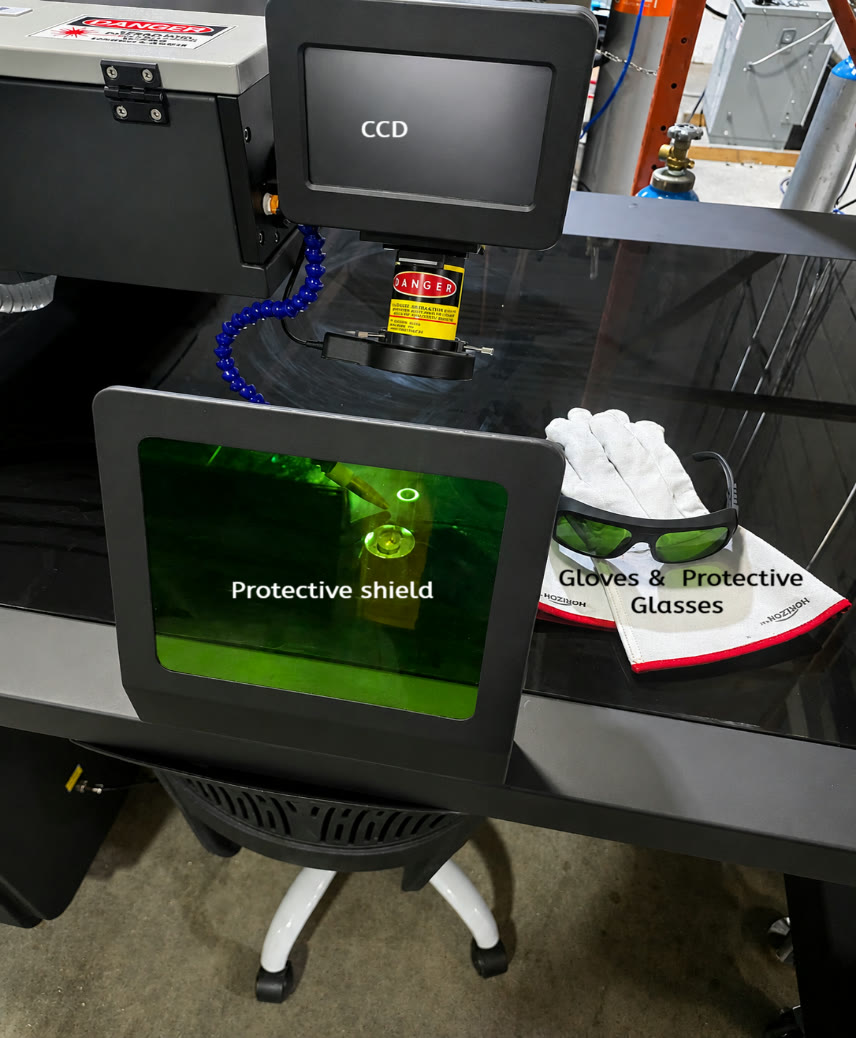
The Ascent QCW welder converts between a tabletop station and a handheld torch. At the bench, the operator fixtures each part, and a CCD camera shows the joint live so the operator can line it up before welding. When a part is too large for the table, the machine switches to the handheld torch, so you do not need a second welder.

Comfort and ease of use

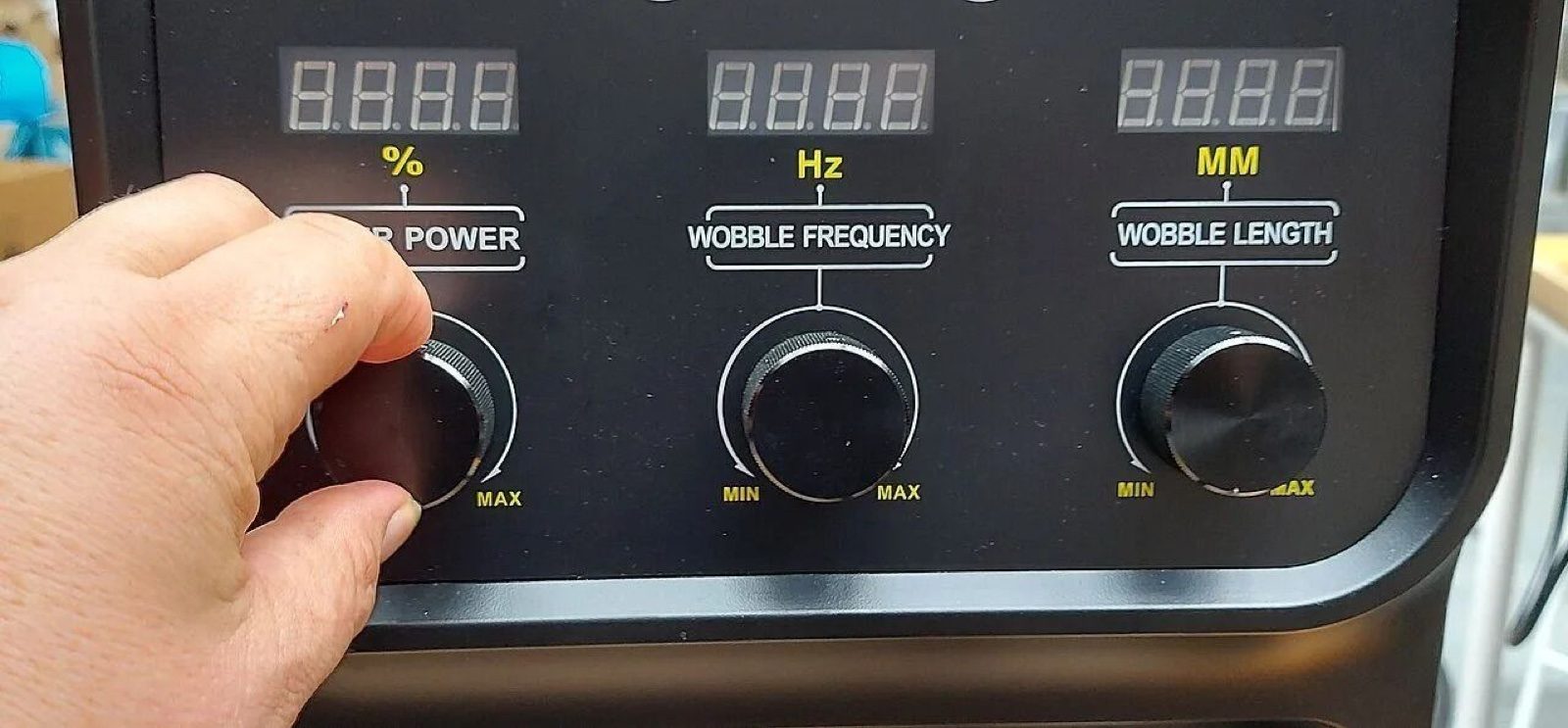
A powerful machine that is hard to use slows the work. Look for simple controls, a clear display, a comfortable torch and a smooth trigger. The Ascent welder's tabletop setup has a flat glass work surface, micropositioning rods to place the part the same way each time, and a dedicated CCD monitor.

Cooling and stability

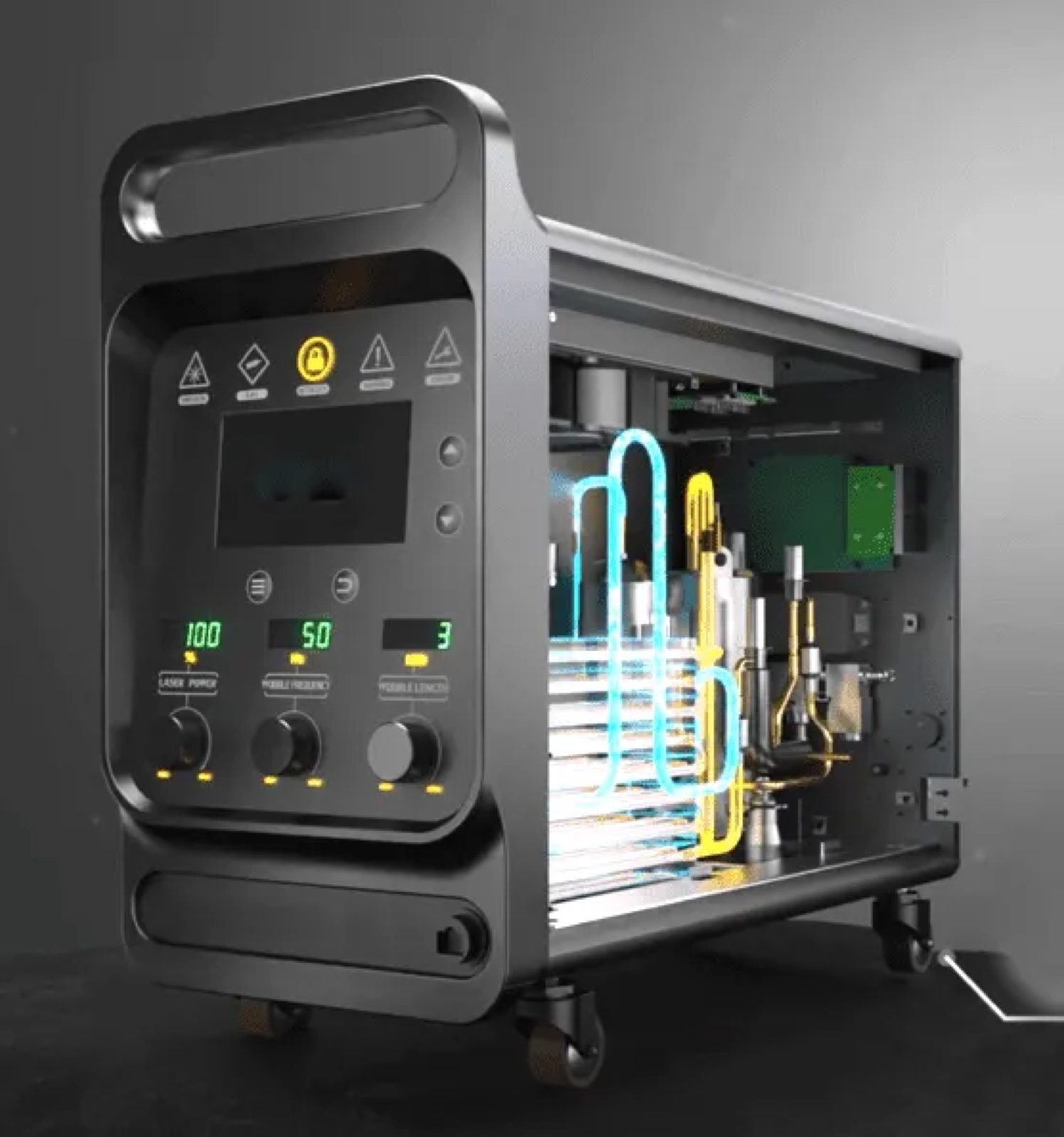
A laser makes heat inside the machine, so cooling affects reliability. Light use may get by with less cooling, but longer runs and steady output call for a proper cooling system. Stable temperature protects the laser, keeps weld quality consistent and extends machine life.

Maintenance and service

Even strong machines need care. Look for easy access to key parts, clear maintenance steps and service that is close at hand. Technicians support Ascent customers from Buffalo, Toronto and Kentucky.

Read also: How to choose the right CNC fiber laser cutter for long-term business growth

Features at a glance

Feature Why it matters
Pulse control Improves weld accuracy
Cooling system Supports long use
Ergonomic design Reduces fatigue
Stable output Gives clean welds
Service access Reduces downtime

Safety

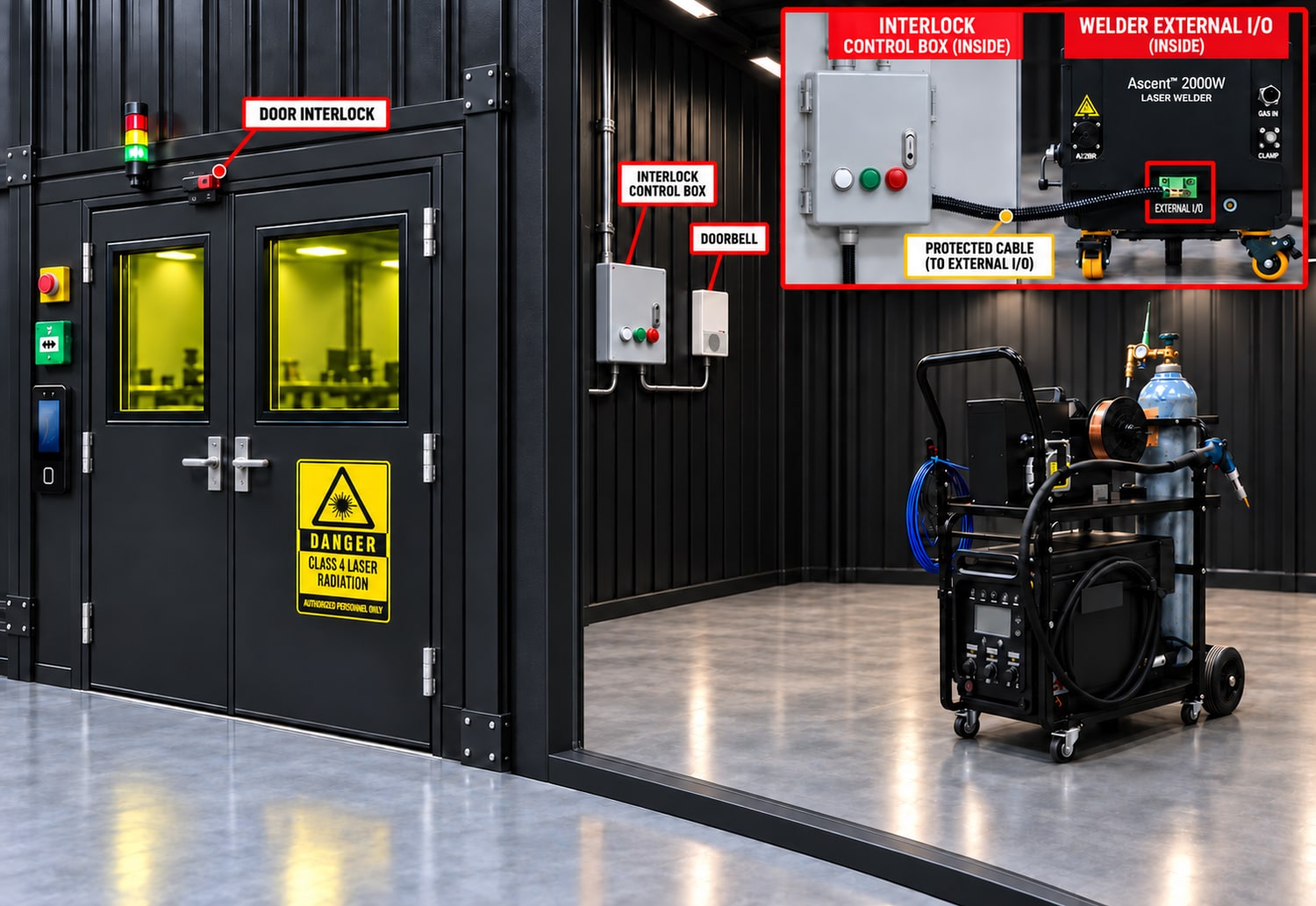
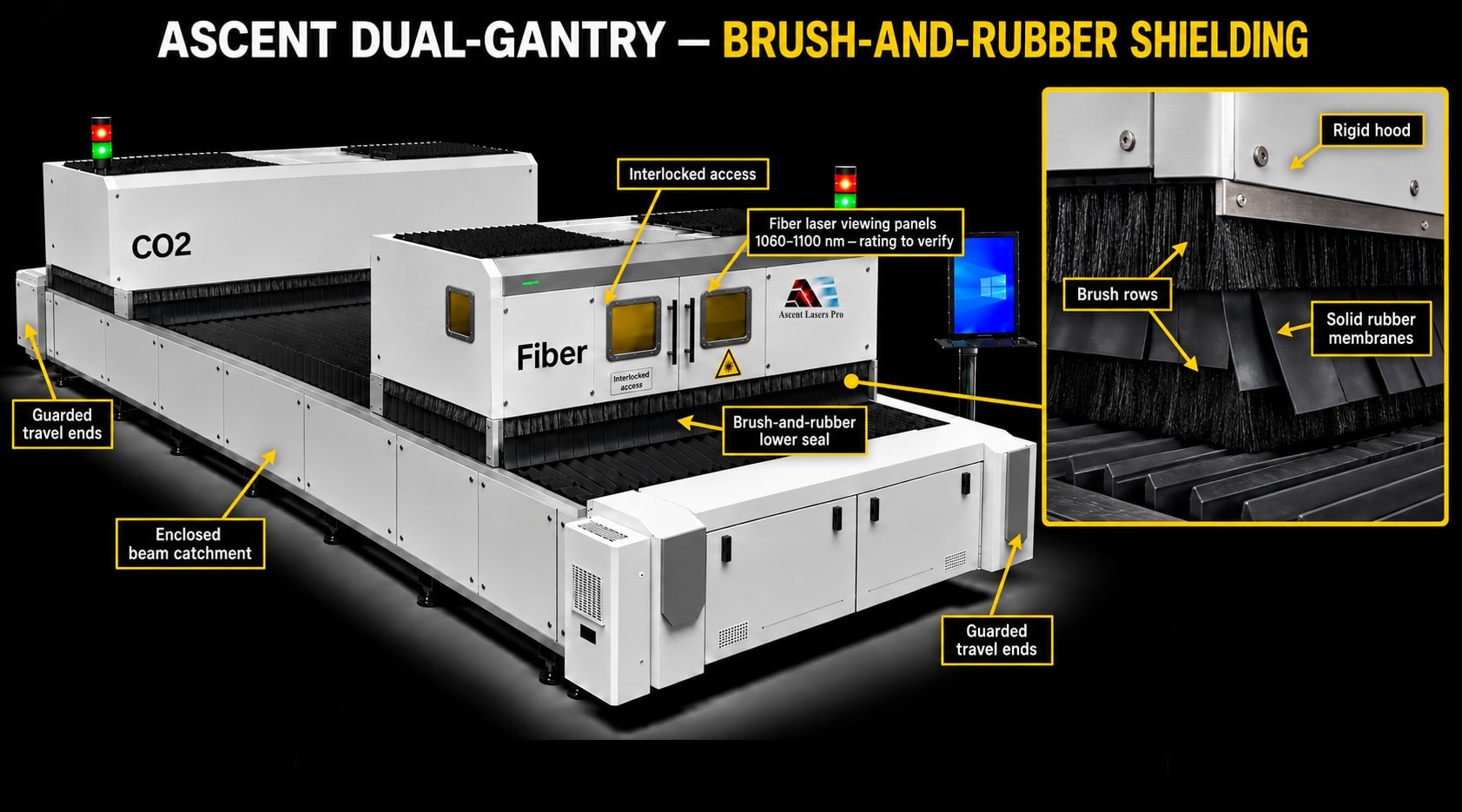
A QCW laser welder is a Class 4 laser. Look for an enclosure, an emergency stop and warning indicators, and wear laser safety eyewear. Minimum OD 5; prefer OD 7 or 8. See our laser safety page.

Training and warranty

Ascent technicians give 3-4 hours of qualified operator training. It is enough for an operator who has never welded aluminum to weld very thin aluminum. The operator remains responsible for completing the required training, following approved process controls and meeting every laser-safety requirement. Installation and training at your facility are included in the price, and the QCW welder has a 1-year warranty covering parts and labor.

Plan for growth

A good machine should still fit as your work changes. Think about whether your materials will vary, your volume will rise or you will add automation.

Making the choice

Pick on the basis of your real work. A well-chosen QCW laser welding machine becomes an extension of your workflow. To talk through your shop, visit Ascent Lasers Pro or contact us.

Read also: How to find the right handheld laser welder for your needs

FAQs

Q1: Which industries use QCW laser welding?

Precision metal work, electronics, medical devices, jewelry and battery manufacturing, among others, use pulsed laser welding.

Q2: Is QCW laser welding good for beginners?

The controls are simple, and Ascent trains operators in 3-4 hours. The operator remains responsible for completing the required training and meeting every laser-safety requirement.

Q3: Can QCW welding handle reflective metals?

It welds aluminum and brass, within the thicknesses on the product page. Reflective metals need the right settings.

Q4: How much maintenance does a QCW system need?

Routine cleaning and checks, done regularly, are usually enough. Follow the maker's schedule.

Q5: Does QCW welding reduce finishing?

A clean weld seam often needs little grinding or polishing. The amount depends on the part and the settings.
← All articles
More from Ascent Lasers Pro

Related articles

How to Select a Handheld Laser Cleaning System
How to buy a handheld laser cleaner: describe the job, test on your own parts, look past the wattage, plan fume extraction and compare cost per square foot.
How Laser Technology Empowers Fabricators and Entry-Level Workers
Laser welders let entry-level workers do professional work on routine jobs. What they learn fast, what still takes skill, and what a shop can save.
Buying a Handheld Laser Welder: A Practical Checklist
Cooling, power, wire feeder, wobble head, torch weight, safety and warranty: the points that decide which handheld fiber laser welder fits your shop.
Your First Laser Welder: The Questions That Matter
Material, wattage, handheld or tabletop, pulsed or continuous, cooling, safety gear and quote terms: how to pick a first laser welder without overspending.
Inside the Ascent 2000W Handheld Fiber Laser Welder
What the Ascent 2000W handheld fiber laser welder brings to a shop: refrigerant cooling, a high-speed wobble head, a light torch and a complete kit.
How the Ascent 2000W Refrigeration Laser Welder Compares
The Ascent 2000W refrigeration laser welder next to typical air- and water-cooled handheld welders: cooling, duty cycle, torch weight, running cost and support.
Winning Over a Skeptical MIG or TIG Welder
How to get an experienced MIG or TIG welder to give laser welding a fair try: aluminum, the daily workflow, labor math, safety questions and a test weld.
Up to 4x Faster: What a 2000W Handheld Fiber Laser Welder Offers
Handheld fiber laser welders can travel up to 4x faster than traditional welding. Cooling, torch weight, included gear and what a 2000W machine can weld.
Laser Welding and the Cost of Aluminum Welding Labor
Skilled aluminum TIG welders are expensive and hard to hire. How training a production worker on a laser welder changes the labor math, with wage data.
Fit-Up and Gap Control in Laser Welding
A gap in a laser weld joint is a path for the beam. Fit-up tolerances, joint types, fixturing, copper backing bars and what to do when a gap stays open.
Setting Up a Laser Welding Workstation, Step by Step
Where to put a handheld laser welding station and how to lay it out: table height, safety zone, fume extraction, cables, fixtures and a daily checklist.
Is QCW Safer? Pulsed vs. Continuous Tabletop Laser Welding
QCW pulses put less heat into thin aluminum and stainless than CW, but both are Class 4 lasers. What a CCD camera and an enclosure really add to safety.
QCW Tabletop or 2000W Handheld: Which Laser Welder Fits Your Shop?
The Ascent QCW tabletop and handheld welder versus the 2000W handheld: typical work, heat input, speed, and which kind of shop should buy which.
Mold Repair Lasers Compared: QCW Fiber, Pulsed Nd:YAG and Continuous Fiber
QCW fiber, pulsed Nd:YAG and continuous fiber (CW) lasers for mold repair: beam quality, efficiency, peak power on reflective metals, filler wire and heat.
Which Materials Actually Stop a 1070nm Fiber Laser Beam?
Ordinary welding curtains don't stop a 1070nm fiber laser. Which absorbing and reflecting materials work as backing, barriers and beam stops, and which fail.
CO₂ or Fiber Laser Cutter? Match the Laser to the Material
CO₂ or fiber laser cutter? Which materials each one cuts, edge quality, speed, running costs and maintenance, and when it pays to run both.
Consumables for a Dual-Gantry CO₂ and Fiber Laser Cutter
Which parts wear out on the CO₂ and fiber sides of a dual-gantry laser cutter, how often to replace them, what spares to stock and how to budget for them.
CNC Router, CO₂ Laser or Fiber Laser: Choosing by Material
CNC router, CO₂ laser or fiber laser? A material-by-material look at what each machine handles, and where a dual-gantry CO₂ and fiber cutter fits.
How to Choose a Fiber Laser Cleaner: Pulsed vs. CW, Power and Cooling
Pulsed or continuous wave, low or high power, air or water cooling? What laser cleaners remove, the specs that matter, red flags and what to ask a supplier.
Class 4 Laser Regulations in Canada
Class 4 lasers in Canada: Health Canada product rules, bilingual labels, provincial workplace law, Alberta registration and what to ask for before you buy.
How Can a 300W Laser Cutter Improve Metal Fabrication?
How a 300W CO₂ laser cutter supports a metal fabrication shop by cutting acrylic templates, panels and prototypes while the metal machines stay on metal.

Talk to a laser specialist about your welding or cutting job

Contact us