
Metal cutting is hard on a small business when the tool is wrong. The wrong choice wastes material, slows production and causes mistakes. A laser cutter for sheet metal is faster, cleaner and more reliable than traditional methods, but which machine is worth considering? This article looks at four Ascent Lasers Pro machines that suit small businesses that cut and weld metal.
1. Fiber laser cutter, 5 ft x 10 ft
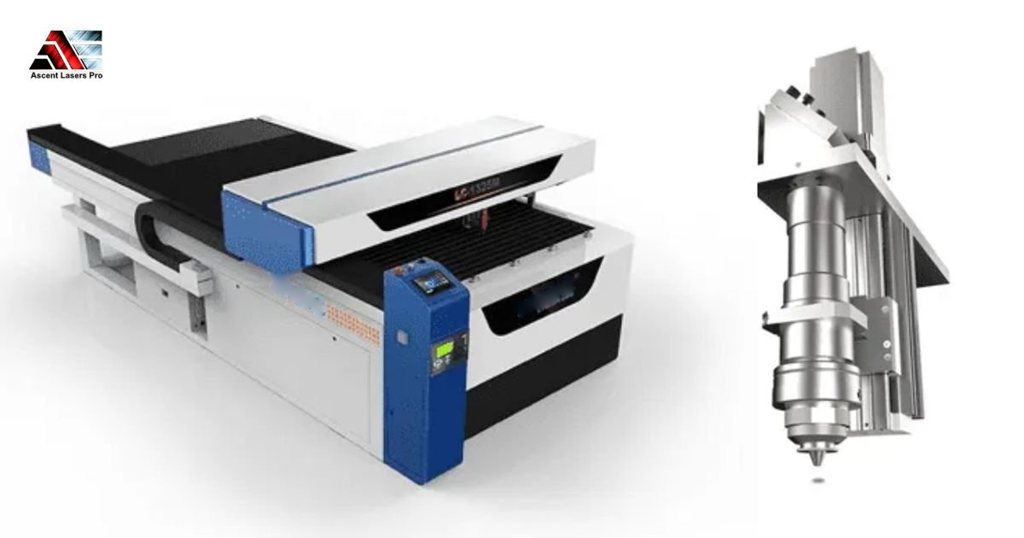
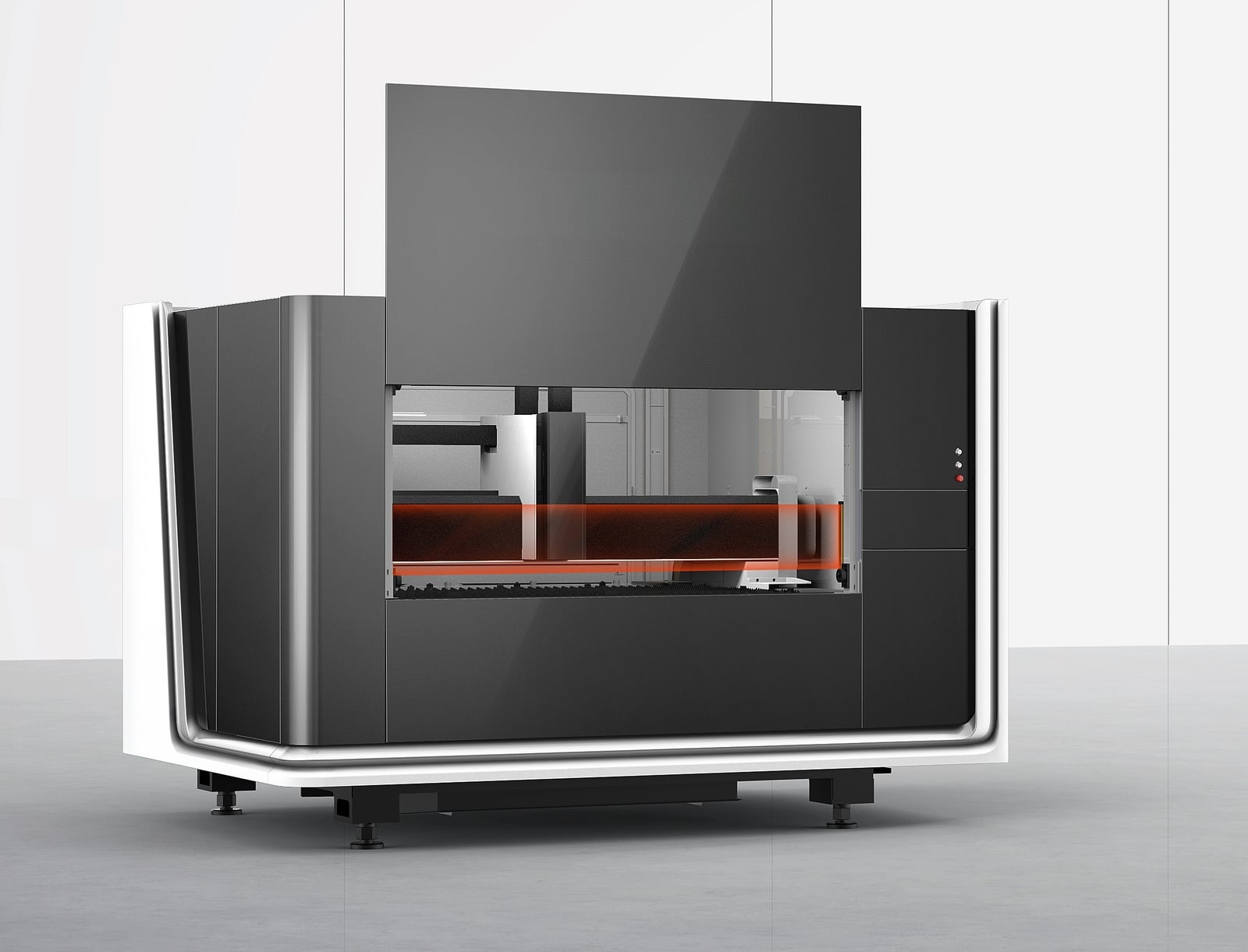
The Ascent fiber laser cutters, the A-A, A-C and A-I Series, are CNC fiber lasers built for precise metal cutting.
- They cut carbon steel, stainless steel, brass and aluminum, and the product page lists cutting speeds by thickness at each power.
- They come with a 3 kW or 6 kW laser source.
- The A-C Series has an exchange table, so the operator can load the next sheet outside the enclosure.
- The 3048 x 1524 mm (10 x 5 ft) work area takes large sheets, so you do not have to divide big projects.
They suit small businesses that make custom panels, automotive parts and other products without compromising quality.
2. CO₂ laser cutter
If your shop also works with nonmetal materials, the Ascent CO₂ laser cutter is a strong choice.
- It cuts and engraves acrylic, wood, MDF, leather and rubber.
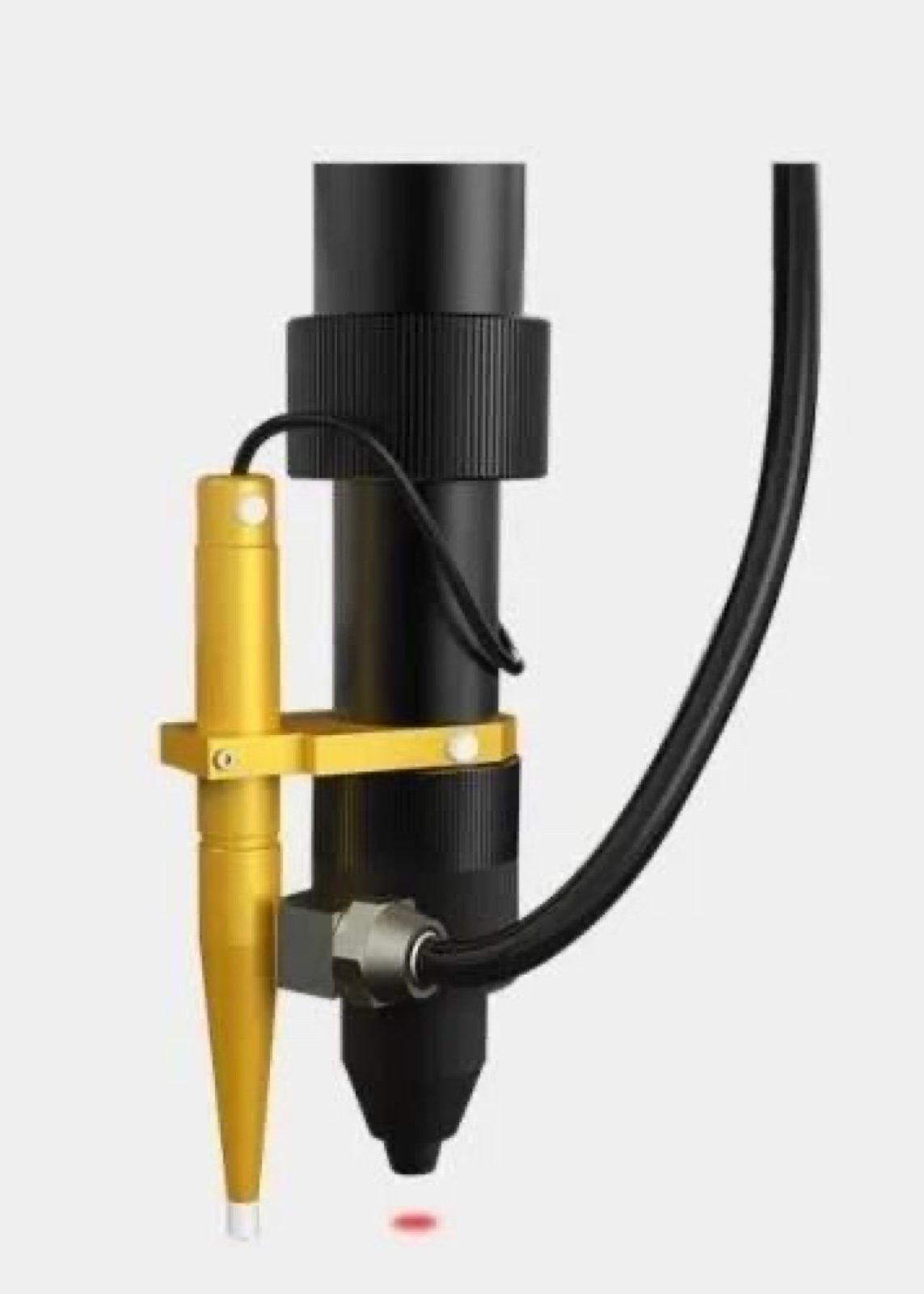
- Servo motors with screw transmission position the head accurately.
- It sits well next to a fiber laser when your business handles a mix of materials.
A CO₂ laser does not cut metal, so it complements the fiber cutter instead of replacing it. One shop with both can handle most materials. If you want both lasers on one table, see the Ascent dual gantry CO₂ and fiber laser cutter.
3. Handheld fiber laser welder
Welding is another task small businesses often take on. The Ascent handheld fiber laser welder is portable, and the torch weighs 1.32 lb (600 g). It welds aluminum, stainless steel, brass and other metals. Ascent trains your operators in 3-4 hours, so a team can start welding without extended training. That suits custom projects, repairs and on-site work.
4. Refrigeration handheld fiber laser welder
For mobility and power, the Ascent refrigeration laser welders use a heat pump with two circuits and no water. They are rated for a 100% duty cycle and for ambient temperatures from -20°C to +60°C (-4°F to +140°F). The trolley carries the welder, the wire feeder and the gas cylinder, so one person can move it to a customer site. With no water chiller, setup is simpler than for a water-cooled welder.
Read also: Top benefits of using a gantry laser cutting machine
Why small businesses use laser cutting
- Efficiency. It cuts metal faster than saws and often faster than plasma on thin metal.
- Cleaner edges. There is less filing and polishing.
- Material savings. The cut is narrow, so there is little waste.
- Flexibility. One machine handles a range of metals and thicknesses.
Choosing the right machine
- Materials. Do you cut mainly metal, or nonmetals too?
- Project size. Do you need a compact machine or a large bed?
- Mobility. Will you work on site or only in the shop?
- Budget and volume. Balance the purchase price against how often you will use the machine.
For many small shops, a fiber cutter plus a handheld welder covers most metal work, and a CO₂ cutter adds plastics and wood.
Applications
- Metal panels and decorative parts
- Automotive and machinery parts
- Small metal products
- Prototypes and short runs
Support
Every Ascent machine comes with shipping, installation and operator training at your facility, included in the price. Software updates are free, and technicians are in Buffalo, Toronto and Kentucky. A laser is a Class 4 device, so plan for enclosure, ventilation and eyewear. See our laser safety page. Contact Ascent Lasers Pro to talk about your shop.
For fiber cutting, the assist gas matters as much as the power. Our shielding and assist gas guide explains what oxygen, nitrogen and compressed air each do to the edge.
FAQs
Q1: What metals can the fiber laser cutter handle?
The Ascent fiber cutters cut carbon steel, stainless steel, brass and aluminum, in sheet and thicker material, within the thickness limits for the power you choose.
Q2: Can the same machine cut nonmetals?
No. Nonmetals such as acrylic, wood and leather call for a CO₂ laser. The Ascent dual gantry and combination cutters have both lasers.
Q3: Are fiber laser machines suitable for small businesses?
Yes, for shops that cut metal regularly and have space for the machine. Check the work area, the power and the support.
Q4: What is the difference between a fiber laser and a CO₂ laser?
Fiber lasers are best for metals. CO₂ lasers work well on nonmetals such as acrylic and wood.
Q5: Do I need special training?
Yes. Operator training at your facility is included when you buy from Ascent, along with shipping and installation.