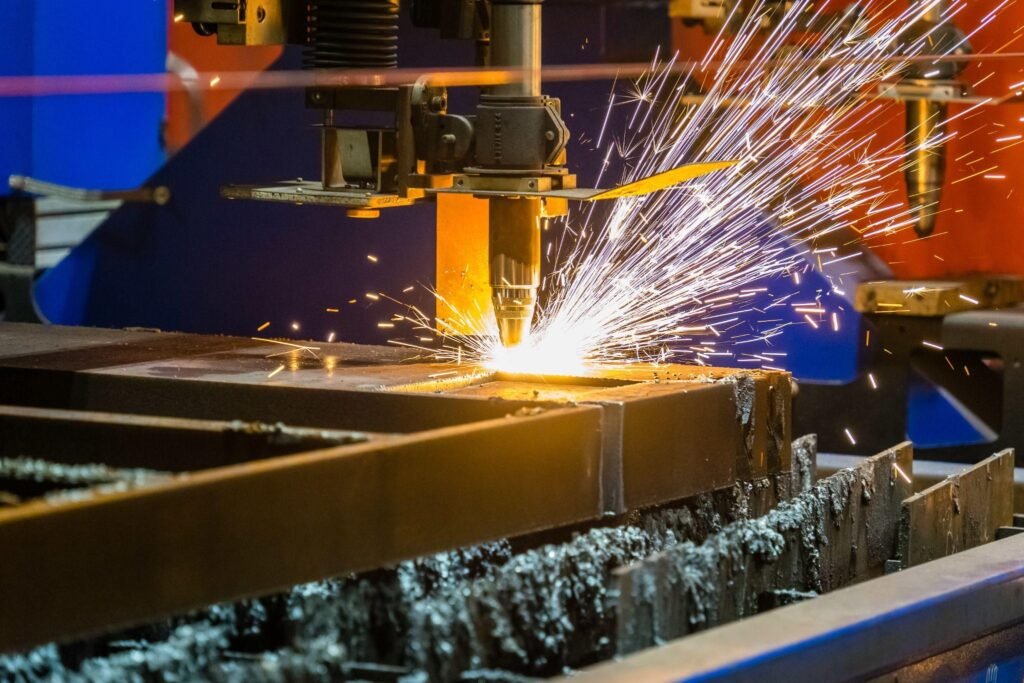
Handheld laser welding is faster than TIG or MIG on many jobs, and it leaves a cleaner weld. Those traits affect what a job costs and how much waste it makes. This article explains where a handheld fiber laser welder can save money and where it is easier on the environment.
It is a practical option for automotive repair, metal fabrication, HVAC and custom manufacturing shops.
What handheld laser welding is
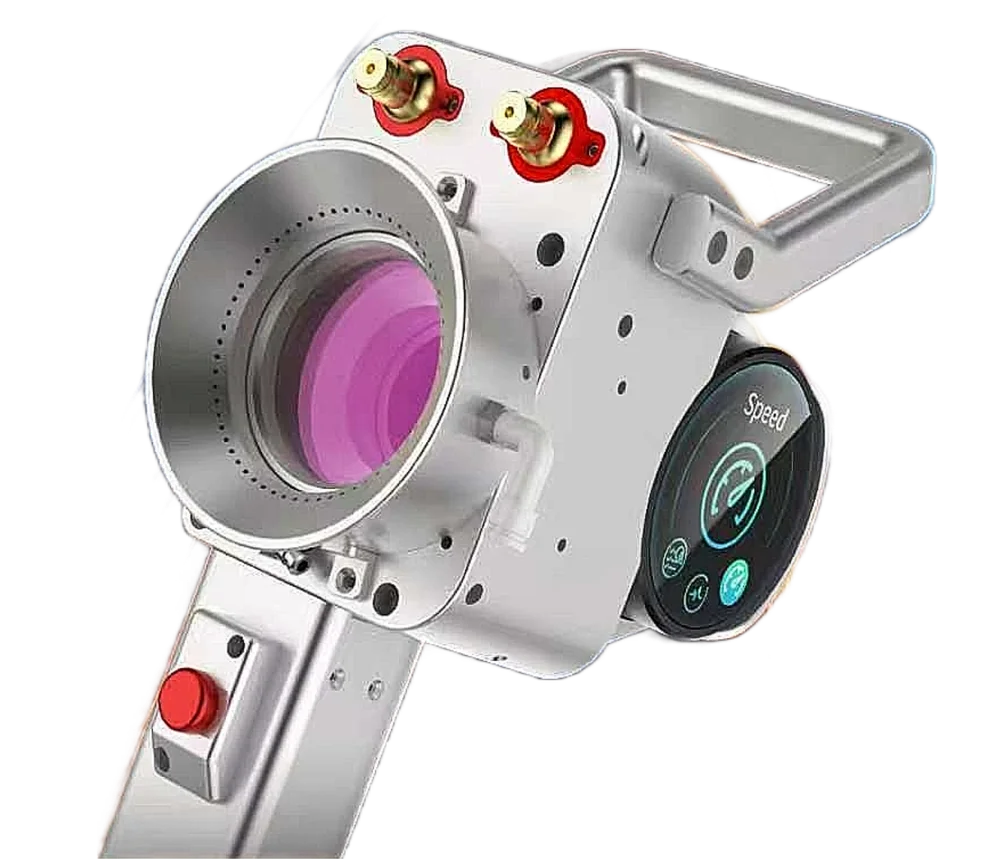
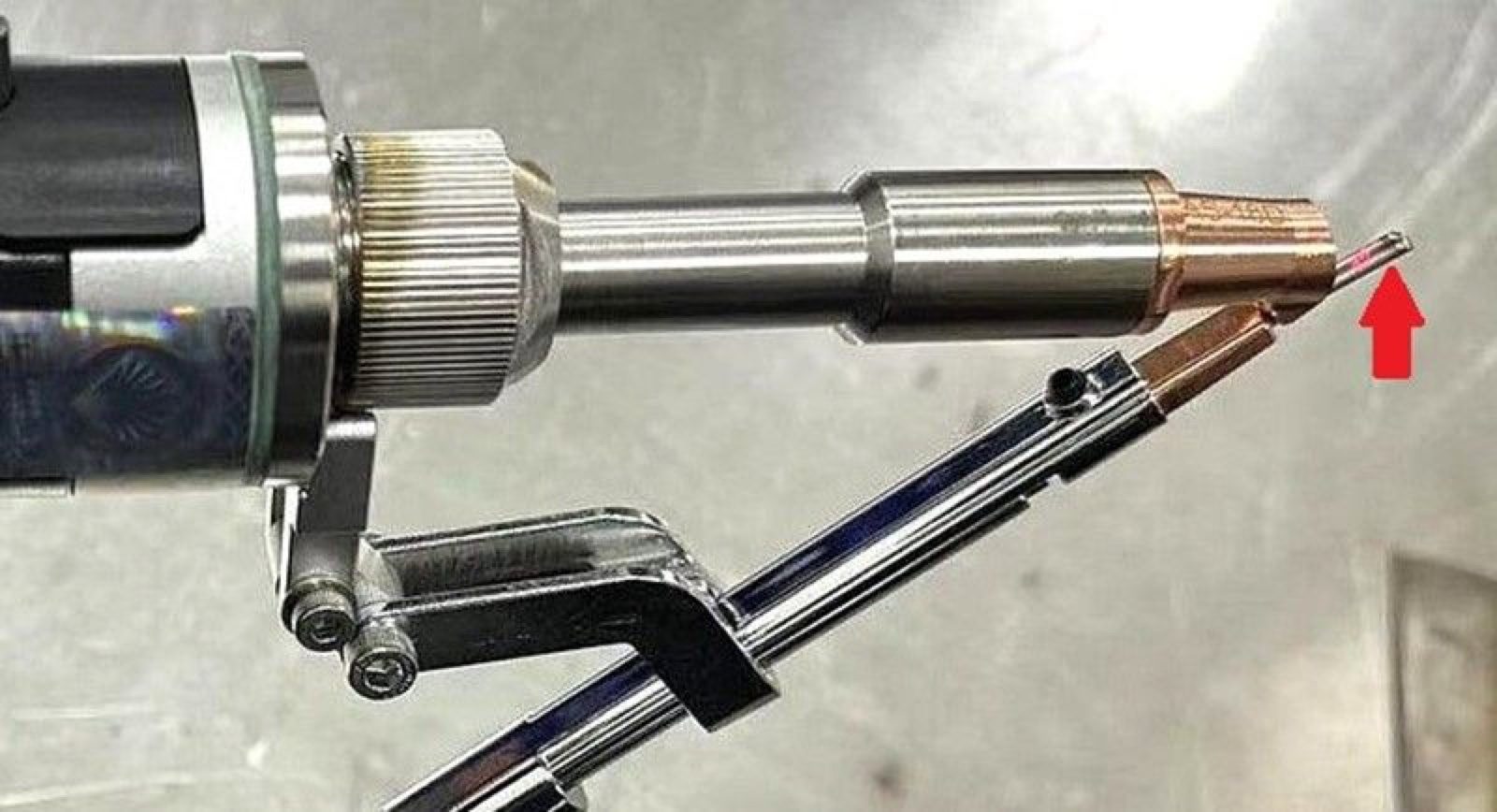
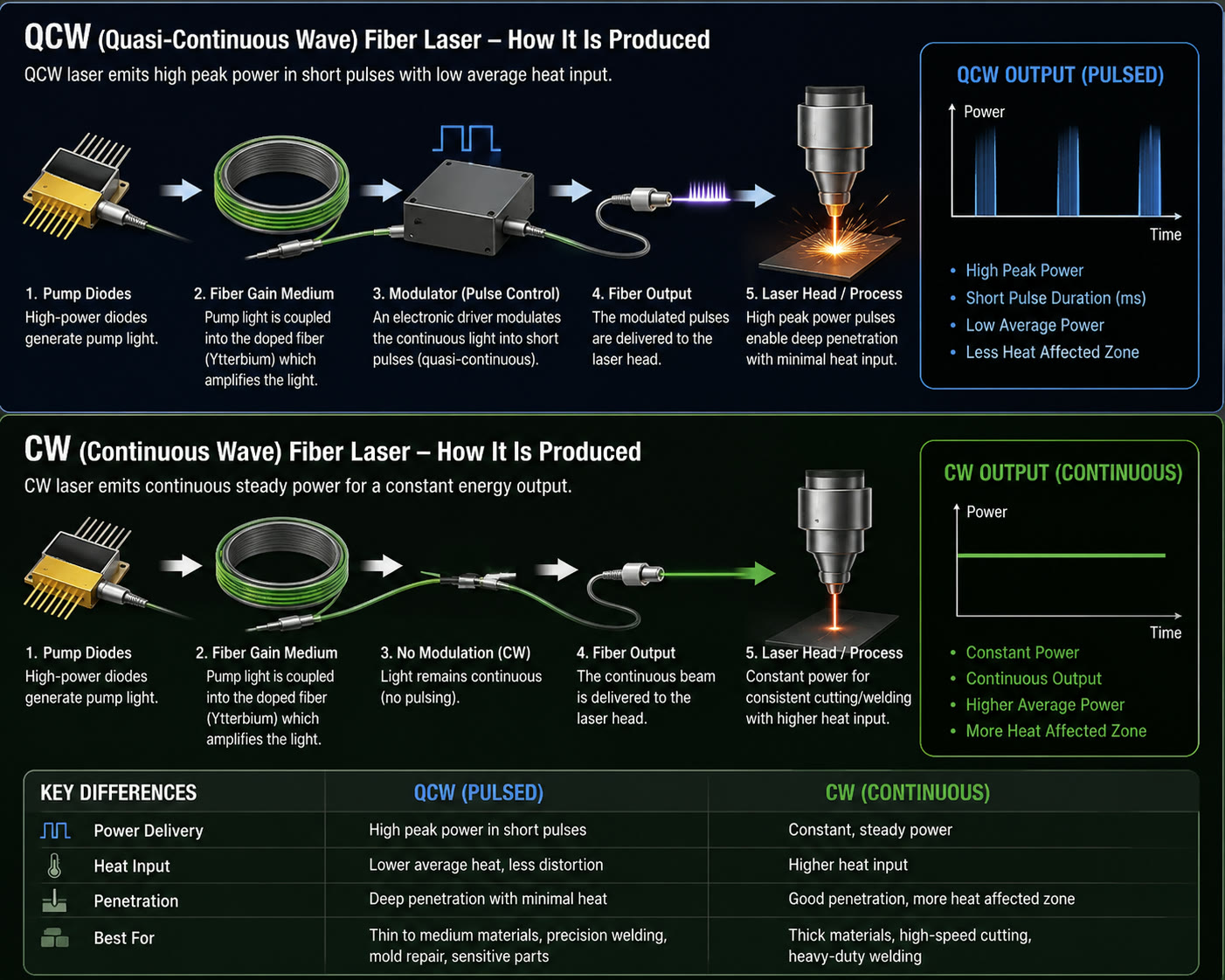
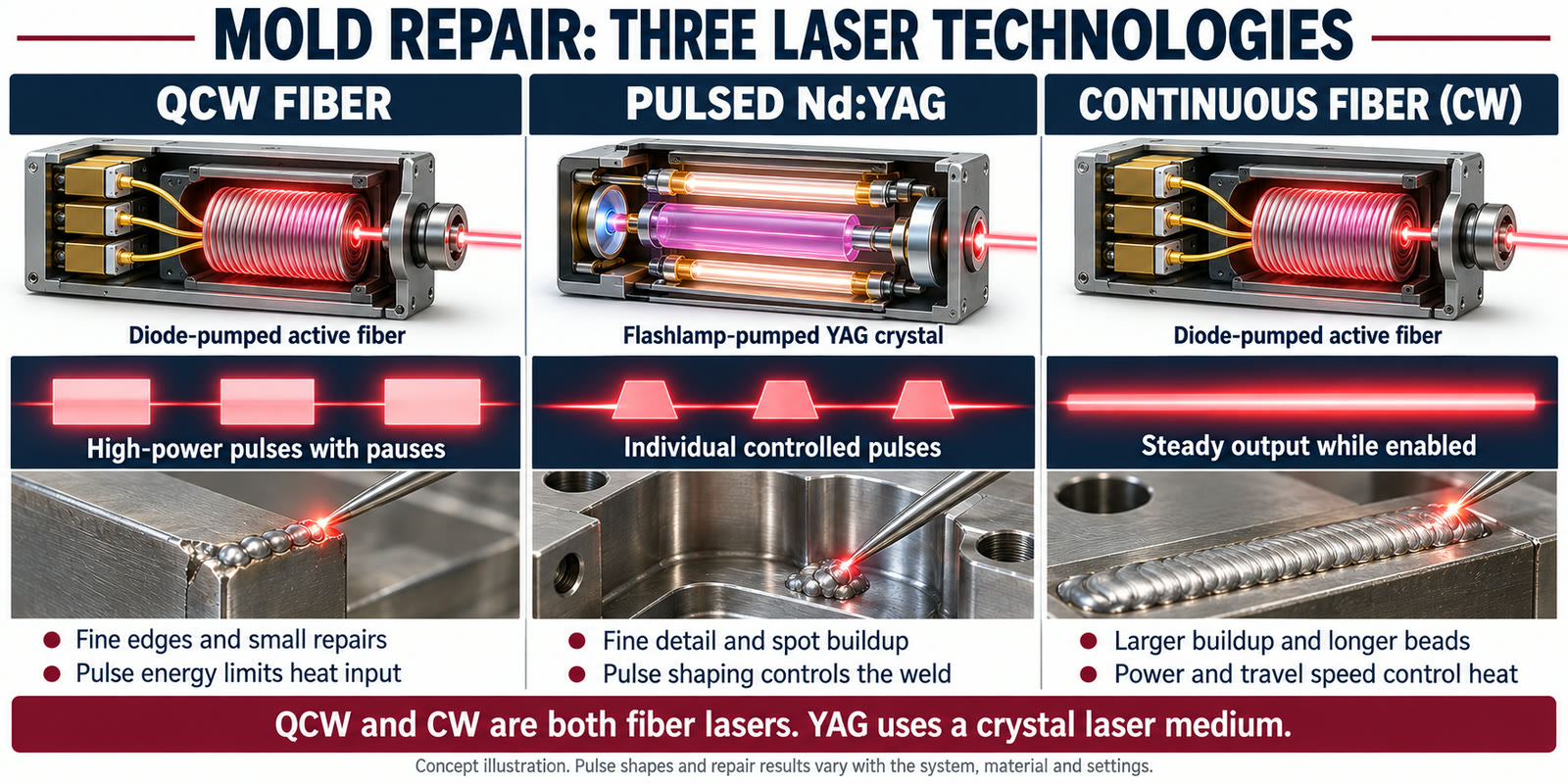
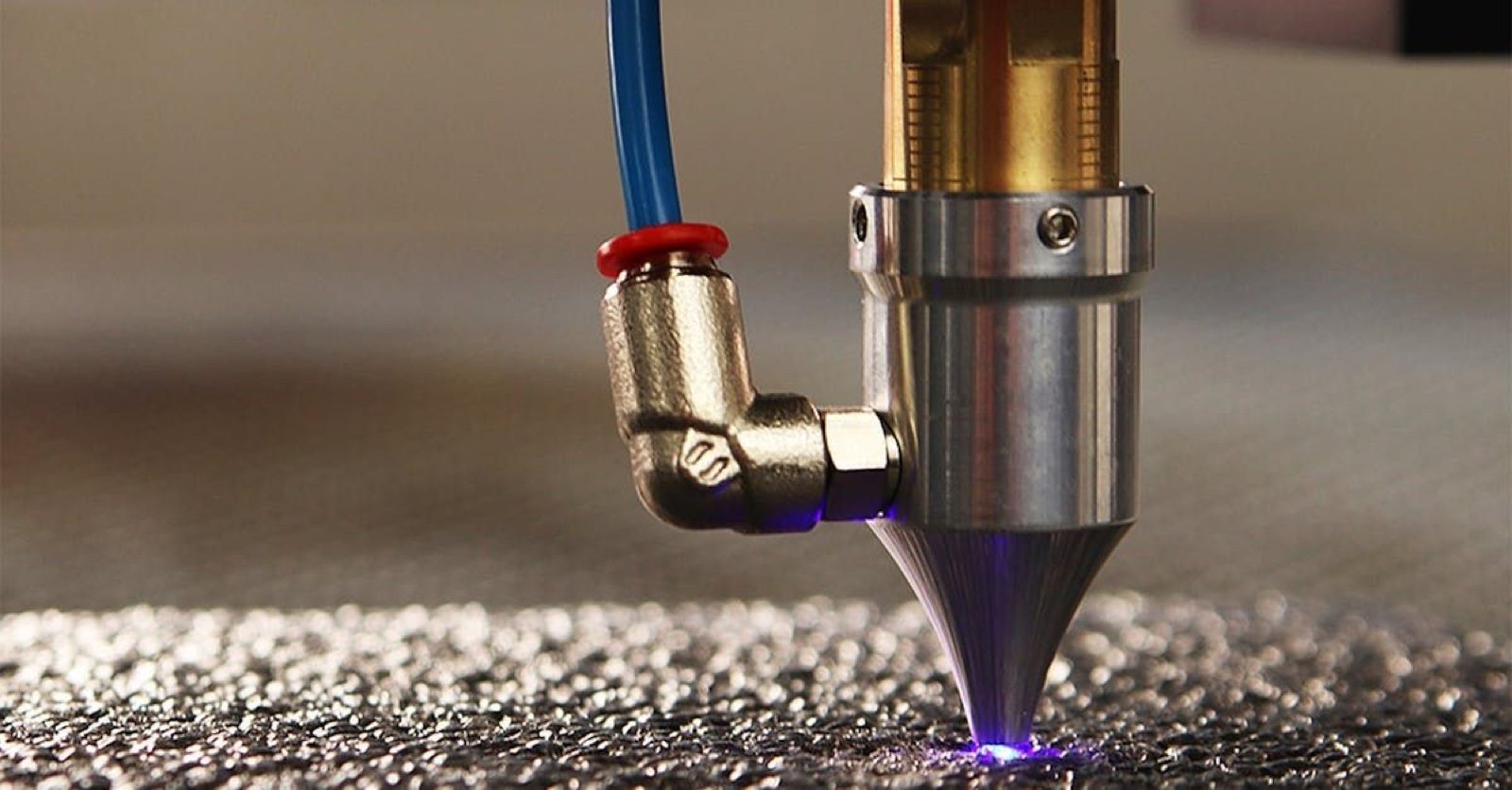
A handheld laser welder uses a compact, hand-guided torch. A fiber laser delivers the beam through a flexible cable, and the operator moves the torch along the joint. Unlike a large machine, it can be rolled to the work. It suits small and mid-sized production lines and repair jobs where time and precision matter.
Where it saves money
- Less prep. Edges often need less grinding or polishing before welding.
- Less post-processing. A laser seam is clean, so there is less rework and finishing.
- Training time. The controls are simple. Ascent's training takes 3-4 hours.
- Fewer consumables. You buy fewer electrodes and less filler material than with traditional methods.
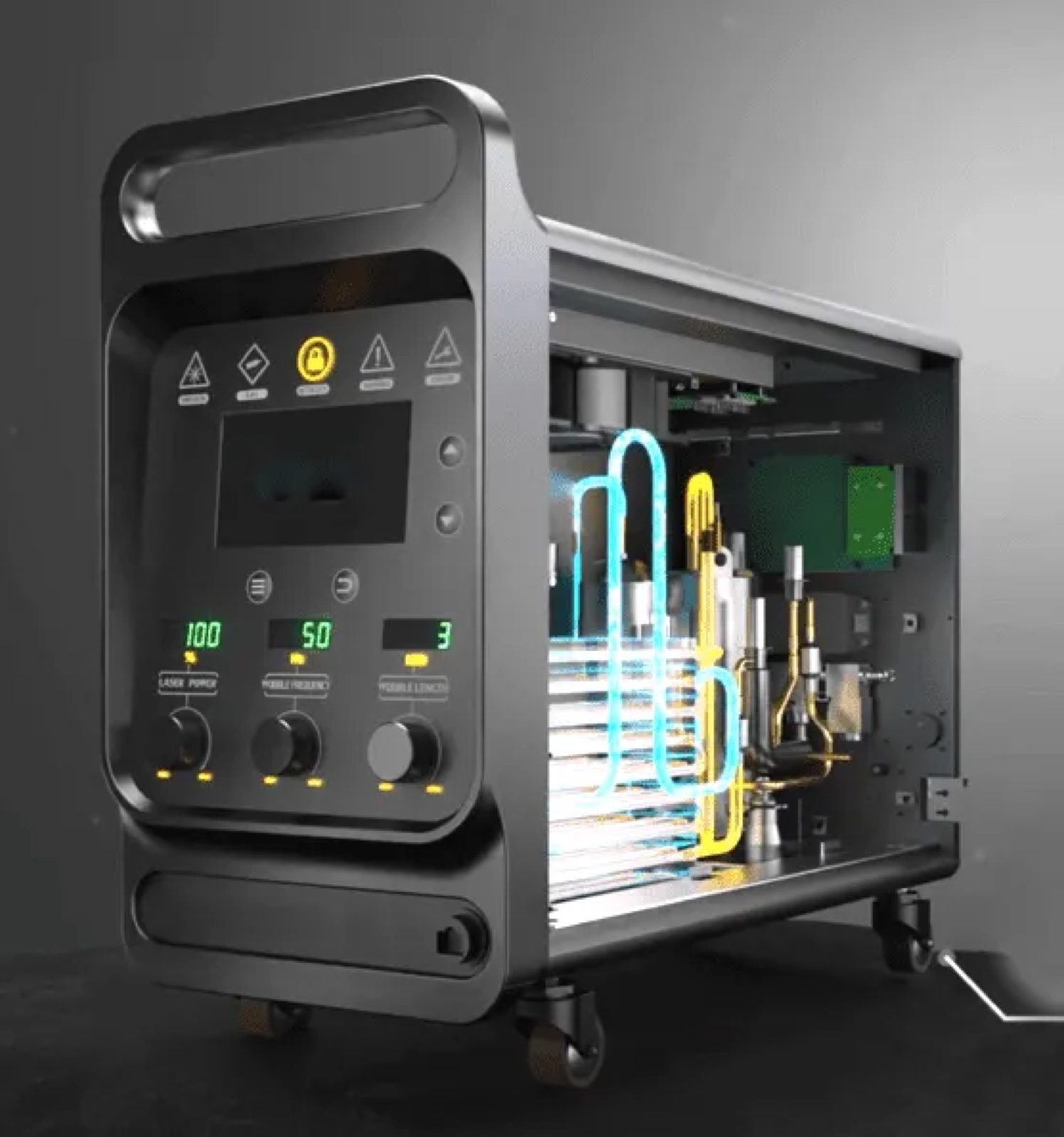
- Energy. The refrigeration heat pump on the Ascent welders uses 60% less energy than other cooling systems, according to Ascent.
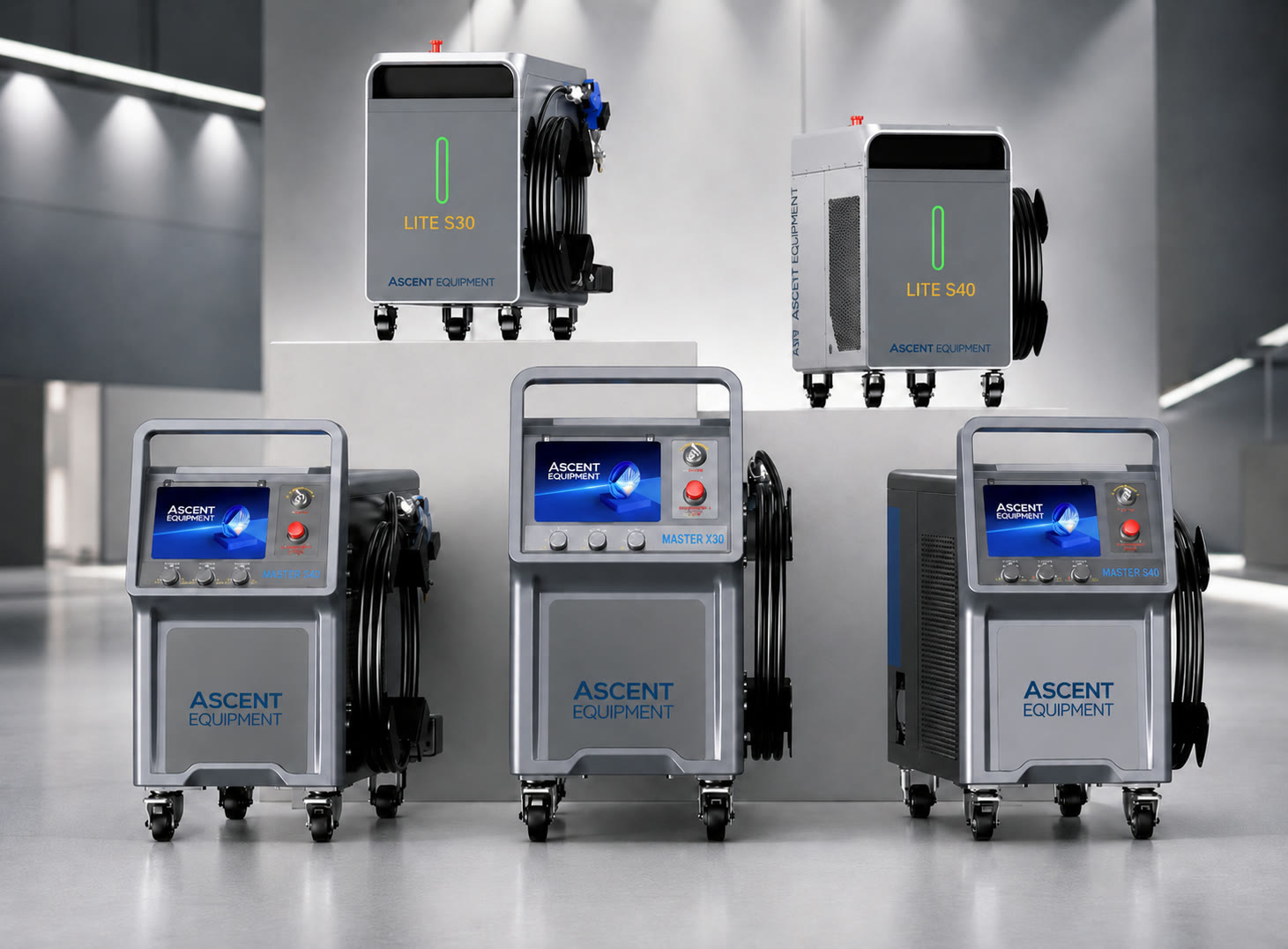
A laser welder costs more up front than a MIG or TIG machine. How soon it pays off depends on how much you weld and how much grinding and cleanup it removes. Compare it with your own job volume. For examples of the machines, see the hand-held fiber laser welding page.
Environmental points
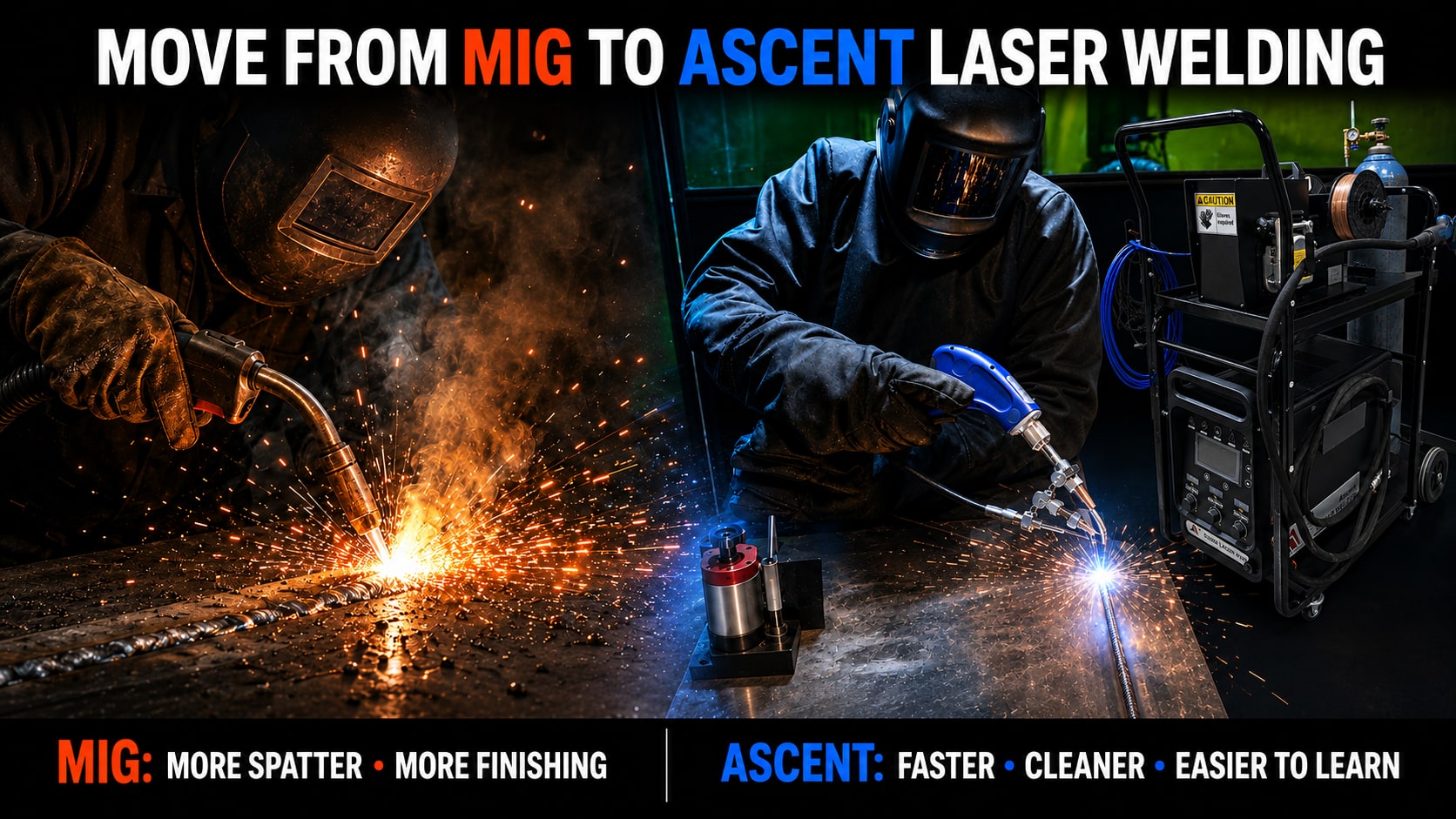
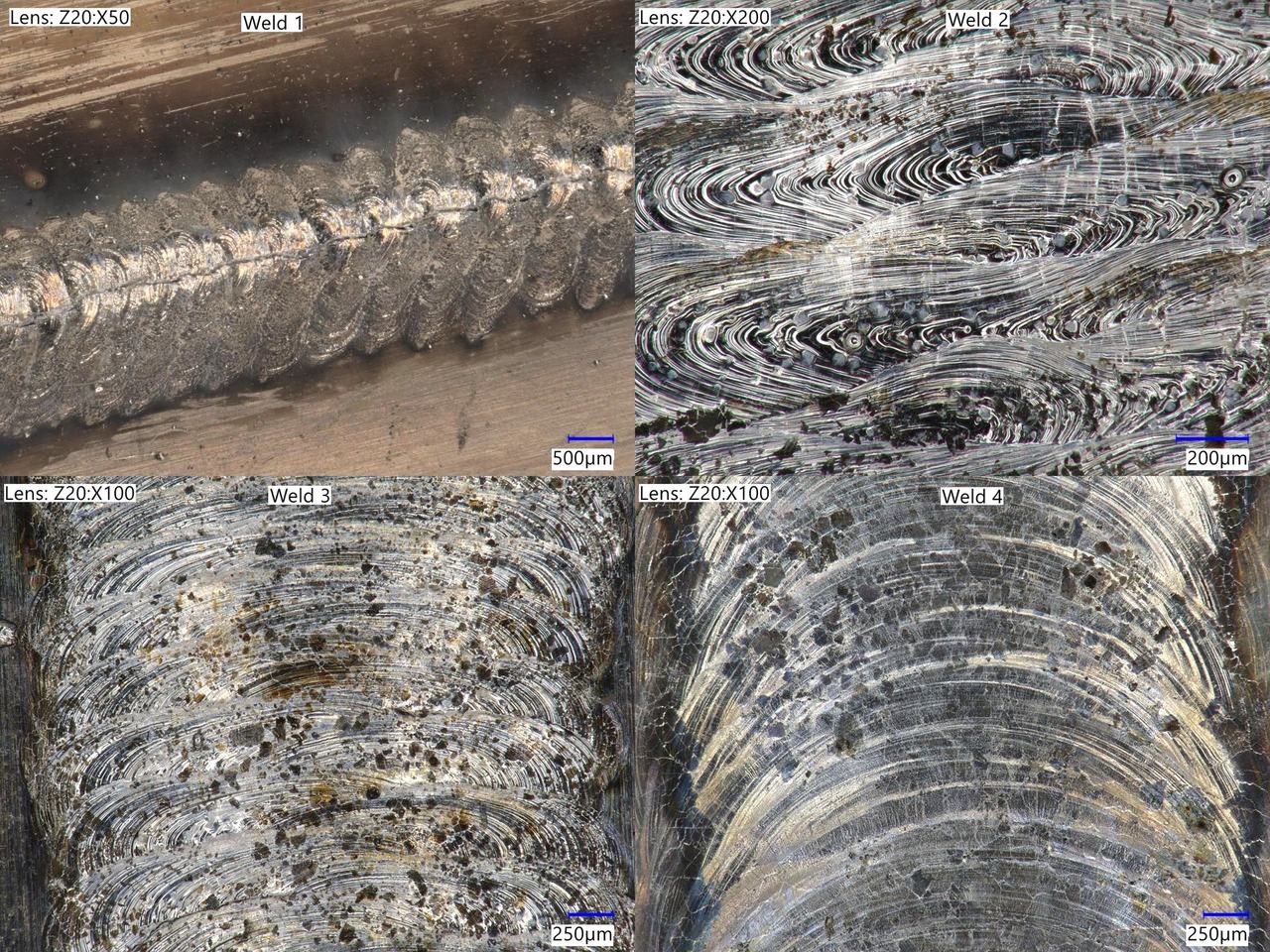
Laser welding produces less spatter and slag, which means less cleanup material and less mess in the shop. The beam makes a narrow weld, so less metal is wasted on rework. A machine with a lower energy draw also helps reduce electricity use.
These are modest gains, not a reason on their own to switch. The main drivers are still speed, quality and cost.
Features worth looking for
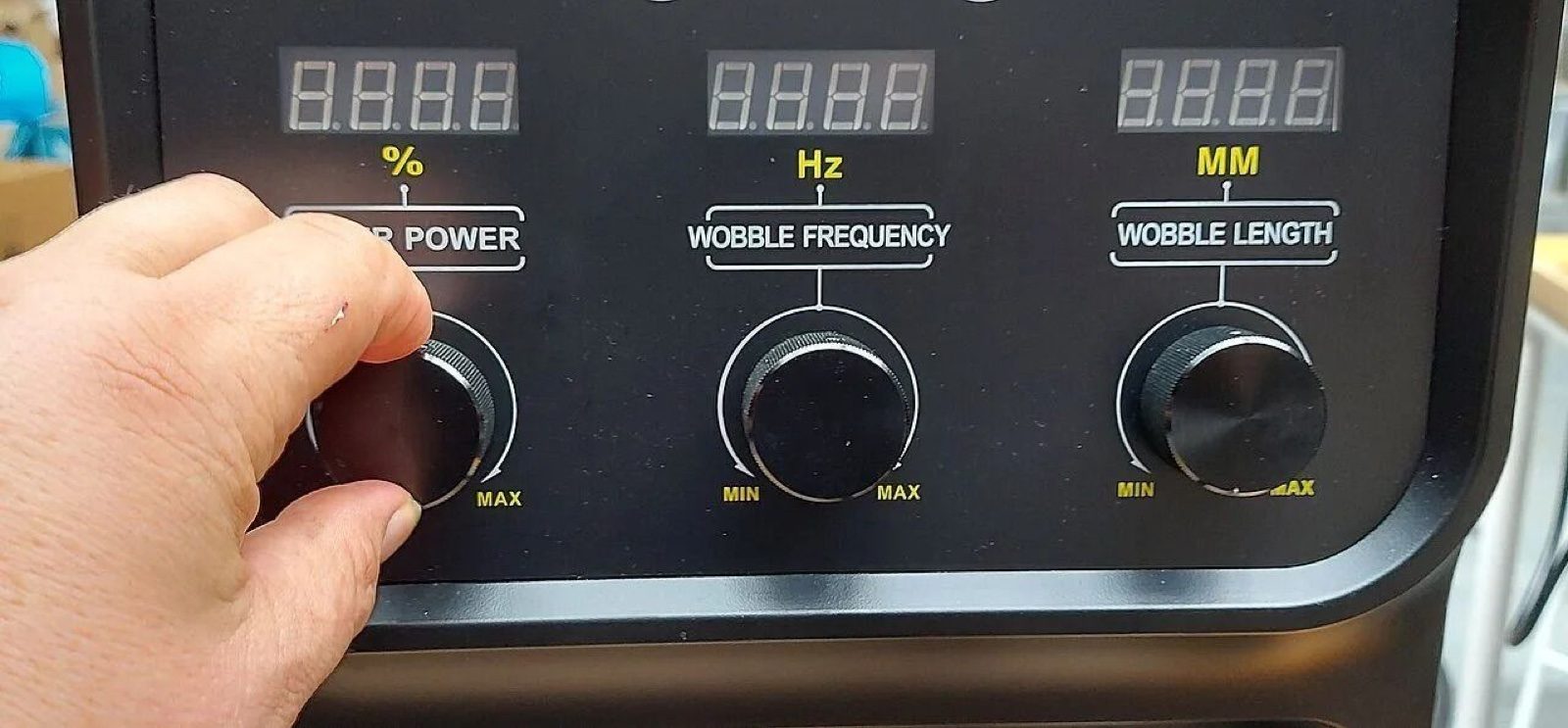
- Adjustable power. Useful across metals and thicknesses.
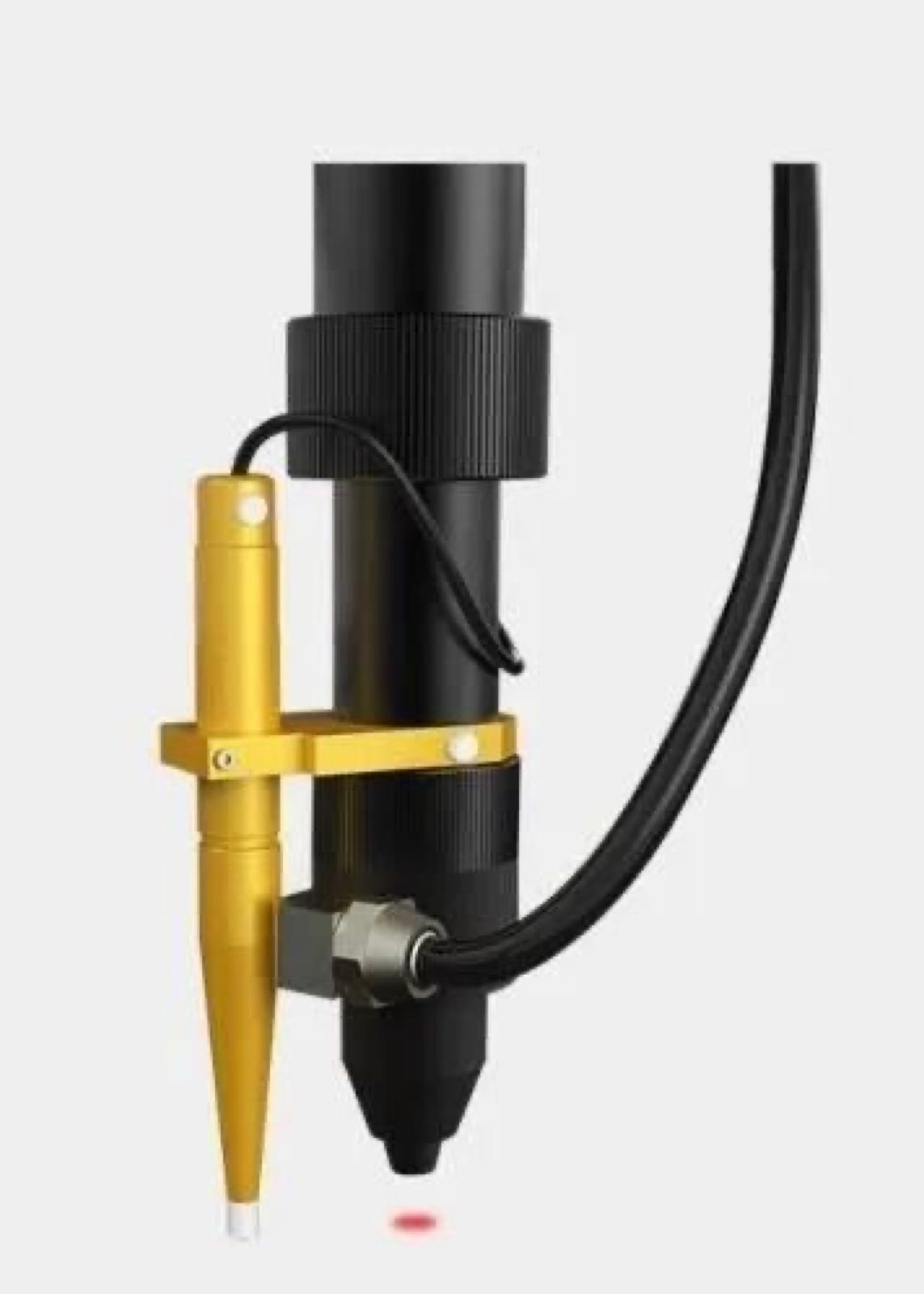
- A light torch. The Ascent torch weighs 1.32 lb (600 g), which reduces operator fatigue over a long shift.
- Simple controls. The Ascent welders use a three-knob control and an Android app.
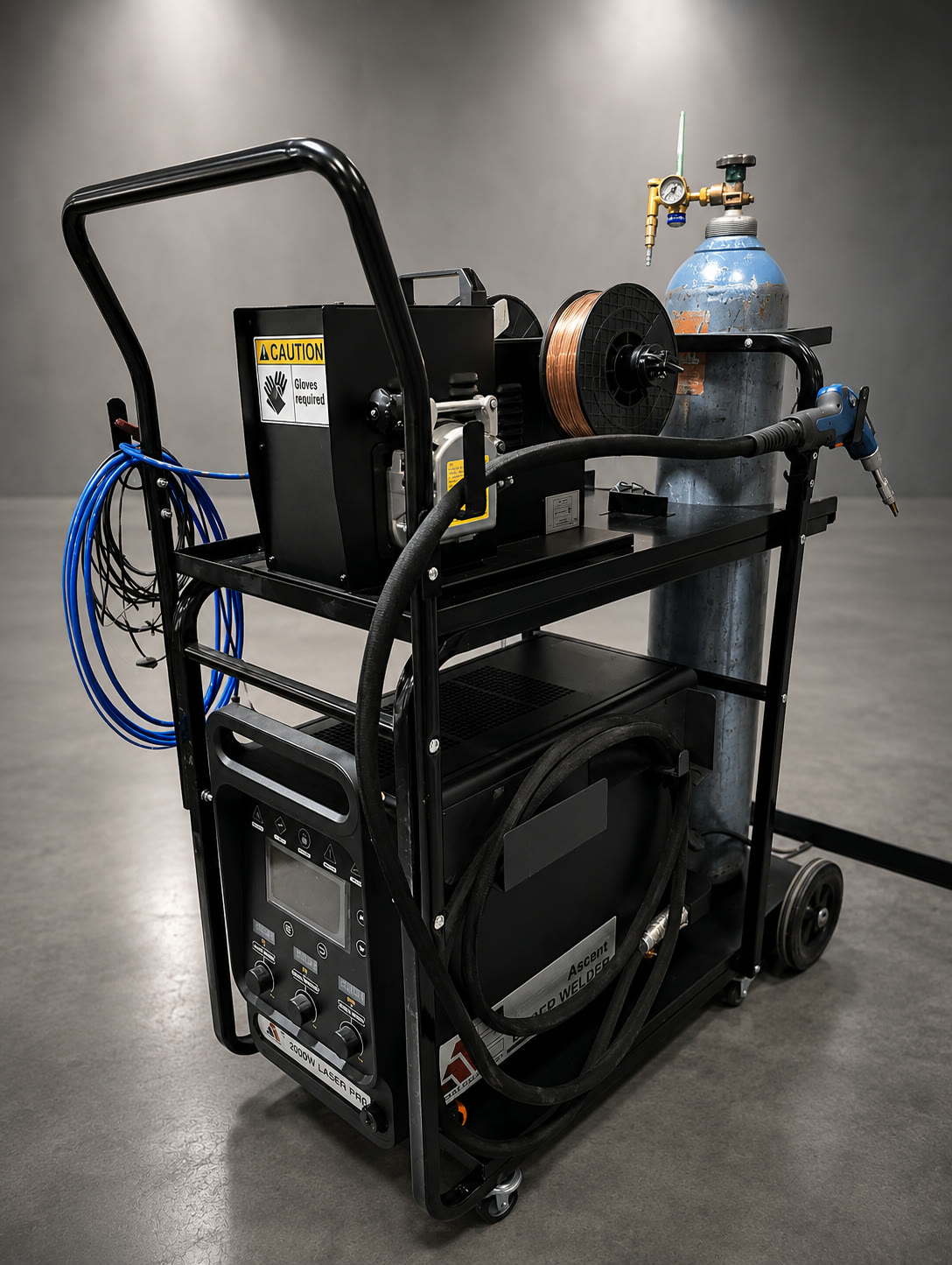
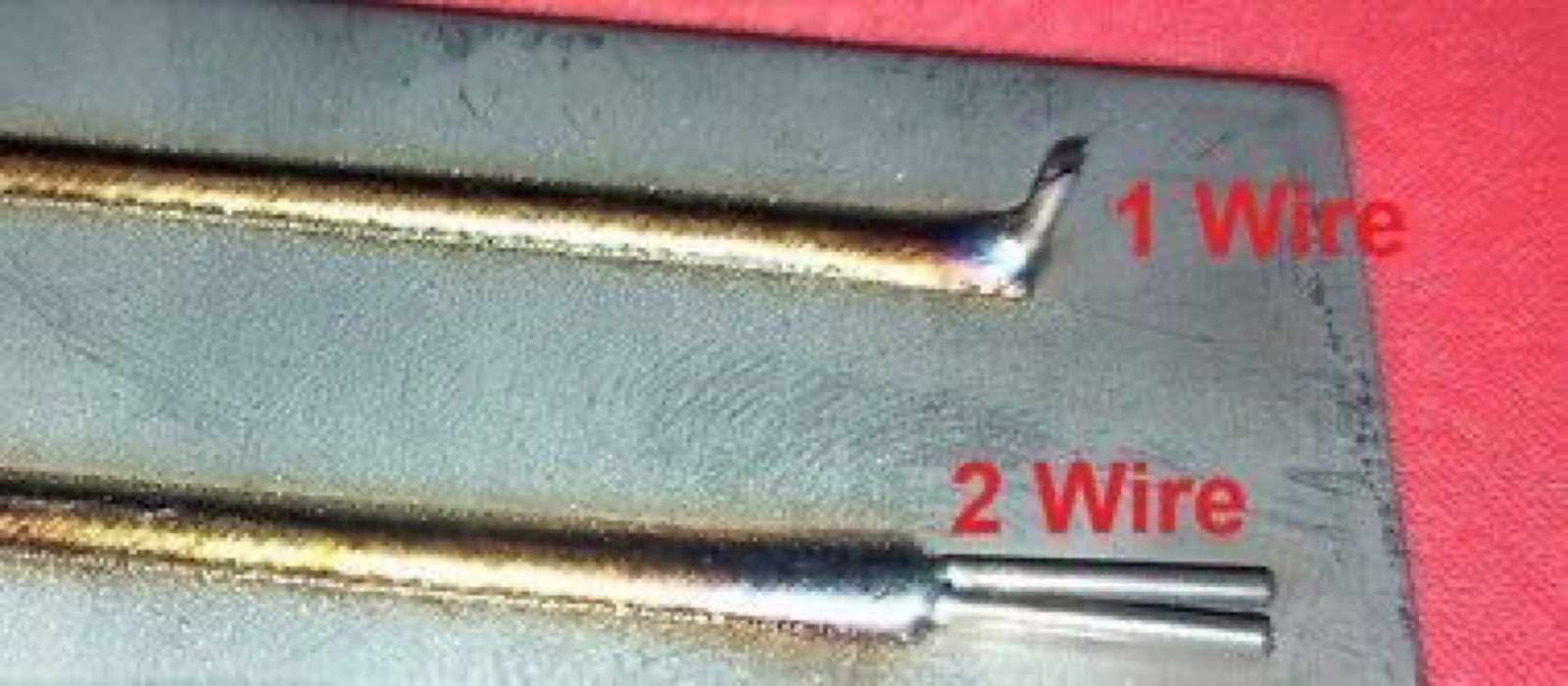
- A wire feeder. The Ascent welders include an automatic wire feeder for single or double wire.
- Continuous running. A 100% duty cycle means no scheduled breaks to cool down.
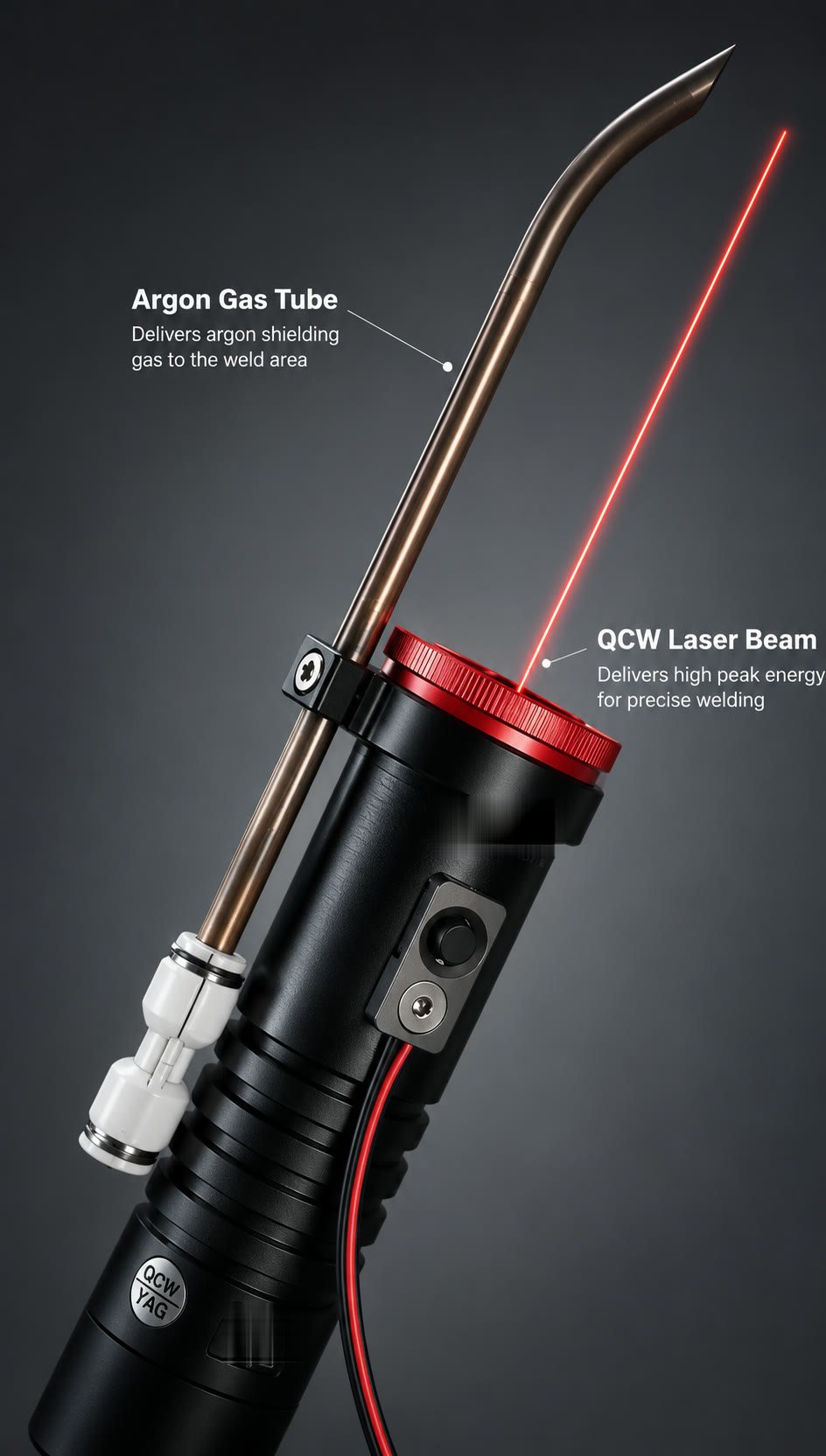
Handheld laser welders still need shielding gas, usually argon. It is on the trolley with the machine.
How it compares with TIG and MIG
| Feature | Laser welding | TIG and MIG |
|---|---|---|
| Speed | Often faster on thin metal | Slower on thin metal |
| Learning curve | Simple controls, short training | Takes more practice |
| Post-processing | Usually minimal | Often needed |
| Waste | Low | Moderate |
| Portability | High | Varies |
| Thickness range | Depends on laser power | Strong on thick material |
Laser welding is not always the right tool. TIG and MIG remain a good choice for thick material and many other jobs.
Where it is used
- Automotive. Body repair and frame work.
- Construction. Structural metalwork, railings and fittings.
- HVAC. Sheet metal and parts, with the precautions covered in our HVAC article.
- Aerospace. Lightweight assemblies that need precise welds.
- Furniture. Decorative metal parts.
Training and safety
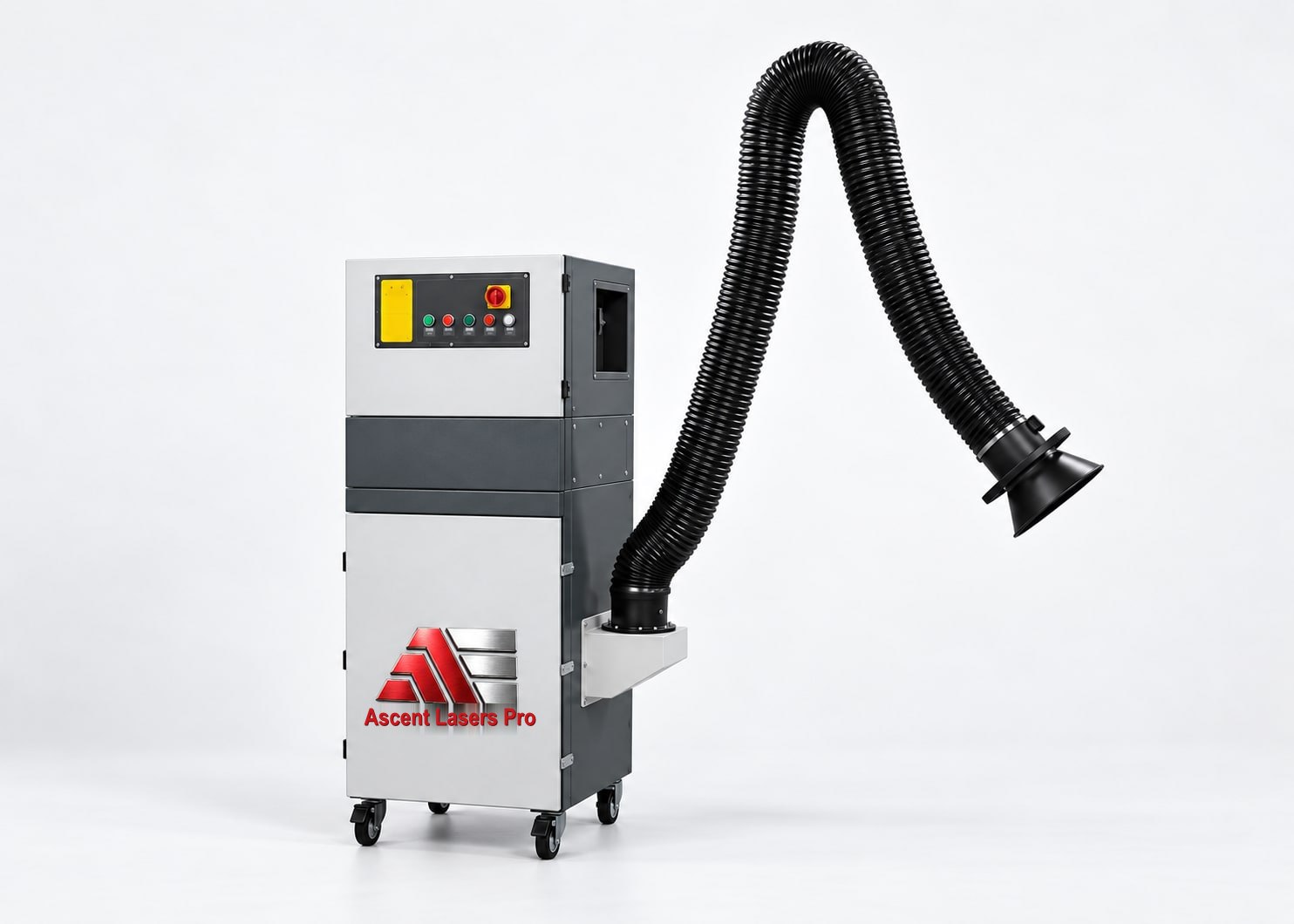
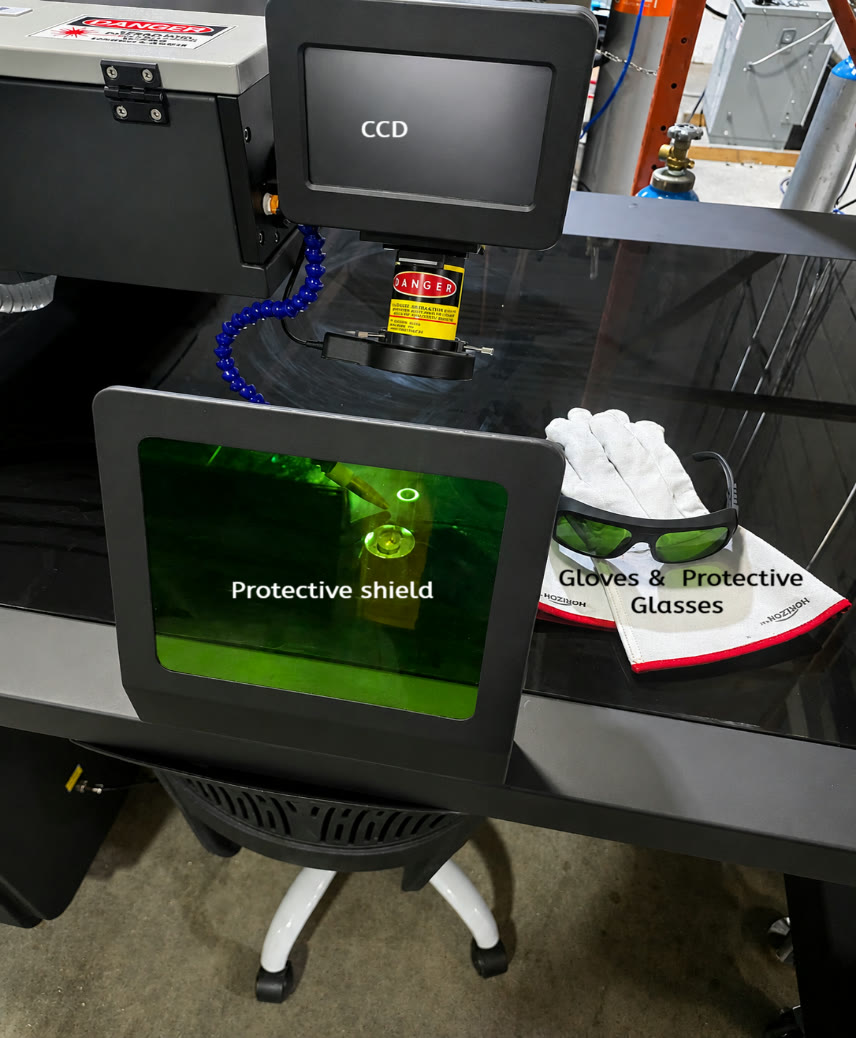
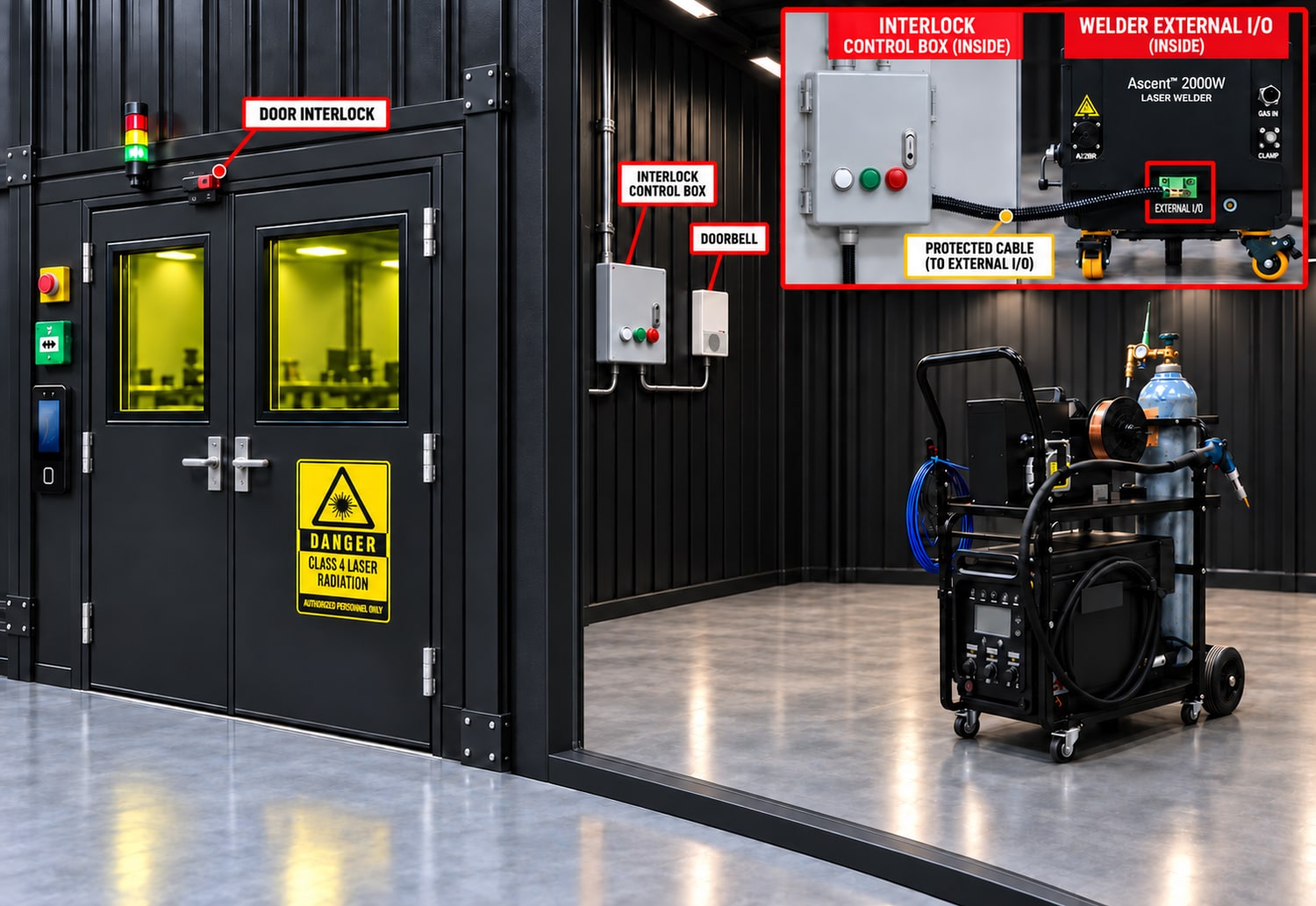
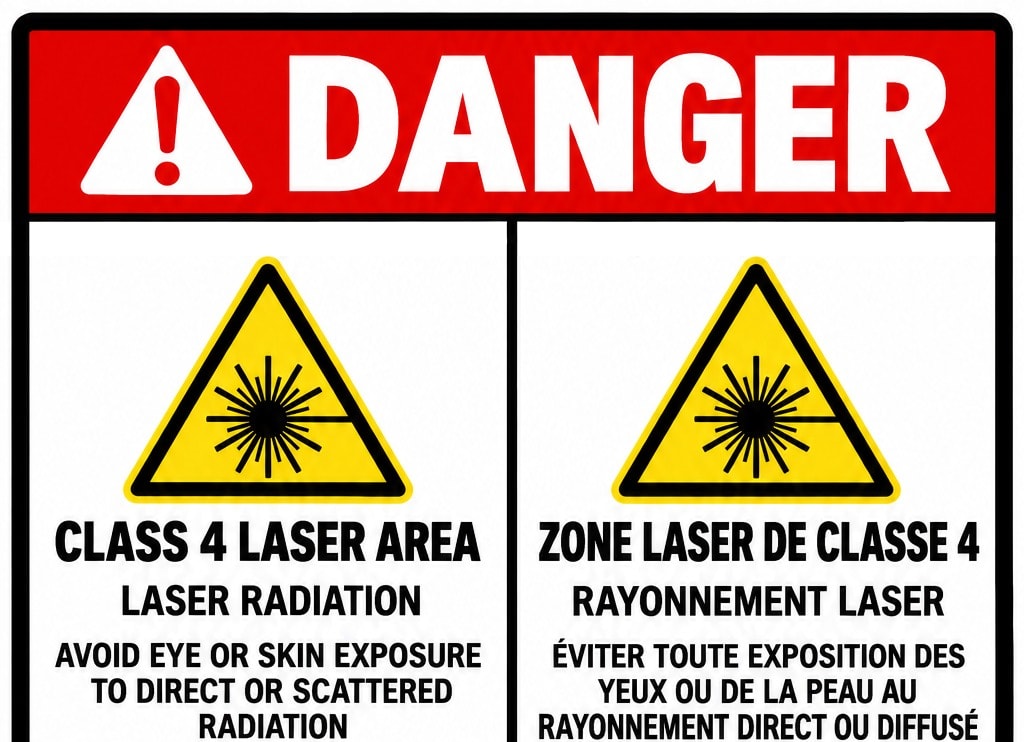
A handheld laser welder is a Class 4 laser. Wear the laser helmet or laser safety glasses that come with the machine, along with welding gloves. Minimum OD 5; prefer OD 7 or 8. Enclose the work area with laser-rated partitions and ventilate the fumes. See our laser safety page.
Is it time to invest?
Look at your current workflow:
- Are your welders spending too much time grinding or preparing joints?
- Do you have frequent rework or poor-quality seams?
- Do you want to cut down on waste?
If you answer yes to any of these, a laser welder may be worth a look. The refrigeration laser welders come in several power levels. Installation and training at your facility are included in the price, and the handheld welder has a 2-year warranty.
Ascent Lasers Pro can help you choose a model. Contact us to get started.