QCW Tabletop and Handheld Laser Welder for Thin Metal Parts
For small and medium parts in thin aluminum and stainless steel
USD $28,500
The price includes shipping, installation and training. Prices are in U.S. dollars. For Canada, the price is calculated in Canadian dollars at the exchange rate when the order is placed. Shipping to Canada is from Toronto, Ontario, and within the USA from Buffalo, New York, or Mount Sterling, Kentucky.
World first: a laser welder you can switch from tabletop to handheld
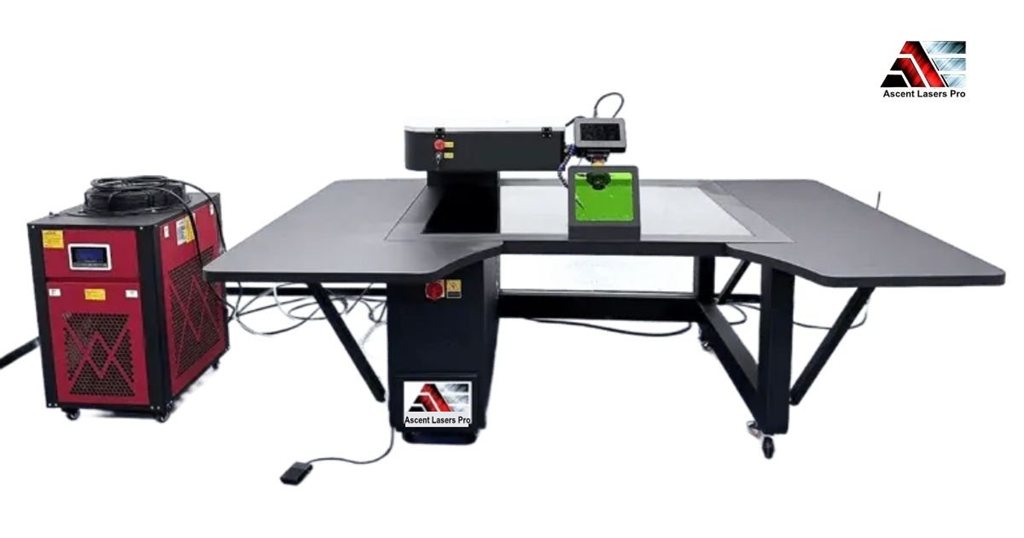
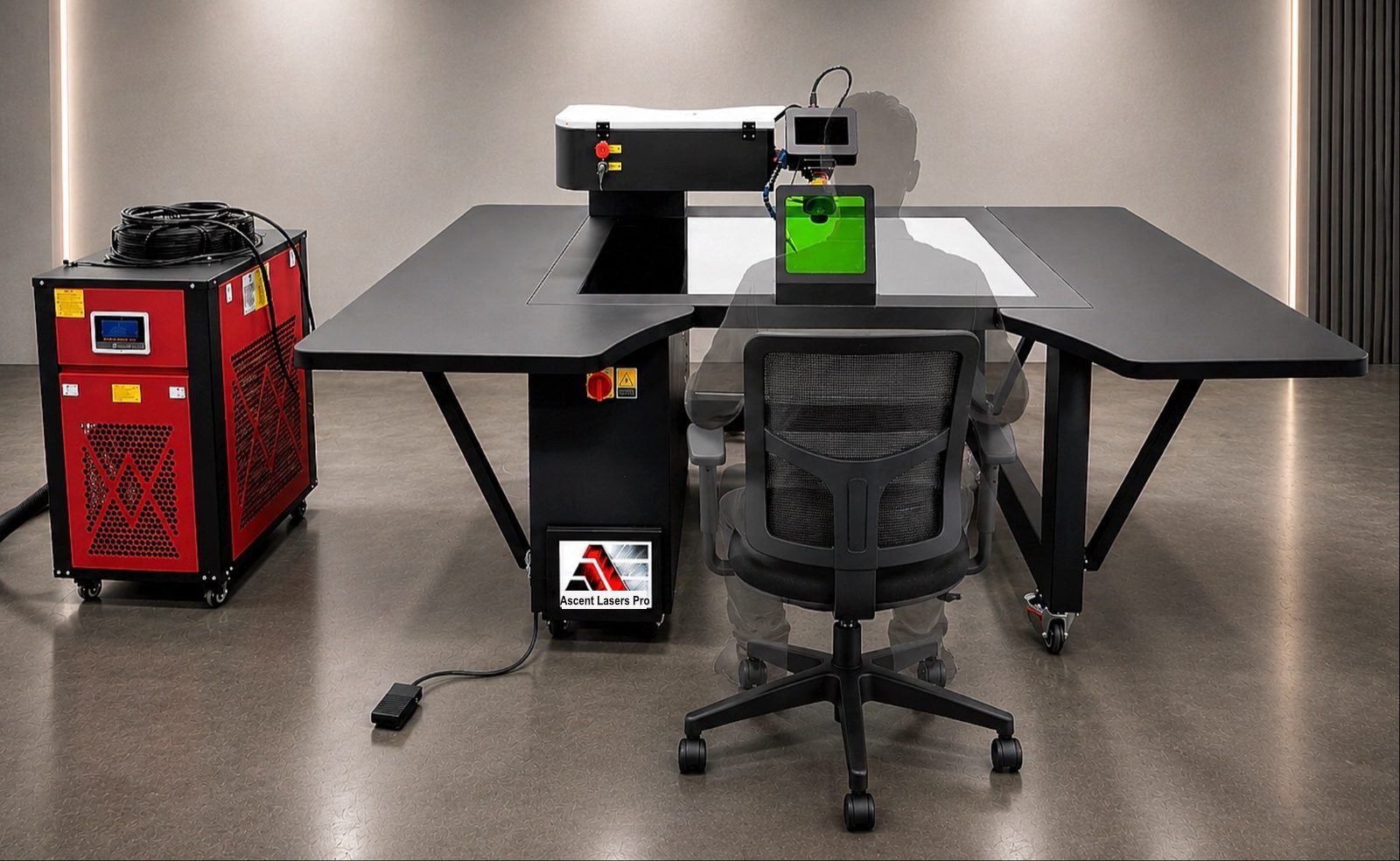
This QCW fiber laser welder works as a bench station or as a handheld torch. It welds small and medium parts in aluminum and stainless steel, and installation and training come with it.
- 300W QCW source whose pulses peak at up to 3,000W
- Pulsed beam that suits narrow parts and narrow joints
- Small heat-affected zone (HAZ)
- Aluminum from 0.020 in., up to a 0.080 in. face on a 0.063 in. return, and stainless steel up to 0.040 in.
- Easy changeover between the tabletop station and the handheld torch
- 3 to 4 hours of qualified operator training that stresses the operator's process-control and laser-safety responsibilities
In a fabrication shop, this QCW welder joins small and medium parts in thin aluminum, stainless steel, galvanized steel and brass, either on the table or with the handheld torch.
Watch the demo
One machine, two ways to weld
A world first
This is the first laser welder in the world that converts between a tabletop station and a handheld torch, and the changeover is easy. Our engineers designed it to take the place of the YAG laser. It welds stainless steel, aluminum, galvanized steel and brass.
At the bench
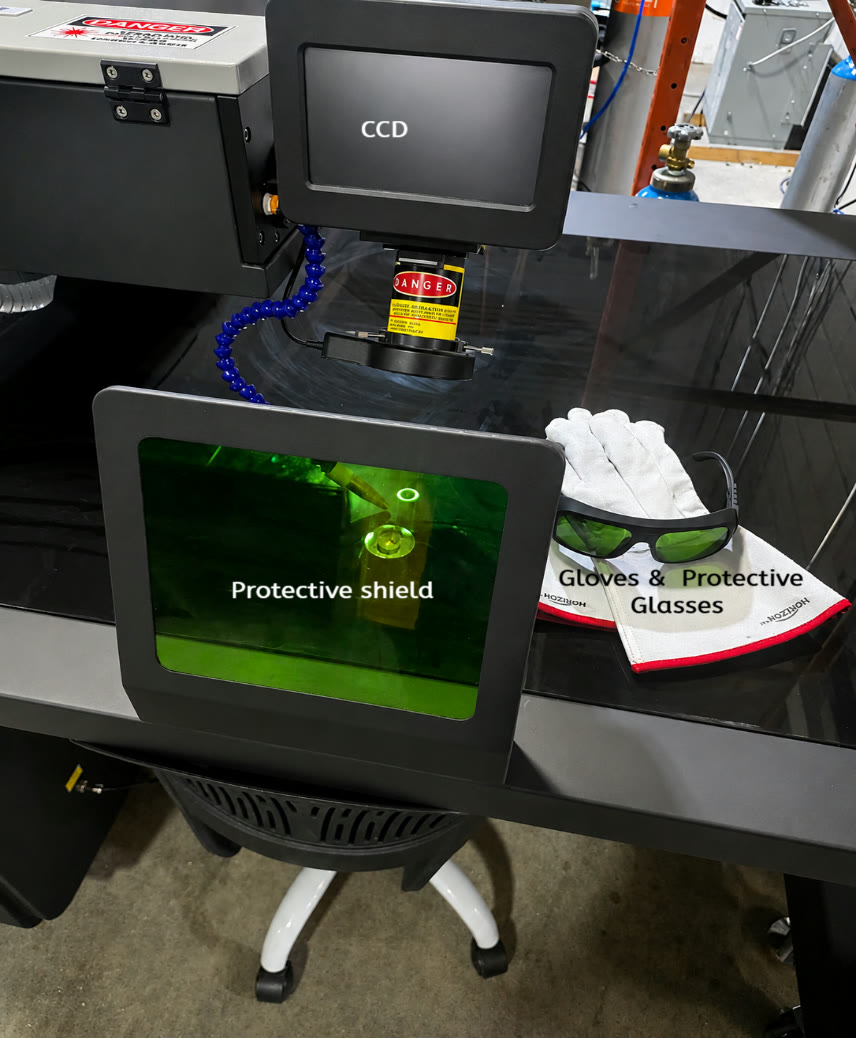
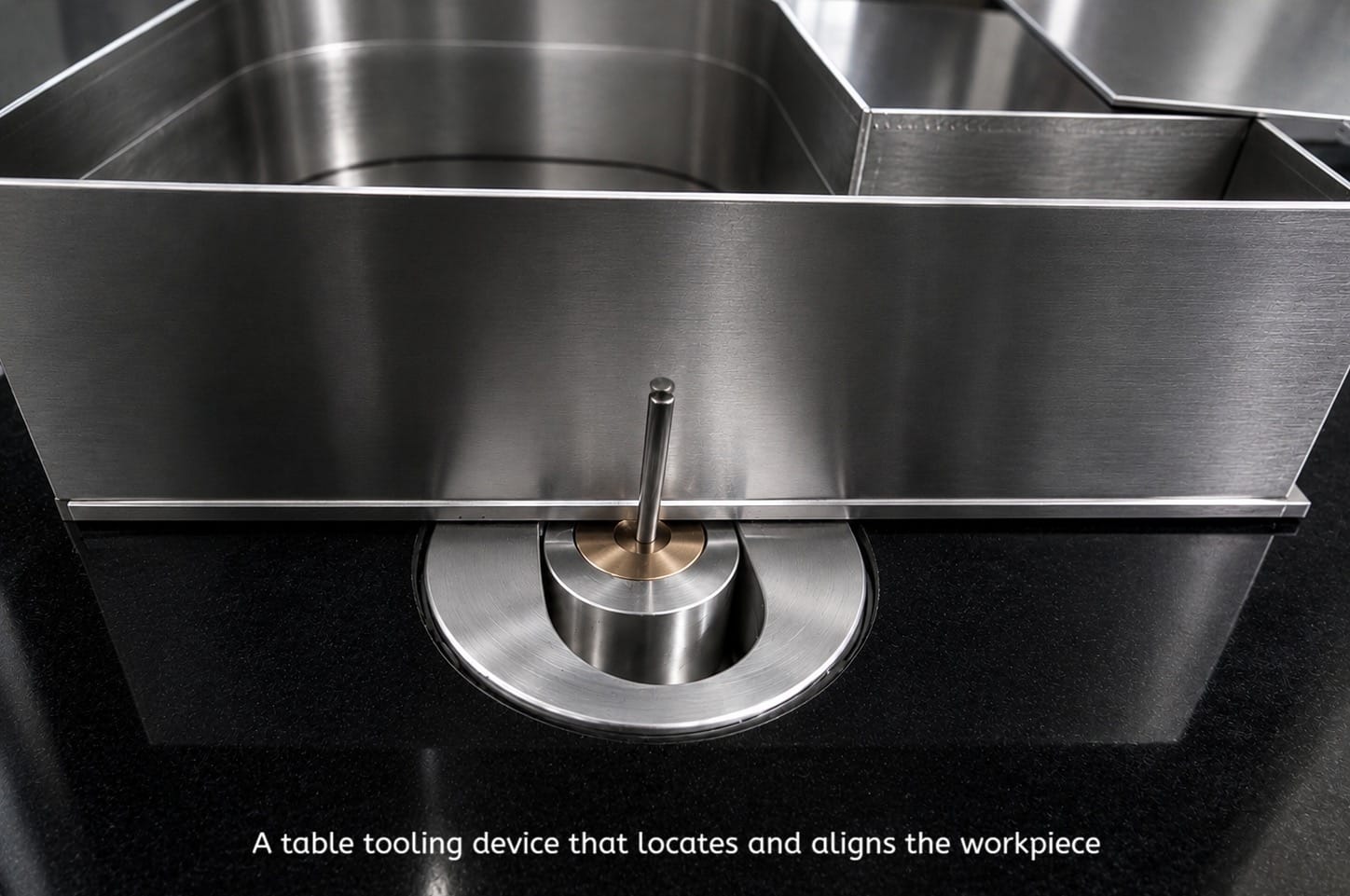
Small parts are welded on the table. The operator fixtures each one, so the weld is controlled and comes out the same on every part. A CCD camera system shows the joint live. The operator lines the joint up on that picture before welding, which makes alignment on the fixed work area precise and repeatable.
With the handheld torch
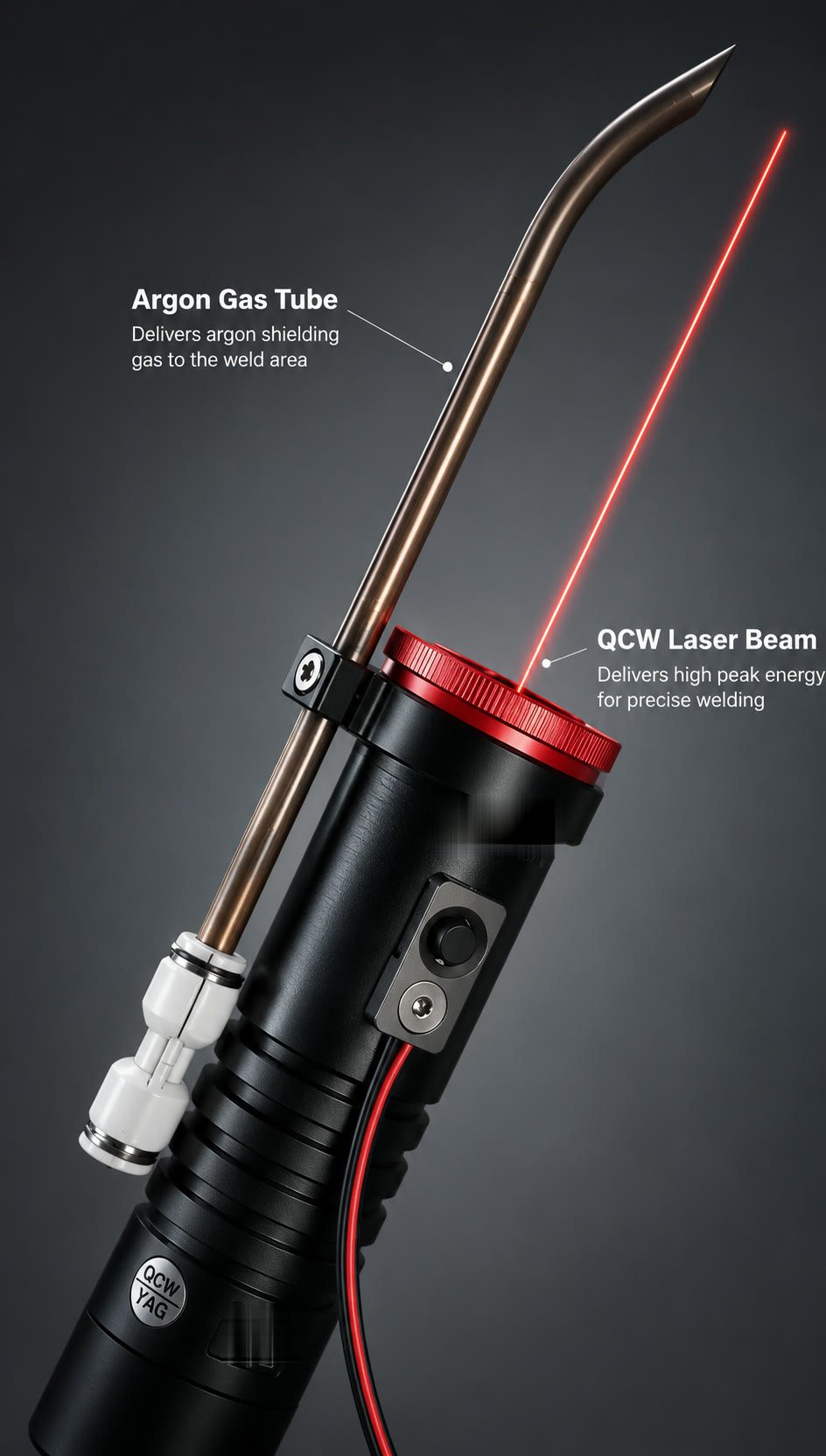
Some jobs are too big for the tabletop setup. The machine then converts to its handheld configuration, and the operator welds the oversized part with the torch. Because it is one machine, a large part does not force you to buy a second welder.
Do you weld mostly larger parts, irregular shapes or jobs away from the shop? Then compare this machine with our standard hand-held laser welder. The questions at the bottom of this page explain the difference.
Materials and thickness
- Aluminum: from 0.020 in.; maximum thickness a 0.080 in. face (the flat panel) with a 0.063 in. return (the side wall)
- Stainless steel: up to 0.040 in. thick
- Galvanized steel and brass: both can be welded
- Painted coil: the welder can be used on it too
How QCW welding works
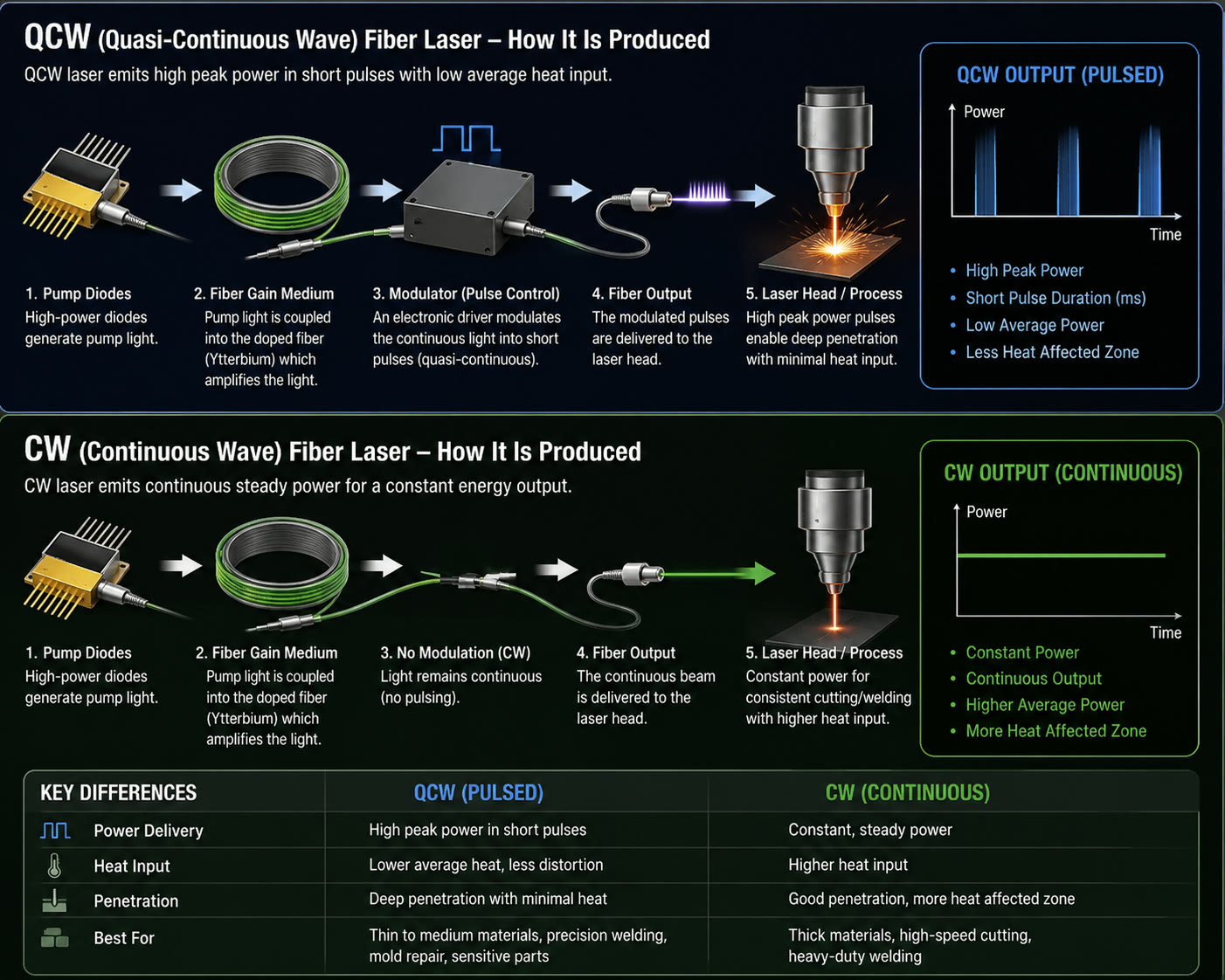
QCW stands for quasi-continuous wave. QCW laser welding uses short pulses from a laser with a high peak power. The peak of a pulse can be roughly ten times the average power of the laser, at most. A 300 W QCW laser therefore produces pulses of up to 3,000 W. The method has several advantages over continuous wave (CW) laser welding. Two of them are a smaller heat-affected zone and more flexibility.
Advantages of the pulsed beam
- With 300W of QCW power, pulses peak at up to 3,000W. That makes the machine a spot welder for narrow joints that have to be precise.
- The beam is pulsed, which suits parts with narrow sections.
Small heat-affected zone (HAZ)
A QCW laser delivers its energy pulse by pulse, and the metal cools in the gaps between pulses. Less heat goes into the part, so the heat-affected zone stays as small as possible.
Thin material benefits most. Too much heat distorts or damages it, and QCW welding keeps the heat input low. The thicknesses the machine welds are listed above.
Skills: Operators quickly learn how to get the best results from QCW laser welding.
YAG or QCW for a tabletop welder?
The main choice with a tabletop laser welder is the type of laser. There are two.
- YAG lasers have a hard time with aluminum.
- QCW lasers have high peak power, can run continuous or pulsed, and weld aluminum very well.
For aluminum parts, QCW is clearly the better of the two.
Three features of a good tabletop welder for thin sheet
The best tabletop laser welders for thin sheet metal have three features in common:
- A flat glass work surface. Glossy coil stock does not get scratched on it.
- Micropositioning rods. They place the part precisely, and in the same position each time.
- A dedicated CCD monitor. It lets the operator line up narrow corners safely.
Training, installation and warranty
Our technicians give 3 to 4 hours of qualified training. It is enough for an operator who has never welded aluminum to weld very thin aluminum. The training does not take away the operator's own responsibilities. Each operator has to finish the required training, keep to the approved process controls and meet every laser-safety requirement. See laser safety for more.
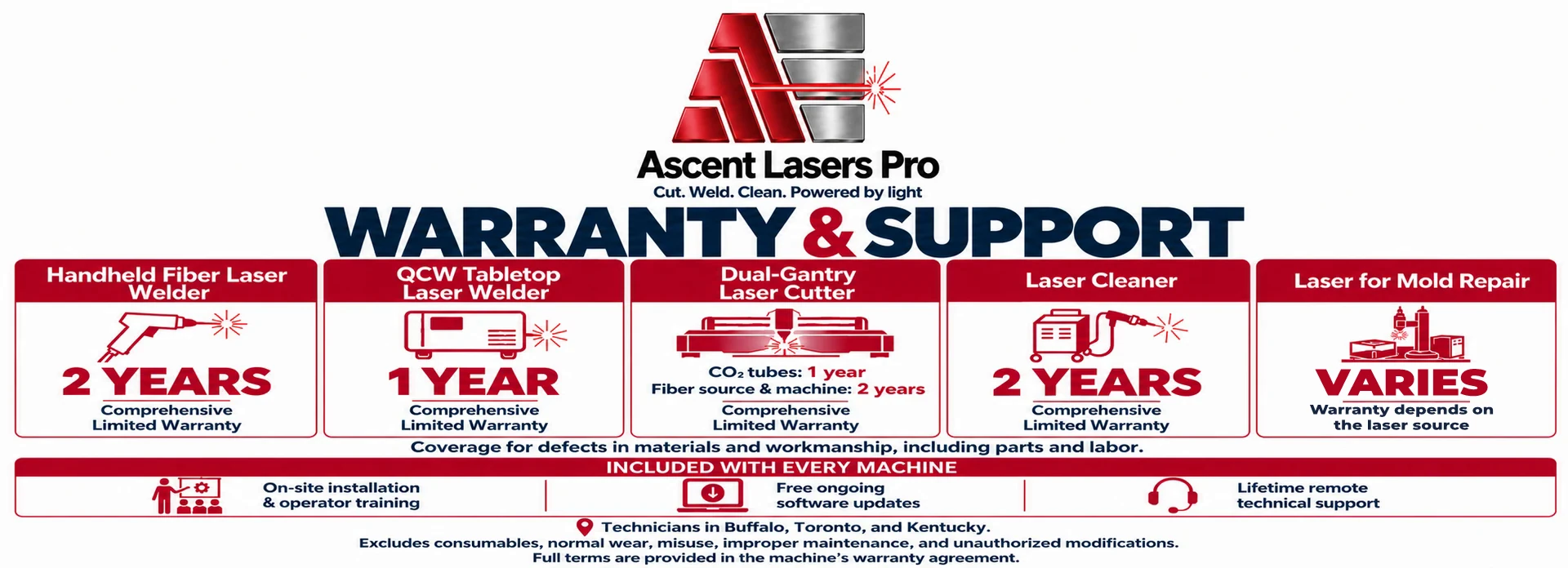
Installation and team training at your shop are part of the price. The welder is covered by a comprehensive parts-and-labor warranty for 1 year. The questions below list everything the quote includes.
Read next