
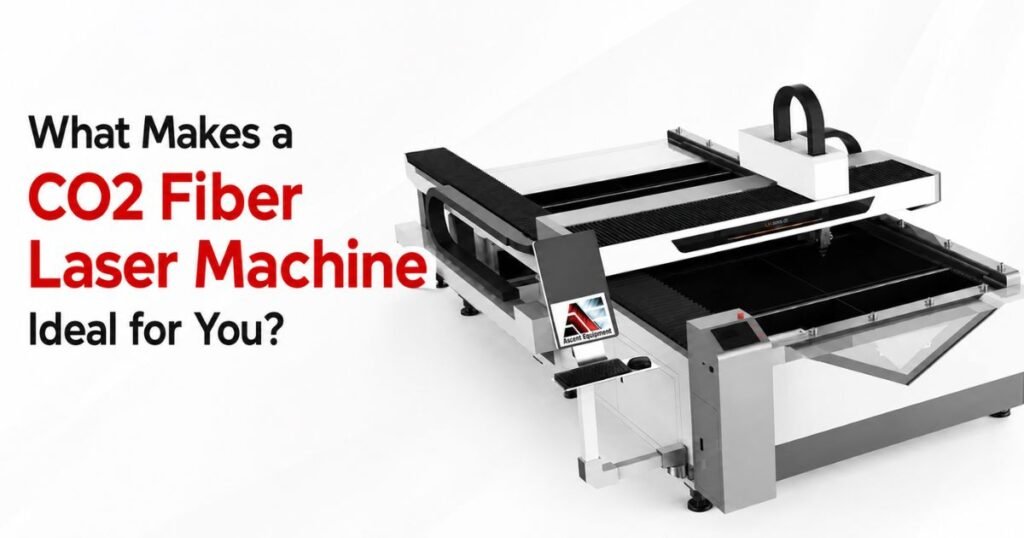
Manufacturers need equipment that keeps production moving without giving up accuracy. A combination CO₂ and fiber laser machine puts a CO₂ laser for nonmetals and a fiber laser for metals on one machine. It helps when your work involves different materials and designs. This article explains where it fits and what to check before you buy.
Why lasers fit modern manufacturing
Manufacturing is about accurate parts, steady output and a process your team can repeat without constant adjustment. A laser uses a focused beam guided by a programmed design, so it is easy to produce matching parts and hold dimensions across an order. A predictable process is also easier to schedule and improve.
Flexibility across jobs
Your work may change from one order to the next: panels today, detailed parts tomorrow, custom designs later in the week. What a laser can handle depends on its type, power, work area and the material.
- CO₂ lasers work on nonmetals such as acrylic, wood, plywood, MDF, leather and fabric.
- Fiber lasers work on metals such as steel, stainless steel, aluminum and brass.
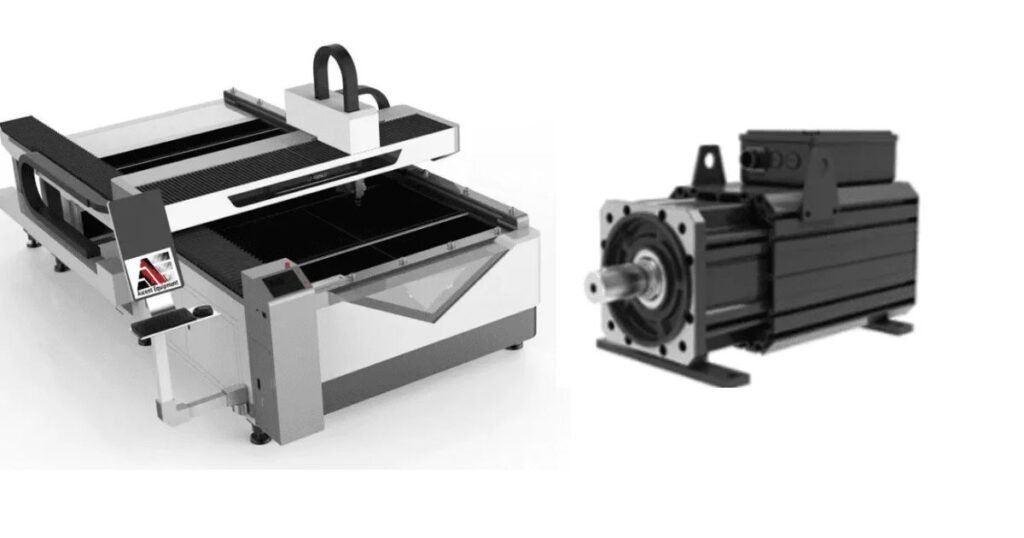
The Ascent combination CO₂ and fiber laser cutter has a 150W CO₂ laser and a 2000W fiber laser on one 4 ft x 8 ft bed. Choose by what you actually make, not by trend.
Cutting accuracy
A laser cuts along programmed paths, which produces detailed shapes and repeatable dimensions. Once the settings and pattern are right, your team can reproduce the same design with less manual measuring. That helps with brackets, panels, decorative parts, machine components and custom products. The Ascent combination cutter lists a positioning accuracy of ±0.03 mm and a repeat accuracy of ±0.02 mm.
Less wasted material
With careful nesting, you can place many shapes close together on a sheet, so there is less scrap. Actual savings depend on the material, design, thickness and settings.
Faster production
A programmed laser follows digital designs with repeatable movements, which cuts some manual steps and leaves operators free for setup, inspection and assembly. A few minutes saved on a job can add up to hours across a schedule. The Ascent combination cutter moves at up to 30 m/min on X and Y.
Where manufacturers use it
- Metal fabrication. Components, brackets, panels and structural parts.
- Automotive suppliers. Repeatable components.
- Display makers. Lettering and display parts.
- Product makers. Acrylic, wood and leather items.
Match the laser source to the material. A CO₂ system and a fiber system do not process every material the same way.
What to check before buying
- The materials you cut most, and their thickness
- Work area and workpiece size
- Cutting speed and production volume
- Accuracy
- Software and automation
- Training, installation, maintenance and support
Do not pick a machine on specifications alone. The best system fits your workload, materials, budget and plans. The Ascent quote includes shipping, on-site installation and operator training, free software updates and lifetime remote diagnostics. The combination cutter has a 1-year warranty on workmanship and non-consumable parts.
Room to grow
A flexible machine lets you take on new designs, repeat orders and new products. A fabrication shop might start with simple cutting and add detailed work later. If you handle both metal and nonmetal materials, decide whether two machines or a combination machine suits your workflow better.
Safety
Both lasers are Class 4. The Ascent combination cutter has enclosed laser protection. Keep interlocks working and ventilate fumes. See our laser safety page.
Final remarks
Choose the machine that fits your materials and workload. Review your materials, volume and plans, and pick a laser system that can grow with the business. Contact Ascent Lasers Pro for equipment options, training and support.
Read also: How to choose a 150W CO₂ laser cutter
Frequently asked questions
Q1: What is a combination CO₂ and fiber laser machine used for?
It cuts nonmetals with the CO₂ laser and metals with the fiber laser, so one machine covers a wider range of work.
Q2: Can laser machines cut metal?
Fiber lasers cut metal. A CO₂ laser is for nonmetals. Check each machine's specifications for the metals and thicknesses it handles.
Q3: Can laser cutting reduce waste?
Yes. Careful layouts and nesting help you use sheet material more efficiently.
Q4: Is laser cutting suitable for small fabrication shops?
Yes. A properly sized machine can handle custom work, prototypes, short runs and repeat production.
Q5: How do I choose the right machine?
Consider your materials, thicknesses, work area, volume, accuracy needs, software, support, training and budget.