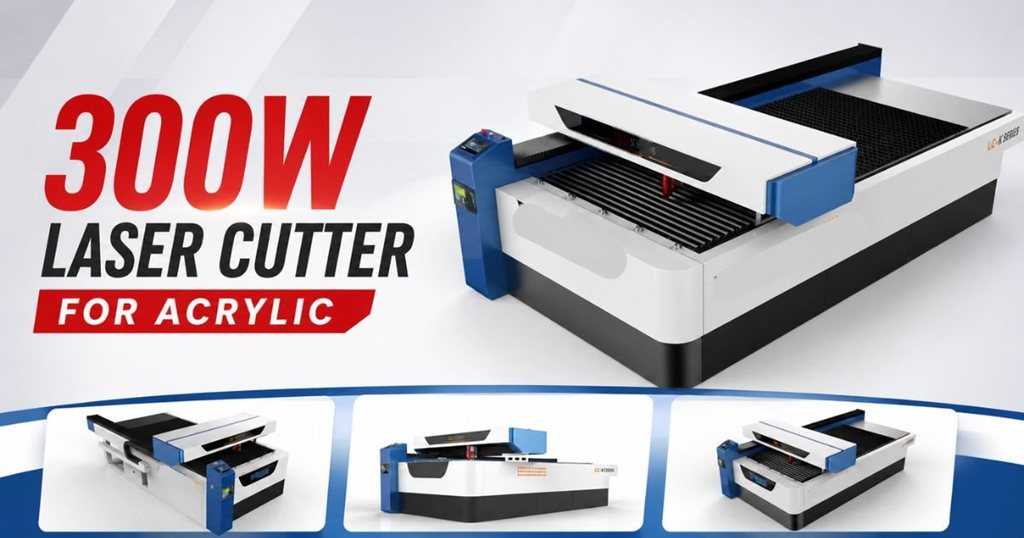

If you work with thick acrylic, MDF or wood, you probably want to know how deep a 300W CO₂ laser cutter can go before you invest. This article gives realistic numbers from the Ascent CO₂ laser cutter, which has a laser power of 80 to 280W, and tips for getting clean cuts.
Why laser power matters
More power means deeper and faster cutting. A higher-power CO₂ laser handles thicker acrylic, MDF and wood and holds its cutting speed better than a low-power hobby machine. It also leaves cleaner edges when the settings are right.
A CO₂ laser works on nonmetals. It is not a tool for cutting metal. For steel, stainless steel and aluminum, use a fiber laser such as the Ascent fiber laser cutter.
Cutting depth by material
The Ascent CO₂ laser cutter lists recommended settings for each material. Speed is in mm/s and power is a percentage of full output. Treat them as a starting point and test on your own material.
| Material | Thickness | Speed | Power | Air supply |
|---|---|---|---|---|
| Acrylic | 3 mm | 50 mm/s | 30% | Air pump |
| Acrylic | 10 mm | 12 mm/s | 65% | Air pump |
| Acrylic | 25 mm | 2 mm/s | 75% | Air pump |
| Acrylic | 30 mm | 1 mm/s | 85% | Air pump |
| MDF | 3 mm | 40 mm/s | 50% | Air compressor, 0.5 MPa |
| MDF | 10 mm | 10 mm/s | 70% | Air compressor, 0.6 MPa |
| MDF | 15 mm | 4 mm/s | 85% | Air compressor, 0.8 MPa |
| Wood | 5 mm | 30 mm/s | 65% | Air compressor, 0.5 MPa |
| Wood | 10 mm | 10 mm/s | 70% | Air compressor, 0.8 MPa |
| Wood | 25 mm | 2 mm/s | 85% | Air compressor, 0.8 MPa |
Acrylic
Acrylic is an excellent material for a CO₂ laser. You can cut thick slabs, and the edge is usually clean and clear. Speed drops as thickness goes up, so a thick cut takes time.
MDF and wood
Thick MDF and plywood are well within reach. Speed depends on the density of the board, so expect some trial and error. Smoke and burning are the main concerns, which is why ventilation and air assist matter.
Leather, fabric and rubber
Soft materials cut quickly with little resistance. Tune the settings to avoid charring, and test on a scrap first.
What makes a clean cut
Depth is only part of the picture. Cut quality also depends on:
- Air assist. Compressed air blows smoke and debris out of the cut.
- Focus. The focus has to match the thickness of the material.
- Cooling. The Ascent cutter comes with a water chiller to keep the laser tube at a steady temperature on long cuts.
- Speed and power. Too fast and the beam does not cut through. Too slow and the material burns.
- Material quality. Warped or low-grade boards can throw off the cut.
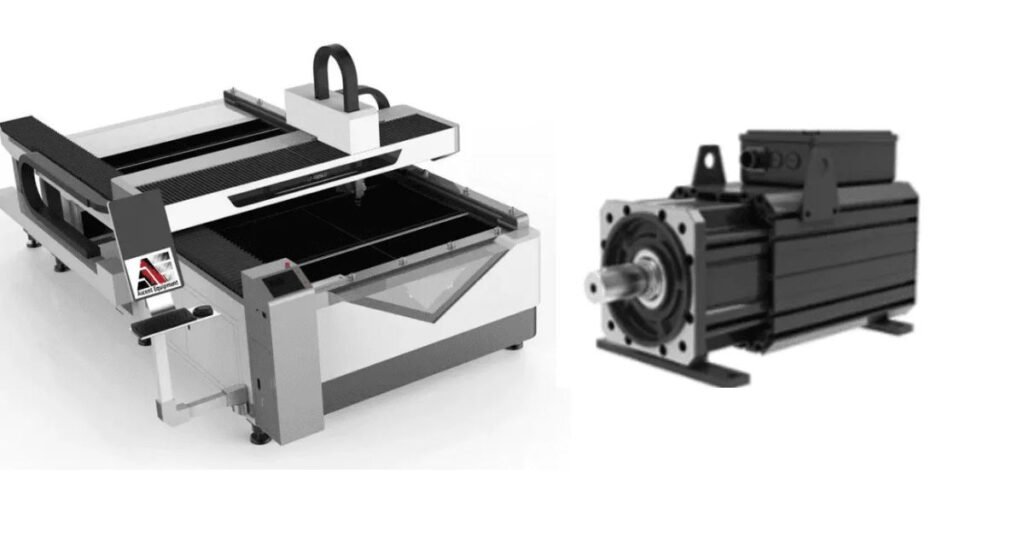
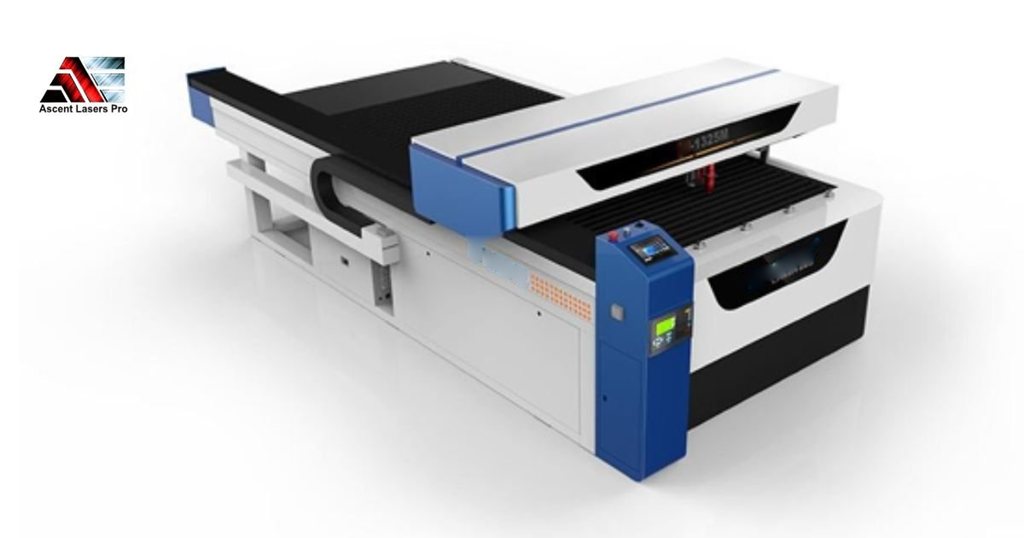
The Ascent cutter has a red-light positioning system for lining up the work, a servo motor with screw transmission for stable positioning, and an anti-dust system. The blade table sits level with the side of the machine, so loading and unloading are easier.
Tips for the deepest cuts
- Use air assist at the recommended pressure.
- Slow the speed down for thick material, or make a second pass.
- Set the focus again for each material and thickness.
- Keep the lens clean. Dust and residue reduce power.
- Use a good exhaust system. The Ascent cutter includes an exhaust fan and pipe.
Cutting in layers
For very thick wood or acrylic, you can cut several thinner layers and stack them. It is often cleaner and can be faster than one deep cut.
Safety
A CO₂ cutter is a Class 4 laser. Keep the lid closed while it cuts, vent the fumes outdoors or through a filter, and keep a fire extinguisher close. Cutting some materials gives off harmful fumes, so check each one first. See our laser safety page.
Who uses a machine like this
Interior designers, prototype makers, display and craft shops and small manufacturers use CO₂ cutters for panels, decorative screens, templates and mockups. It is a good balance of cutting depth, speed and cost.
Talk to Ascent Lasers Pro
If you are looking for a 300W-class CO₂ laser cutter, visit Ascent Lasers Pro or contact us. Shipping, installation and operator training at your facility are included in the price.
If you are moving up from a smaller tube, read When Should You Upgrade to a 300W Laser Cutter for Acrylic?